Today we’d like to introduce you to Melissa Elias.
Every artist has a unique story. Can you briefly walk us through yours?
Home is a place not only of comfort, but of habits and tradition. Being Mexican-American, raised in a small agriculture-led border-town with Mexico in the southwest corner of Arizona, and with a high Mexican population, there was definitely a strong sense of culture and identity. Although I had shown interest in drawing from a young age, it wasn’t until my last year of high school that I recognized it. I decided to pursue and explore Fine Arts and enrolled in Arizona Western College in Yuma (A.A Studio Art) where my painting mentor, then and now, has been the role model of the art professional I aspire to be one day.
It was my move to Phoenix, though, and my experience at ASU Herberger Institute for Design and the Arts (B.A Painting) that allowed me to find a style, voice, and individuality in my creative-process. That alone offered something I had not seriously considered before: a glimpse in the possibility of making a living with Art, which I am steadily working towards to today.
Over the years, I have known something to be true: that culture and identity are the fundamental ingredients that have helped me mold the person and painter I am today. Even though doubt looms over my head like vultures above a staggering prey, I am constantly using that to reassure myself to work harder towards my goals.
Please tell us about your art.
Due to the academic curriculum at the schools I attended, I had the opportunity to learn and experience many areas of art. From Screen-Printing, Printmaking, and Painting/Drawing, to Ceramics, Sculpture (clay, stone, wood, etc.), Art Education, and Gallery Studies, I was able to find in each one something to adopt and excel in. I started in high school with acrylic on canvas and by the time I graduated Arizona State University, I had found oil on wood to be my chosen medium and portraiture to be my subject-matter.
The main reason I chose that medium and subject was because of my admiration for Caravaggio and chiaroscuro, as well as having to be under the pressure of stretching the limited funds that I could spend on materials. First of all, I taught myself how to build all of my painting surfaces/frames, explored wood beams, better sturdiness/resistance/durability with the materials, and how to prepare the wood surface to hold oil paint much efficiently. I learned how to “stretch my buck” by doing oil washes and working on portraits by layers and with Quick-Drying chemicals so I didn’t have to buy oil paints as often. By approaching wood in a more thoughtful and methodological fashion, I was also able to preserve the remarkable wood grain and equally emphasized it by showing it through the portraits. All of this, to me, adds a higher quality of production and the emotional attachment to a piece that makes each one as unique and symbolic as the next. Working with this organic surface is to work with the unpredictability of nature. Creating portraits on wood forms a harmonious marriage between the necessary chemicals to work with oil, the effortless abstraction of the grain, and the complexity of the portrait I am trying to produce. Combining these elements help create a unique image, which is the point of portraiture: to capture a specific individual not only in physical traits, but to represent a vivid sense of their real presence.
There continues to be this attempt to preserve with my work: the timelessness and importance of art and portraits through the ages and their precious value in past societies. The modern technological world we live in today has taken away the nuances that a picture used to have not only in many other centuries behind ours, but also at the beginning of the very recent 20th century. My work is a continuation of the classical practice of “painter and sitter” with influence of the great Renaissance masters and their work, as well as finding a balance and inspiration with the contemporary approach to portraits. I strive to add emotion and symbolism in my work with the hopes that the viewer might react and walk away with a sense of appreciation for the arts, something I believe many tend to overlook as equally fundamental as any other subject.
What do you think is the biggest challenge facing artists today?
As I mentioned before, the biggest challenge facing artists today is finding people that are willing to purchase artwork or to contribute to an artist’s project. There is not a high demand for fine art, therefore we cannot make a living out of it.
As the modern world continues to be digitalized and based on fast reproduction of goods, the ones that do not adapt to that change tend to be left behind. Unfortunately for me, I focus on wood oil portraits and that in itself conveys an antiquity that does not fit in with this time. On the upside and through this somber tone, though, the prospect of carrying this “antiquity” gives value to the work in the future, just like fine aged wine.
How or where can people see your work? How can people support your work?
I am constantly finding ways to expose my work to the public. I recently had a solo show down in Yuma and I am currently looking for spaces to exhibit across the border in Mexico. The best way to find out about up-coming exhibits, though, is to visit my Instagram page @melossart or press on the link in my Bio that will direct you to my official website. On that website, people will be able to see some of my work, CV, and short Bio.
There are many ways people can support not only my work, but the art community as well. I found that the best way is to actually purchase or commission work out of artists, which is one of the few options we have to make an income. Just like the good old’ days, becoming patrons to artists actually impacts and helps out in such a tremendous way. Another option is to refer an artist to people you know that might need or want a creative approach to a space.
There is a persistent attempt for individuals to find and keep a job that they love, of finding opportunities that showcase a unique skillset, and to thrive in a time in which pursuing our dreams and desires becomes the epicenter of the decisions we make. And making art is no different than any other career choice. It is not only a challenge in this time and age, but actually selling art is even more difficult since there is no demand for it.
Contact Info:
- Website: https://www.melossart.com/
- Email: melissa.elias602@gmail.com
- Instagram: https://www.instagram.com/melossart/
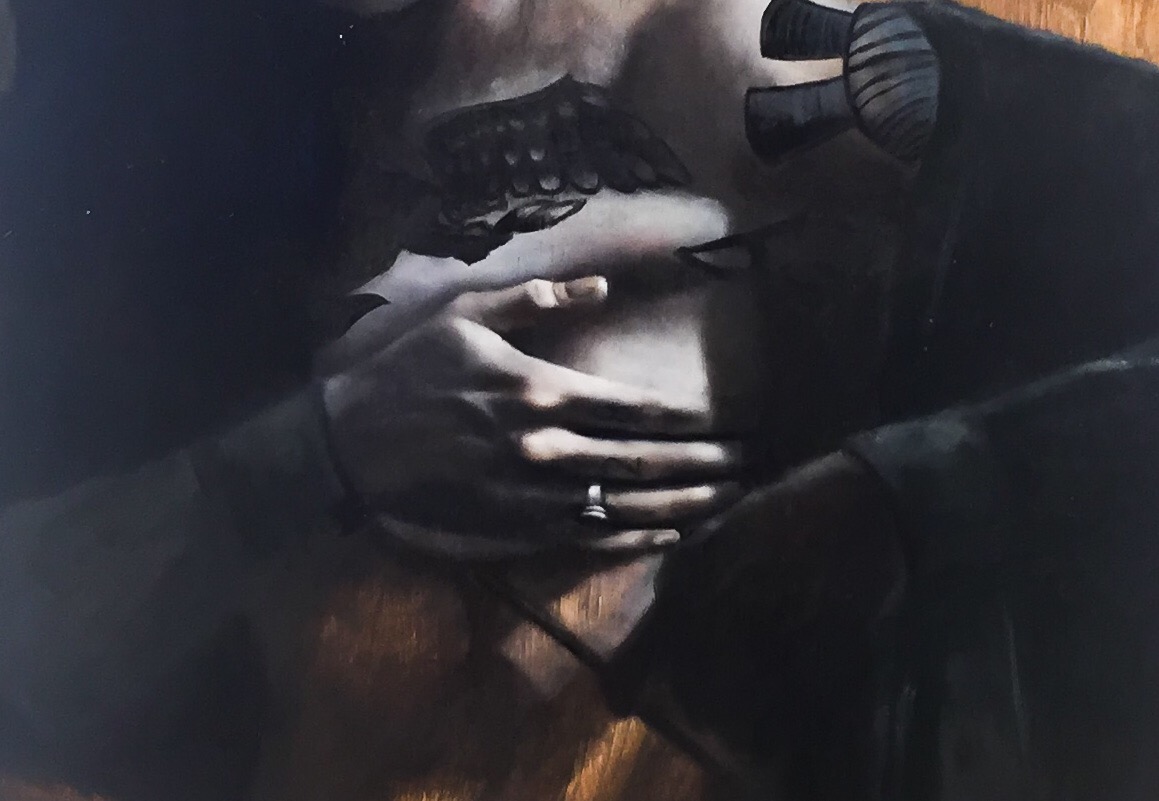
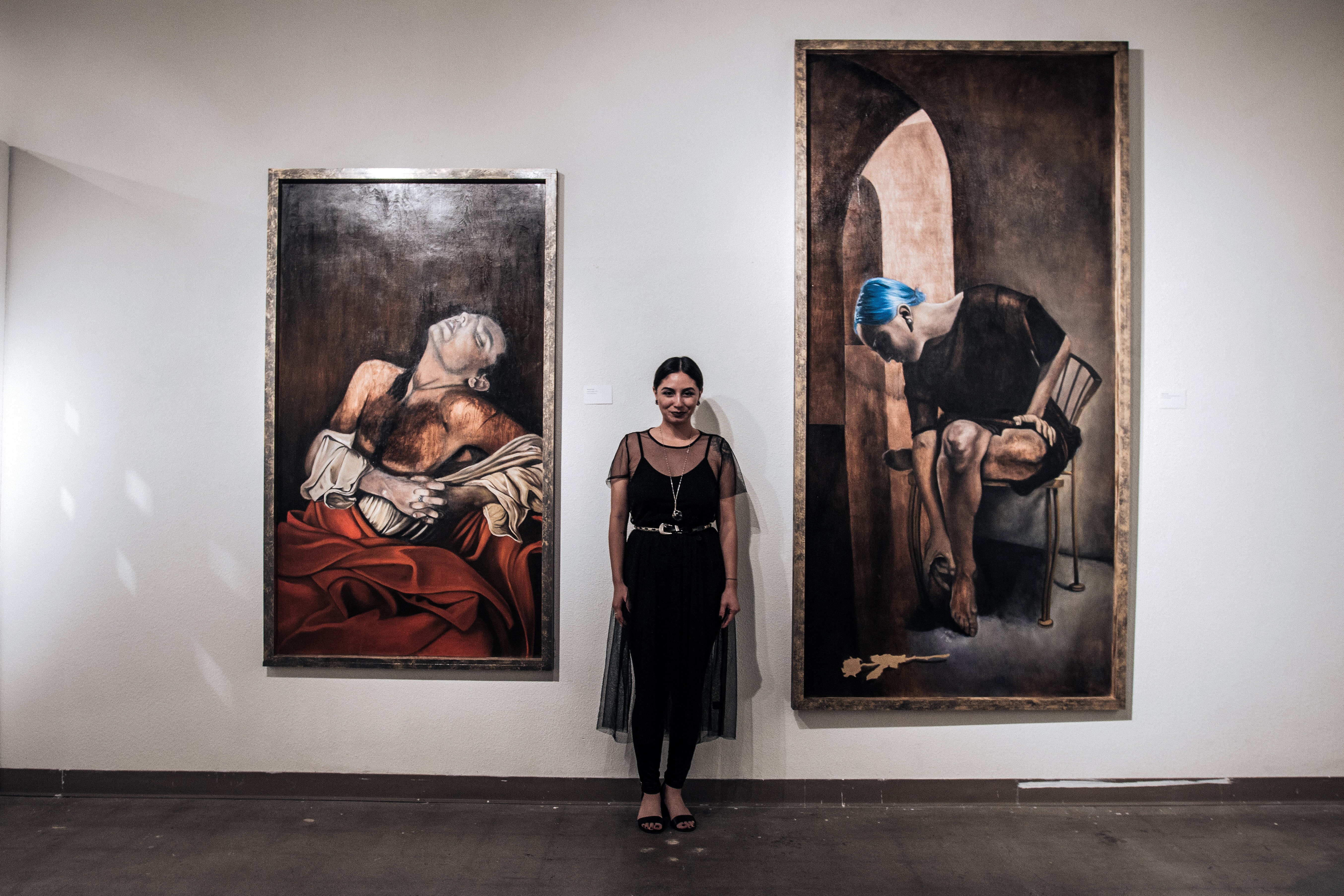

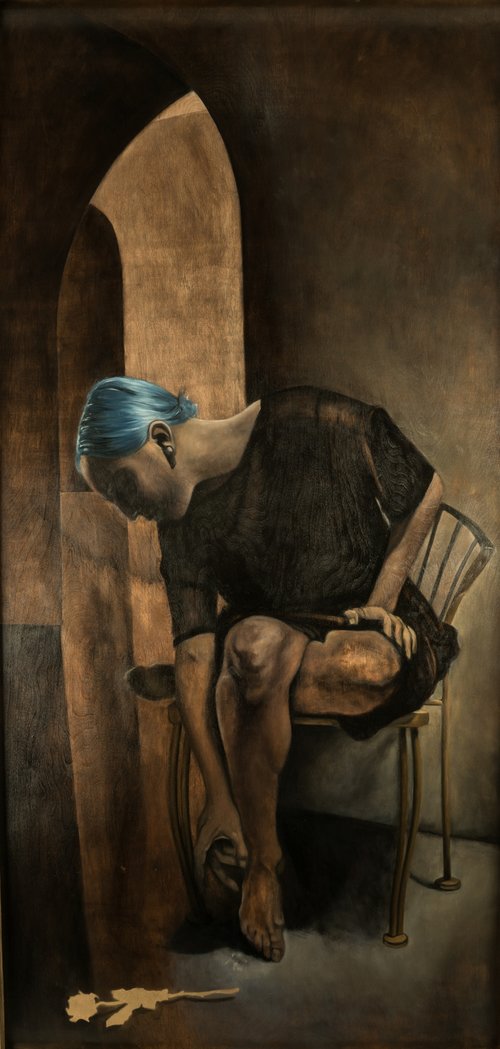
Image Credit:
#1 ASU Gallery 100, Senior Art Show, standing in between my big scale paintings
#2 2017, “Perder de Vista,” Oil on wood, 4ft X 8ft
#3 2017, “Cuerpo (After Caravaggio),” Oil on wood, 3ft X 6ft
#4 2018, Close-up, “La Flecha del Duelo (The Arrow of Grief),” Oil on wood, 2ft X 4ft
#5 2018, “Beads of Lament,” Oil on wood, 16in X 20in
Getting in touch: VoyagePhoenix is built on recommendations from the community; it’s how we uncover hidden gems, so if you know someone who deserves recognition please let us know here.