


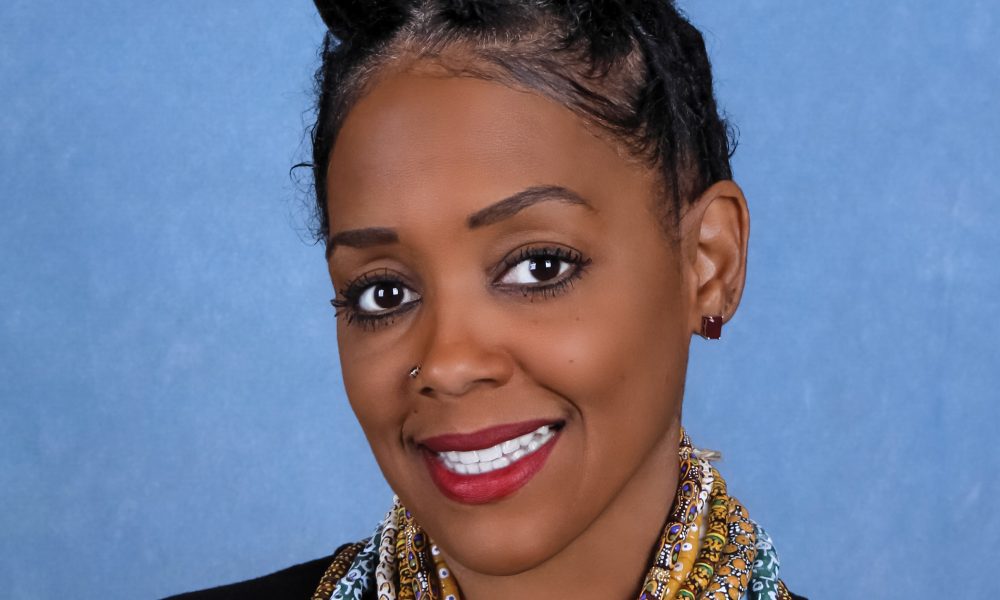
Today we’d like to introduce you to Iya Affo.
Hi, Iya; having you on the platform is an honor. Thanks for sharing your story with us – to start, maybe you can share some of your backstory with our readers.
I grew up as “Vanessa with the hair.” “Hair defines you as a Black woman. At one point, I shaved my head during a critical transition in my mid-twenties, but today, I am a grandmother, and my natural waist-length locs are usually looped in a gleaming pile atop my head. The particular way that Black women in America are defined based on their appearance—the length and texture of their hair, the precise shade of their skin, and how European their facial features are—reflect the generational trauma left by the slave trade that ripped through my own family. Born in Manhattan, New York, I grew up in Teaneck, New Jersey, after my parents separated. I lived in a Jewish community in Teaneck with my mother and older sister. Though my mother’s family came from the West Indies via Barbados, she studied at New York University and developed a reverence there for the Jewish people and traditions she encountered. This, along with the multicultural heritage in Teaneck and the Jewish culture, inspired her to relocate with us. Despite this multiculturalism, I experienced little to no connection with her own family’s history. For a long time, being black didn’t seem necessary.
As part of the first generation of African Americans to achieve a high-level institutional education (she had two Ph.D. and three master’s degrees) and the money that followed, my mother focused on managing money and providing access to society and opportunity for her children rather than “mothering” us or nurturing a connection to our blackness. The stark difference between my own experience and that of my Jewish friends bothered me from a young age. Spending so much time with Jewish kids made me wonder why the Holocaust was so present in their families while any legacy of slavery was so absent in my own. My family still seemed sick with its past, while the Jewish families I knew were engaging with theirs and building community around it. When I saw my friends having bat mitzvahs, I wondered, “Where are the black rites of passage?”
If I think about childhood, I can think of depression with clarity by second grade—just an overwhelming sadness and grief. Although I was always popular, I was the captain cheerleader in high school and the go-to person to solve everyone’s problems. No one knew me. My friends didn’t even know that my father died when I was 14, despite the reality that the gaping hole he left in my life had deepened my depression. I was very close to my father. I often felt like I was placed on a pedestal among the kids at school because my soul was invisible through their eyes; all they saw was my physical appearance and access to designer clothes and expensive cars. It didn’t feel safe for me to show my authentic self, so my grief remained hidden. Many years I was passed before I told my story.
After dragging myself through high school, desperate to reinvent myself, I moved away to college 2 days after my high school graduation to an off-campus apartment where I intended to fly under the radar. I planned to study physical therapy at the University of Maryland before someday taking over my mother’s thriving practice, where I had worked throughout high school. Instead, I began having suicidal ideations and developed an eating disorder that had me swinging frequently between bulimia, anorexia, and overeating. Though I did manage to get a degree, an abusive relationship propelled me across the country after graduation. After my college boyfriend punched me in the face, something in me woke up. Looks were the one thing I had held on to while my eating disorder wrecked my self-esteem. The most vain part of me thought, “My face is the one thing that can’t be messed up; I gotta figure this out.” So, I moved to California, where kickboxing became the unexpected first step toward healing. Frustrated by endless talk therapy (“How many times do I have to say how sad it was when my father died? I talk about it, I leave, I cry, I binge, where’s the therapy?”), I felt drawn to the silence of kickboxing. I didn’t expect how it finally brought movement to my emotions. Every time I took a class, I would cry and have to run out of the studio and throw up, but I felt strong and emotionally solid afterward. Soon, I realized it wasn’t being out of shape that was making me vomit; it was the emotions moving through me when I moved my body. Though this gave me hope and brief experiences of feeling normal, the birth of my son at age 23 was what finally fundamentally altered the course of my life. By this time, my mother had started doing healing work herself, meditating and exploring our family roots. She traced our family roots back to the Benin Republic in West Africa, and when I got pregnant, my mother told me she had to go there to understand our family’s pain. Every male in our family was messed up in some way, and my mother knew something had to happen to prevent this from affecting my son. I immediately felt the truth and began to travel to the Benin Republic with my mother after my son was born. I knew it was my last chance not to be the mother who killed herself. I thought to myself, “You can’t bring a child into the world and then die; that would be too horrible. You have to figure out how to live.”
In the Benin Republic, I connected with my ancestral culture. Following our traditional way of being, first, I went to see a medicine man. He is one of the messengers of God who tells you who you are, your life’s destiny, and the obstacles you will face. After divination, I received my spiritual name, Wekenon, translated as the mother of the universe. In my tradition, babies get named based on their destiny; without such a name, you’re walking blind. The name is the north star that brings you back to your path, back to yourself. Eventually, I was given the title Iya, which means Holy Mother. They were so significant that I legally changed my name to reflect my identity. My new name pointed to the work I was meant to do to tie the West back to Indigenous culture. From then on, I only made decisions after consulting the medical person. My focus turned away from Western medicine and toward healing. Rituals and ceremonies became an integrated part of whatever was happening in my life and my children’s lives as a support for decision-making, challenges, or rites of passage like naming ceremonies, manhood ceremonies, womanhood ceremonies, and marriage ceremonies.
My path and focus on bridging Western and Indigenous worlds to support healing led me to become a trauma specialist. By pursuing certification with trauma experts like Gabor Maté and Bruce Perry, I explored the impact of historical and intergenerational trauma on neurobiology and how culture drives behavior. In doing so, I discovered the foundations of my healing. We have problems not because we’re facing adversity but because all ethnic groups have faced adversity at some point in history. Unresolved trauma can be passed from one generation to the next for potentially fourteen generations—trauma and toxic stress cause our brain and nervous system to be dysregulated. The cultural things we’ve learned to prioritize, like capitalism, have created a situation where we’re constantly in the flight or fight response. Our nervous systems are always on high alert, which increases the amount of stress hormones in our system and drives aggressive or withdrawn behaviors. Whereas things like washing clothes by hand and walking to get water brought a rhythm and a physicality into the lives of our ancestors, modern life offers little opportunity for our nervous systems to relax unless we are intentional about our actions.
Utilizing my knowledge of the nervous system to control my stress response system has been life-changing! Through my Trauma and Generational trauma training, I have also been able to impact the lives of those I train in the work. Leveraging my knowledge of the nervous system has allowed me to find ways to regulate and heal my traumas by consciously generating feel-good hormones like dopamine, serotonin, endorphins, and oxytocin. Daily rituals built around connecting interactions, exercise, behaving consistently with my values, and experiencing music and rhythmic sensory input have allowed me to regulate my nervous system. This means that my window of tolerance for responding to stress has opened wide enough that I can pass the healing on to others. I tried so long not to have depression and anxiety, to eat like an average person, and to not be afraid to eat, overeat, or vomit. Knowing there’s a way to empower somebody to influence what they want to influence without being dependent on an outside entity for their health is the most rewarding part of my work. Today, I work training trainers. From police departments to hospitals to individuals, I continue to fulfill my bridge-building destiny by operating at a level above the individual, trusting that the ripples of this work will make an impact. All spirituality is about healing. We can pass on the beauty of resilience and benevolence instead of trauma, and we can do this by combining modern neurobiological knowledge with ancient ways of living and being. We can help the next generation to have identity and peace, to have the freedom to live to
their fullest capacity.
Would it have been a smooth road, and if not, what are some of the biggest challenges you’ve faced along the way?
It’s been a difficult road! I had to be willing to take a lot of risks. As I endeavored to understand culture and adversity, I moved to different countries worldwide. While living abroad, I wanted to be immersed in the people, so I did just that. I slept on a mat on the floor with no air conditioning in extreme heat, no refrigerator, hand washing my clothes, and without consistently clean water. It wasn’t easy driving a car in China when I needed help reading the road signs. I was afraid to take a bus in India when they were labeled with signs in Hindi. I had to go to the doctor when I was sick and couldn’t communicate. I had to learn to trust strangers. I fell in love with friends with whom I could barely speak.
Thanks for sharing that. Please tell us more about your business.
I am passionate about trauma! I know it sounds crazy, but that is my deep love. In my business, I train people about the impact that trauma, generational trauma, historical trauma, and toxic stress have on human physiology. The effects of trauma drive behavior. It controls how we think, feel, emote, behave, and relate. I developed the only 48-hour, 6-level Historical Trauma Specialist Certification being taught anywhere in the world. We train in the public sector, private sector, and individuals. Physicians, psychologists, judges, police chiefs, teachers, and others take our training to understand better themselves and the people they serve. Understanding the history of blacks, indigenous people of color, and other groups that have suffered generationally and how our histories can impact our neurobiology, which drives our behaviors, brings unity to our communities. Recognizing that at least 60% of our population has endured adversity in children, we can interact with people differently to prevent re-traumatization. We must promote, and support felt safety if we want unity and safer communities. When we feel secure, we deactivate the stress response system and have access to the part of the brain that allows us to make good decisions, be self-reflective and empathetic, and allow for learning in the classroom. When we live in a constant state of fear and threat, we live in the survival part of the brain and cannot build relationships, control behavior, and learn. I am proud to love all humans and find the best in us.
Is there any advice you’d like to share with our readers who might just be starting?
My advice is to have no fear. Don’t be afraid of failure. Follow your heart and your dreams. What’s the worst that can happen?!
Contact Info:
- Website: healhistoricaltrauma.com
- Linkedin: https://www.linkedin.com/in/heal-historical-trauma-35ab13210/
- Youtube: https://youtu.be/Qtdg7rOTZk0?si=suwGDKDoBVY4jfDY
- Other: https://youtu.be/nPdcUCy4agE?si=59xH-mH5VzYZ58e8

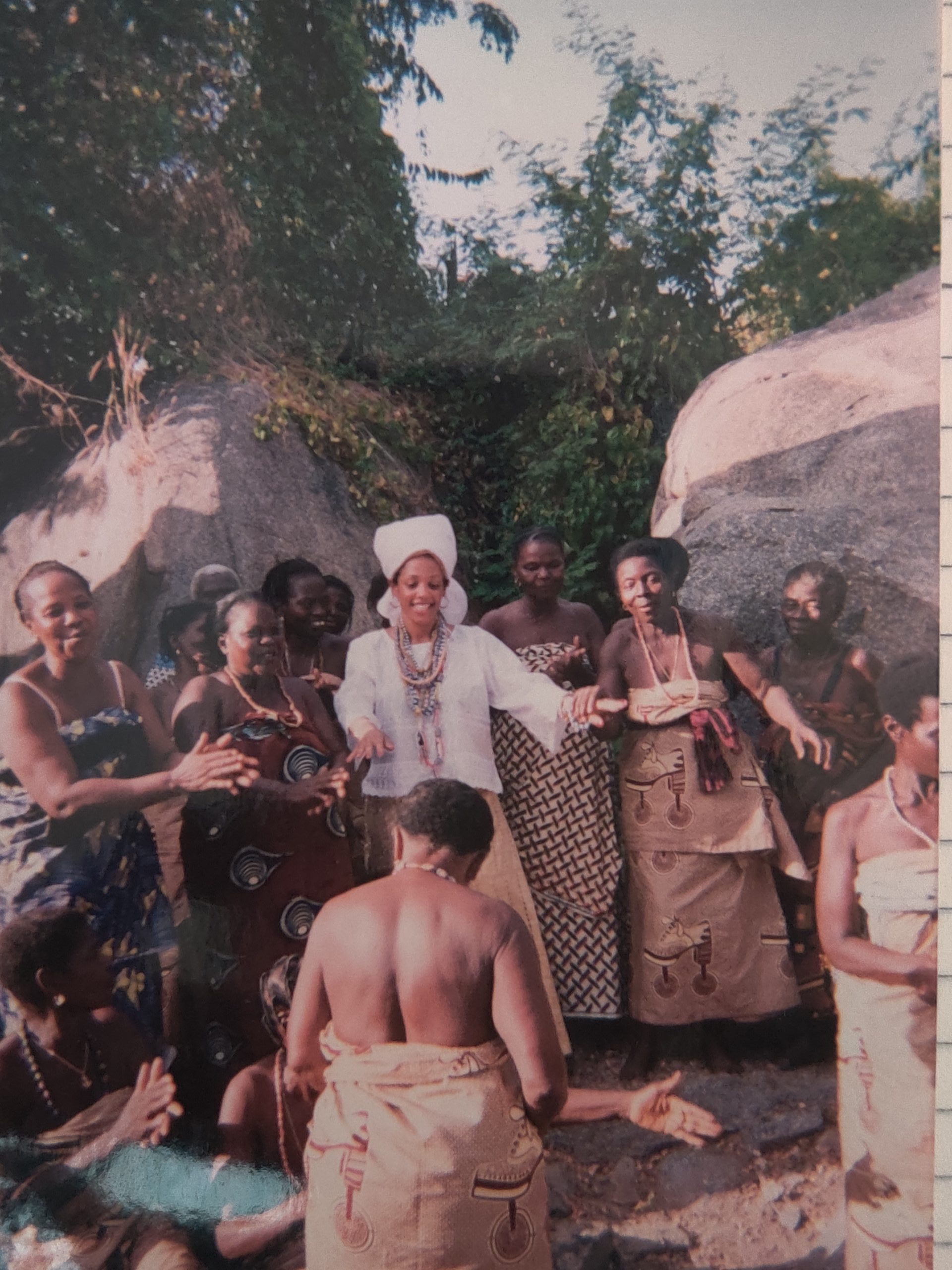
Image Credits
Iya Affo
Popular
-

Isaac Navias on How AI Search Is Reshaping Local Discovery and Building Businesses for Freedom
-

Phoenix’s Most Inspiring Stories
-

From Manuscript to Meaning: How Lauren Wise Is Helping Authors Turn Stories into Lasting Impact
-
Designing the Invisible: Jennifer Hassett on the Rise of Fully Staffed Luxury Households in Phoenix
