


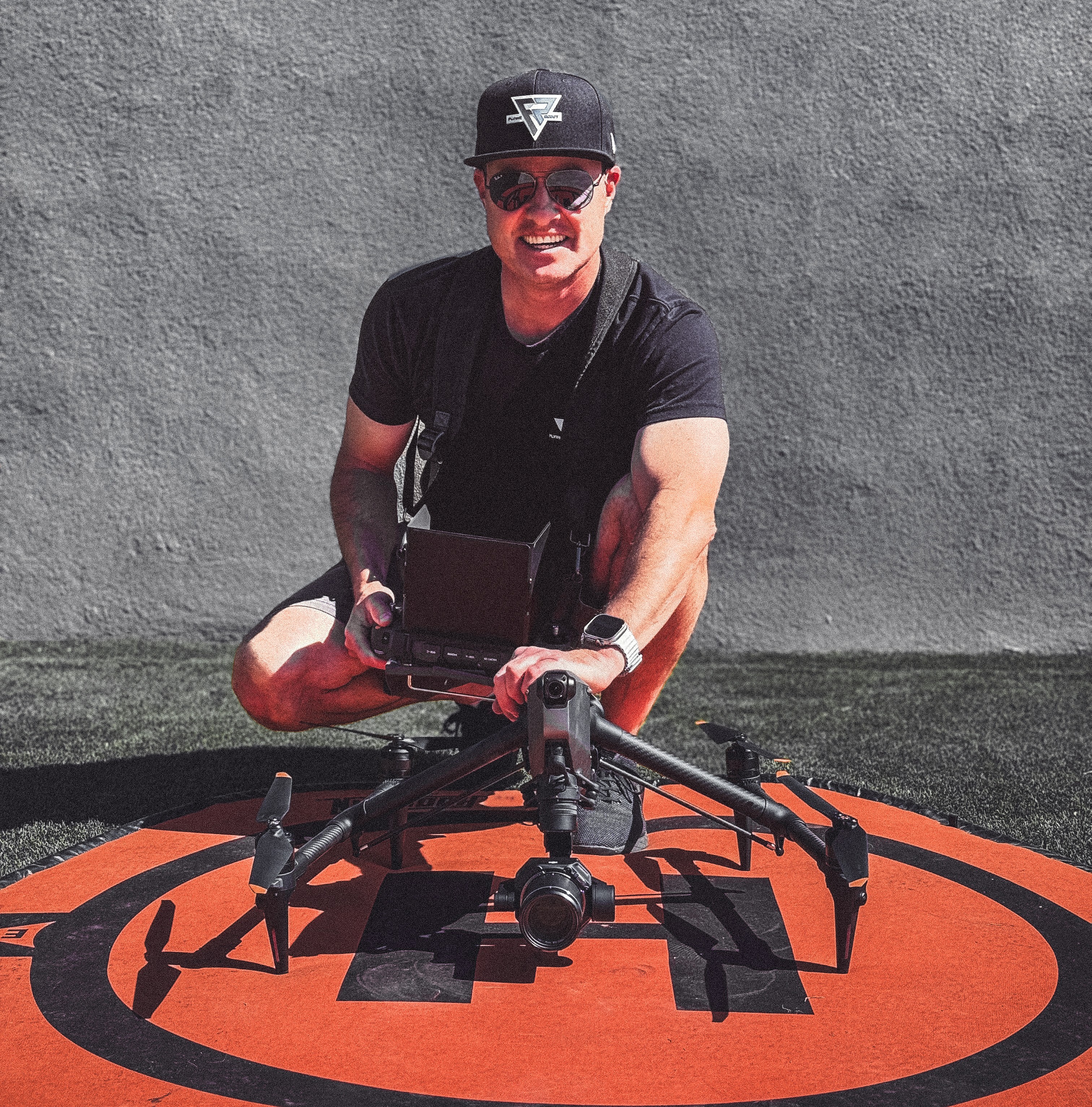
Saunders Staley shared their story and experiences with us recently and you can find our conversation below.
Saunders, we’re thrilled to have you with us today. Before we jump into your intro and the heart of the interview, let’s start with a bit of an ice breaker: What do the first 90 minutes of your day look like?
I wake up at 5 a.m. every day, savor my coffee alongside my two dogs, and soak in the quiet calm that comes with the early morning hours.
Can you briefly introduce yourself and share what makes you or your brand unique?
My name is Saunders Staley, and I’m a graduate of the Brooks Institute of Photography’s film program in Santa Barbara, California, where I specialized in underwater cinematography at the Channel Islands. After gaining experience through various agency jobs and freelance gigs, I made the leap to start my own business in Phoenix, Arizona — a place I now proudly call home.
For the past nine years, I’ve owned and operated Flying Robot, a drone aerial cinematography and photography company. We work with a wide range of clients both locally and across the country. Our portfolio includes major names like National Geographic, Discovery Channel, HBO, Spotify, Lexus, PING Golf, Caesars Entertainment Group, and high-profile events such as Super Bowl LVII.
I chose the name Flying Robot because it perfectly captured the spirit of what we do — it’s simple, memorable, and a bit playful. After years of persistence, I secured the trademark on the principal registry, and the name has stuck ever since.
At Flying Robot, no two days are the same. We shoot everything from large-scale productions and documentaries to car commercials and major events. The ever-changing nature of drone work keeps things exciting — I never quite know what I’ll be filming next, and that’s exactly what I love about it.
Thanks for sharing that. Would love to go back in time and hear about how your past might have impacted who you are today. What part of you has served its purpose and must now be released?
Working a 9-to-5 corporate job was a valuable learning experience, but I quickly realized that no matter how hard I worked, recognition and growth opportunities were limited. It often felt like a dead-end, with little room for advancement or reward.
Being self-employed and running your own business isn’t easy — far from it. But it offers something the corporate world rarely does: freedom. The freedom to control how hard you work, how far you go, and ultimately, how successful you become. There are no limits except the ones you set.
Yes, it can be tough not having the security of a regular paycheck every two weeks. But for me, it’s absolutely worth it. I’d rather work 80 hours a week for myself than 40 for someone else.
Was there ever a time you almost gave up?
Burnout hits a few times a year — no question. The long hours, the unpredictable ROI, and the constant push can be overwhelming. Working through COVID was one of the toughest periods; with production completely shut down, I had to pivot marketing to an entirely different industry to keep the business alive.
On top of that, managing multiple social media channels can be exhausting. It’s a necessary part of staying visible and relevant, but it adds another layer of pressure.
Still, no matter how tough it gets, there’s always light at the end of the tunnel. I keep pushing forward, knowing that persistence and adaptability are what make this journey worth it.
Alright, so if you are open to it, let’s explore some philosophical questions that touch on your values and worldview. What are the biggest lies your industry tells itself?
I often see ads claiming that if you get your drone license and buy a drone, you can start making six figures. Honestly, that couldn’t be further from the truth — and it makes me cringe. Yes, the top 1% of drone operators are earning well into six figures and beyond, but that success doesn’t come from simply owning a drone. It comes from having a solid foundation in business, marketing, and expertise in a specific field — whether that’s cinematography, photography, mapping, LiDAR, or another specialized area.
You also need startup capital to invest in gear, software, insurance, and marketing — not to mention time. Building a reputation, gaining trust in the industry, and getting to the point where you can consistently pay yourself a livable wage takes real work, patience, and persistence.
Just having a drone and a license isn’t enough. Without the complementary skills, you’re setting yourself up for disappointment. I come from a film background, which is why I naturally gravitated toward aerial cinematography and photography. But I often see people with no creative or technical experience try to break into the industry with just a drone and an Instagram account. Unfortunately, it doesn’t work that way.
Okay, so let’s keep going with one more question that means a lot to us: When do you feel most at peace?
Over the past year, I’ve really gotten into golf. When I’m out on the course, everything else fades away — I’m fully focused on each shot, one at a time. I love the game because it’s you versus yourself, much like running your own business. Your success depends entirely on the time, effort, and discipline you’re willing to put in. You get out what you put in — no shortcuts, no excuses.
Contact Info:
- Website: https://www.flyingrobot.io
- Instagram: https://www.instagram.com/fraerials/
- Linkedin: https://www.linkedin.com/company/18562608/admin/dashboard/
- Twitter: https://x.com/FRaerials
- Facebook: https://www.facebook.com/FRaerials#
- Youtube: https://www.youtube.com/channel/UC_zs8Nj0maA6DRMURvU4wGw







Diane Staley
September 18, 2025 at 5:18 pm
You have a fabulous company built on respect, trust, excellent skills, vision and hard work.