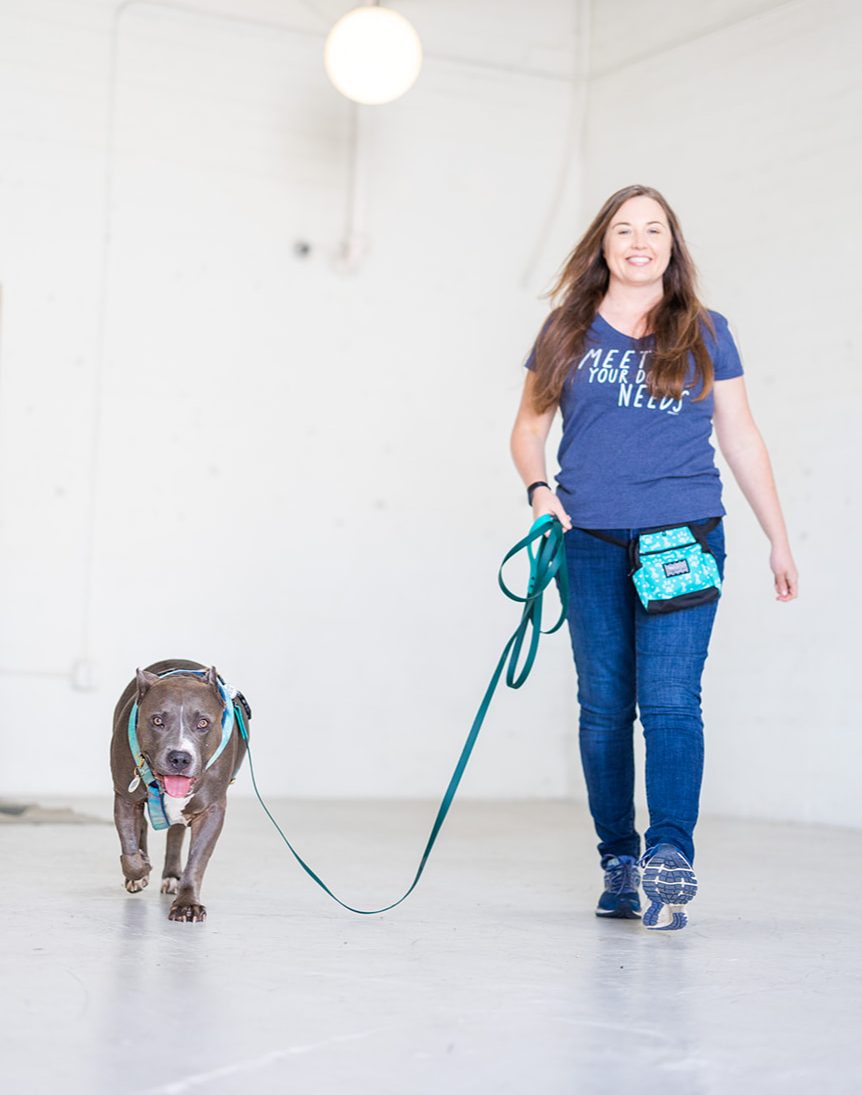
We recently had the chance to connect with Sara Miles and have shared our conversation below.
Good morning Sara, it’s such a great way to kick off the day – I think our readers will love hearing your stories, experiences and about how you think about life and work. Let’s jump right in? What do you think is misunderstood about your business?
One of the biggest misunderstandings is that dog training is just about teaching obedience cues or “fixing bad behavior.” In reality, what I do goes far deeper. Behavior is valuable communication that guides me to what we need to address, which is often an unmet need the dog has living in a world designed for humans. Every growl, bark, or lunge is a signal that something isn’t working for the dog. It’s not stubbornness or defiance. It’s stress, fear, or frustration.
To truly help a dog thrive, we need to look at the whole picture: their emotional well-being, their physical health, their environment, and the human-dog relationship at the heart of it all. Pain, chronic stress, or even an inconsistent routine can all contribute to behaviors that look like “misbehavior” on the surface.
My role isn’t just to teach skills. It’s to help dogs and their people feel safe, seen, and supported. We work together to rebuild trust, reduce fear, and create a plan that’s not only effective, but kind and sustainable.
Can you briefly introduce yourself and share what makes you or your brand unique?
I’m Sara Miles, a certified professional dog trainer and behavior specialist, and the founder of Smiles Dog Training. I work with thoughtful, caring pet parents whose dogs are struggling with complex behavior issues like fear, reactivity, or aggression, and I help them transform those daily struggles into more connected, successful lives together.
What makes my approach different is that I don’t just focus on teaching obedience. I focus on why the behavior is happening in the first place. That means looking at the whole dog: their welfare, physical health, environment, and the relationship they have with their humans. I use only evidence-based, progressive methods that prioritize welfare and are grounded in compassion, not control.
My mission is to help people feel more confident and supported in their role as a pet parent, and to help dogs feel safe and supported, not just “better behaved”. Suppressive techniques and methods are outdated and harmful. It should be about trust, consent, and collaboration.
Right now, I’m working on expanding my Wags & Wisdom membership, a supportive online space where pet parents can learn at their own pace, get expert guidance, and connect with others who get what it’s like to love a dog who struggles. It’s all about progress over perfection, and building a life where both human and dog can truly thrive.
Appreciate your sharing that. Let’s talk about your life, growing up and some of topics and learnings around that. What’s a moment that really shaped how you see the world?
When I was in elementary school, I visited our local county shelter, and it broke something open in me. I remember rows of dogs and cats in kennels, many of them scared or shut down. There were so many, and it felt like no one really saw them. Even as a kid, I noticed the lack of compassion in the system, and I knew animals deserved better.
That moment shaped my path. Years later, I worked at San Diego Humane Society, where I helped lead behavior support for animals in the shelter system. It felt like coming full circle, this time being part of a more humane, trauma-informed approach that centered animal welfare, not just warehousing pets like I’d seen when I was young.
Now, through Smiles Dog Training, I help pet parents and dogs build safer, more connected lives together because I still believe every animal deserves to be understood, not just managed.
Was there ever a time you almost gave up?
Yes. When I moved to Phoenix, I honestly wasn’t sure I could keep working with animals. After years in the sheltering world, the compassion fatigue had caught up with me. I was emotionally drained, and part of me wondered if I needed to walk away from this work entirely.
But animals have always been at the center of my life. Even when I felt burnt out, I couldn’t imagine not being in service to them somehow. After settling in and making a few key connections here in Phoenix, I realized something important: I didn’t have to go back to sheltering. I could support animals by helping them stay in their homes where they are loved.
That shift gave me a new purpose. Now, through Smiles Dog Training, I get to work directly with pet parents who are trying to do right by their dogs, even when it’s hard. I help families prevent the kinds of heartbreaking outcomes I saw in shelters by giving them tools, support, and hope. That’s what keeps me going.
Sure, so let’s go deeper into your values and how you think. What are the biggest lies your industry tells itself?
One of the biggest lies is that dogs need to be dominated or “put in their place.” That outdated mindset still shows up in training circles today, and it leads to aversive methods that do more harm than good.
Another huge lie? That quick fixes are enough. So many programs promise instant results, but what they’re really doing is suppressing behavior, not addressing the root cause. Sure, the dog might stop barking or lunging (for now), but often, it’s because they’re scared, shut down, or avoiding punishment. It looks like progress, but underneath, the emotional distress is still there. And it will come out another way eventually.
The truth is, real behavior change takes time and effort. It’s not flashy. But it’s ethical, lasting, and rooted in trust and safety. That doesn’t mean we can’t improve things from the start. My clients get relief through effective management techniques while we build skills.
And maybe the most harmful lie of all? That if a dog is struggling, it’s the human’s fault, or worse, the dog’s. I don’t believe that. Most pet parents I work with are showing up with so much love and effort. They just need support that’s rooted in science, not shame.
Okay, so let’s keep going with one more question that means a lot to us: What is the story you hope people tell about you when you’re gone?
I hope people say I made the world a kinder place for dogs and for the people who love them.
That I helped shift the way we think about animal behavior, from something to “fix” to something to understand. That I gave people the support they needed to meet their dogs with curiosity instead of control. That I helped pet parents feel less ashamed, less alone, and more empowered to support their dogs with compassion and clarity.
Contact Info:
- Website: https://smilesdogtraining.net/
- Instagram: https://www.instagram.com/smilesdogtraining/
- Facebook: https://www.facebook.com/smilesdogtraining/
- Youtube: https://www.youtube.com/@smilesdogtrainingAZ


Image Credits
Pup + Me Photo