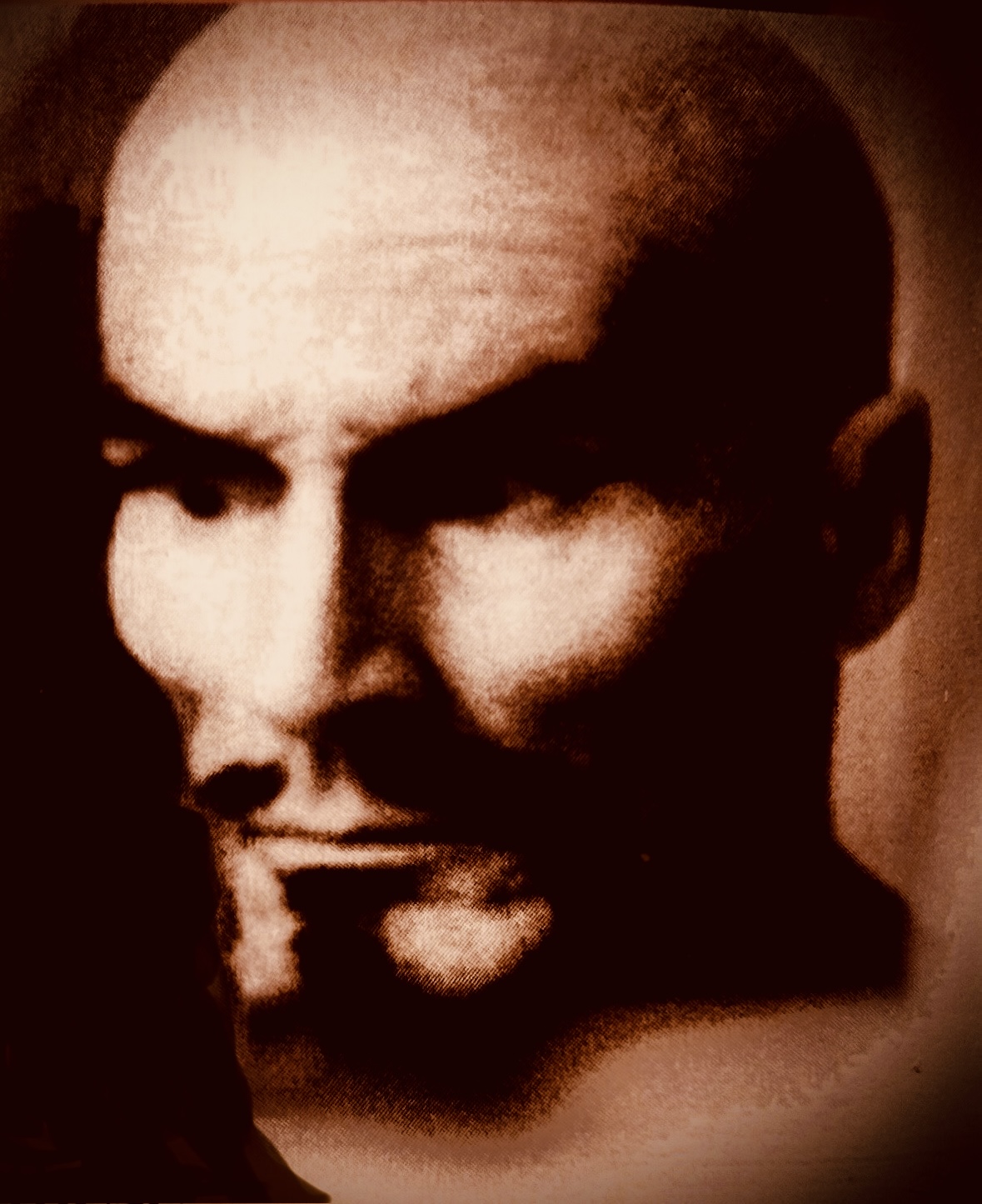
We recently had the chance to connect with James Mueller and have shared our conversation below.
James, a huge thanks to you for investing the time to share your wisdom with those who are seeking it. We think it’s so important for us to share stories with our neighbors, friends and community because knowledge multiples when we share with each other. Let’s jump in: Have you stood up for someone when it cost you something?
Yes, my whole life is dedicated to defending the defensiveness: from beating up the school bully in 5th grade, to championing the Native American long before it was in vogue, refusing to stand up at a Homestead Air Force Base, Homestead, Florida Officer’s Club event where instead of opening up with the National Anthem they opened it up with Dixie (costing me all future clientele at the beginning of my art career), working with the mentally handicapped for 22 years at minimum wage, spending 40 years on a trilogy with hundreds of paintings and drawings never knowing if it would ever get published, all with the intention of giving all my profits to the starving children of the world as stated in the back cover, and now living like a monk at a small mission to the Apaches. Not to mention, writing articles that could cost me all SORTS of lawsuits from the very people I’ve been fighting all my life. So, stood up for some ONE – SINGULAR? How about our fellow man – plural? Whatever the cost?
Can you briefly introduce yourself and share what makes you or your brand unique?
100 years from now I want my novel to be regarded as the greatest novel of the 21st Century. In the meantime, however, I’ll settle for that cult-like following that generated the kind of response that classics like The Catcher in the Rye, Portnoy’s Complaint, and Catch-22 generated – the kind of novel that not only spoke to a whole generation – but the kind of novel that changed a whole generation – and since I’m already getting responses from readers of every persuasion from every major continent* listing it on Facebook, Instagram, and elsewhere as one of their all-time favorite novels along with the greatest novels of all-time, including the greatest novel of the 20th Century, ULYSSES! the real question now is – where do I go from here? And that’s where my promoter, Grayce McCormick, par excellence, comes in. Because it’s obvious the one thing I lack (besides modesty) is a good marketer. In the meantime, you can check it out on Amazon, Facebook, Instagram, and YouTube.
* – No buyers from Antarctica yet.
Okay, so here’s a deep one: Who were you before the world told you who you had to be?
Once upon a time a vice-president was asked, what do you do? His reply: nothing, but I do it well.
There was a time in my life, like Solomon, I wanted to experience everything “til I might see what was that good for the sons of men, which they should do under the heaven all the days of their life.” – including doing nothing but to indulge my every whim. There are words for such people. The more euphemistic ones were sybarite, dilettante, or “gentleman” as they were called in aristocratic circles in the Eighteenth and early Nineteenth Century. Fortunately, that was short lived just out of sheer boredom since my goal was just the opposite. I wanted to live a life more intense than anyone I ever knew. But like Lord Jim in Joseph Conrad’s novel, reality can get in the way if you don’t have a Walter Mitty imagination to fill in the boring parts and that’s where I thrived!
Drawings, paintings, stories, whole novels and movies I could see in the most dreary environment, like first through twelfth grade, then college, and eventually the army. Where ironically in the summer of ’65 while waiting to be shipped over seas to the DMZ in the northern most camp in South Korea, I read Catcher in the Rye and my life changed. No more the campus dilettante who could AND WOULD write comedy, plays, skits, and create political cartoons for mere laughs to fill in the boredom of the classes I rarely attended except for the finals to get a good enough grade to get the credit. No, over night I knew my life’s calling: TO WRITE THE GREAT AMERICAN NOVEL and from that point on everything I would do would have to further that cause. I succumbed to the world of literature and read all the world’s greatest novels, plays, poetry – I fought in the Napoleonic Wars, sailed the Seven Seas, explored the Amazon – nothing was beyond my reach. If I didn’t read it, I’d write it, if I didn’t see it, I’d paint it. My mission was clear: write the novel you always wanted to read, paint the paintings you wanted to see, and then put’m all together and MY LIFE WAS LITERALLY FOREVER CHANGED. From an idle dilettante to the most driven person I ever knew or read! How long did James Joyce take to write Ulysses? Or Proust his Remembrance of Things Past? Or Dante his Divine Comedy? Three authors – three works? Answer? Seven to thirteen years. Joyce seven. Proust and Dante thirteen. Me? You can more than triple that. Forty years to write a trilogy that encapsulated all their themes and far more, including hundreds of paintings and thousands of drawings that not ONLY ALL had to tie together – like one long Homeric poem – but they ALL had to accomplish my goal in the first place! TO LIVE A LIFE (and now write about it) MORE INTENSE THAN ANYONE I EVER KNEW!
Question is would it work? And was it worth it? The former is yes if you’re just asking me. But if you’re asking more than just my cult followers, the answer is yet to be determined. But to answer the latter: was it worth it?
Yes.
But from God’s perspective? I’ll have to wait and see.
What did suffering teach you that success never could?
EVERYTHING! Someone once said suffering isn’t the problem. Sin is the problem. Suffering is the solution. And what was the first sin? Pride. Which doesn’t come from a lack of success. And since my goal was to write the Great American Novel, it, like any great story has to have conflict. Cervantes, who wrote Don Quixote, was captured by Barbary pirates, sold into slavery in Algiers and remained in prison for five years, was later imprisoned at least twice for financial difficulties and yet inspite of all that he wrote what most literary critics consider the greatest novel of all time.
Alright, so if you are open to it, let’s explore some philosophical questions that touch on your values and worldview. What’s a belief or project you’re committed to, no matter how long it takes?
Art and literature.
Art defines a people. Has any culture developed without its being defined by its art? Not only our conception of them – but their perception of themselves? Could the Greeks and the Romans have achieved what they did without the very art that defined them? Or could Napoleon have been what he was without his David, Ingres, Meissonier, and so many others who almost made him a god? And what about Virgil’s apotheosis of Julius Caesar? Or conversely, Goya’s flip side of the Napoleonic Wars? Or Picasso’s Guernica? The cartoons of Thomas Nast? Harriet Beecher Stowe, who probably wrote one of the most influential novels ever written? Or Dickens’s influence on child labor laws and the whole legal system? Who better reached the people whether they originated the ideas or merely parroted them? – whatever the ideology – whether on religion, philosophy, or politics – whatever the point of view – art seems to have the final say. What would existentialism have been without Sartre’s art to back it up? Or the novels of Rand versus Steinbeck? Les Miserables? Ellison? Wright? Plays by Ibsen, Brecht, Buchner, Gorki, O’Casey, Osborne, Kushner, Friel, Behan, Hansberry, Fugard, Hellman, Hauptmann, Wasserstein and songs? – too many to even mention – so let me sum it up with this: Time magazine’s choice for the best song of the 20th century: “Strange Fruit” – Billie Holiday! *
Those are just some of the ones that had a more overt, immediate effect. What about the ones who had such a profound effect it’d merely trivialize their influence to even go there? – Shakespeare, Dante, Homer, Chaucer, Joyce, Sophocles, Aeschylus, Milton, Shikibu, Eliot (both), Cervantes, Proust, Yeats, Pushkin, Euripides, Wordsworth, Keats, Byron, Ovid, Blake, Mozart, Bach, Beethoven, Handel, Wagner, Da Vinci, Michelangelo, Rembrandt, etc., etc., etc..
Yes – ideas!
– Can only have an effect when the idea comes alive! Schindler’s List only used one color – red! – once – in the entire movie: the little girl with the red coat who eventually gets lost in the sea of doomed people. But that’s all it took to see the reality beyond a mere statistic. Because fiction puts a face on fact. I dare anybody to read Tess of the d’urbervilles (1891) and not only see it more relevant than ever today (in light of the Harvey Weinsteins and all the other revelations that have come out in the last few years about the victimization of women that have been ignored for so long) – But – to be so moved as to be convinced they’re ALL guilty now – ferret them all out and hang them ALL out to dry! And that’s only for starters! – Aside from seeing the injustice done to Tess, a mere fictional character, Hardy makes us question not only the unfairness of life itself – but the very cosmos! And that’s the power of art! Philosophers may ignite the spark – but artists lead the charge.
How many boys went to war because of a movie they saw – movies of the Russian Revolution or Hitler’s propaganda movies – Hollywood goes to war? Or a song they heard? (Or during Vietnam, how many didn’t go to war because of a song they heard? – “Blowing in the Wind” or “Where Have All the Flowers Gone?” – or a novel they read – Johnny Got His Gun? – or the movie by the same name?).
Art defines a people as much as a people define its art! – both are inextricably linked and are as much a part of our lives as “breathing out and breathing in” (a line from a song, from a movie, based on a play, sung by the same person who played in two movies, based on two plays, all by the same playwright. Name the plays, the playwright and his method** to get his point across, and you begin to understand what this is all about).
* – Written by Abel Meeropol (published under his pseudonym Lewis Allen in 1937 and performed by Billie Holiday In 1939.
Southern trees bear a Strange Fruit
Blood on the leaves and blood at the root
Black body swinging in the southern breeze
Strange Fruit hanging from the poplar trees
Pastoral scene of the gallant South
The bulging eyes and the twisted mouth
Scent of magnolias, sweet and fresh
Then the sudden smell of burning flesh
Here is the fruit for the crows to pluck
For the rain to gather, for the wind to suck
For the sun to rot, for the trees to drop
Here is a strange and bitter crop
** – Rex Harrison in My Fair Lady (based on the play Pygmalion) and Major Barbara, both by George Bernard Shaw using the dialectical method.
Okay, we’ve made it essentially to the end. One last question before you go. Are you doing what you were born to do—or what you were told to do?
Silly question! At least the latter part of that question. Question is was I born to do it?
Of course!
How do I know?
Let’s go back to where did it all start? Me being an artist, a writer, and an advocate, living with the Apache Indians. Let’s go back to your question what did suffering teach you that success didn’t?
First of all, thinking I could become “normal” by majoring in psychology. You see almost all through school – right up to when I graduated from college – my notebooks betrayed any attempt at serious scholarship. They were almost entirely drawings. Even all those advanced psychology courses you needed to graduate (with a degree in psychology) were drawings. First page I’d write down Psyc.. I couldn’t even be bothered to write down the entire word – it’d just be Psyc.. or Abnor. Psyc. or Pers. Psyc. and then maybe a course number. After that maybe a few notes. And then less than halfway down the page it’d start – like the hands of Orlac – some obsessive-compulsive behavior that betrayed my real intent OR A NERVOUS TIC THAT HAD TO BE SATIATED! Because from that point on it was all drawings! – which of course I couldn’t let anybody see. Because it was bad enough I wasn’t taking notes and thereby was totally remiss as a scholar, let alone a college student and be found out and sent back to grade school (since I somehow wondered how I got beyond it in the first place considering my total failure at concentrating on anything beyond drawings), but then to be drawings Indians besides. I might as well have been drawing Spider-Man or Superman or even Straight Arrow for all the connection it had to deal with reality (which is what psych was all about, wasn’t it? – at least I thought so – that’s why I took it). But Indians! – not even an attempt at reality there. So no, no one ever saw my drawings, in fact most of my classmates didn’t even know I was an artist until years later when I became “famous” and then the school – yes the very school that couldn’t wait to get rid of me years earlier – couldn’t wait to give me an honorary doctorate years later! And yet ironically for the very same “behavior” they wanted me to grow out of years earlier. And yet ironically the very behavior that got me all the attention years later was the very behavior I used to hide years earlier! Except now I was getting paid for the very things I was supposed to grow out of – THE VERY THINGS THAT WOULD RUIN MY LIFE – THE VERY THINGS THAT WOULD DOOM ME TO FINANCIAL FAILURE! And yet if I grew up, I wouldn’t have made the money nor received the praise I now got – but by being what they told me not to be, I ended up becoming what they wanted me to be? Meanwhile the very fantasy I NOW wanted to grow out of, they now want? while I don’t? Thus the final irony – I wanted to do something significant! – LIKE WRITE THE GREAT AMERICAN NOVEL – lambasting the very failure and folly we were both guilty of! – all the while now using those paintings that I considered insignificant – to now do what I now considered the most significant – like what we both wanted in the first place!
Bottom line: write the novel you always wanted to read and paint the paintings you always wanted to see. And then to REALLY go out on a limb, combine the two. Good artists stick to their genre; great artists transform it.
Contact Info:
- Website: https://muellerartandliterature.com/
- Instagram: https://www.instagram.com/confessionsofstaugustine/
- Facebook: https://www.facebook.com/IconoclastPublishingLLC
- Youtube: https://www.youtube.com/@confessionsofst.augustine4094


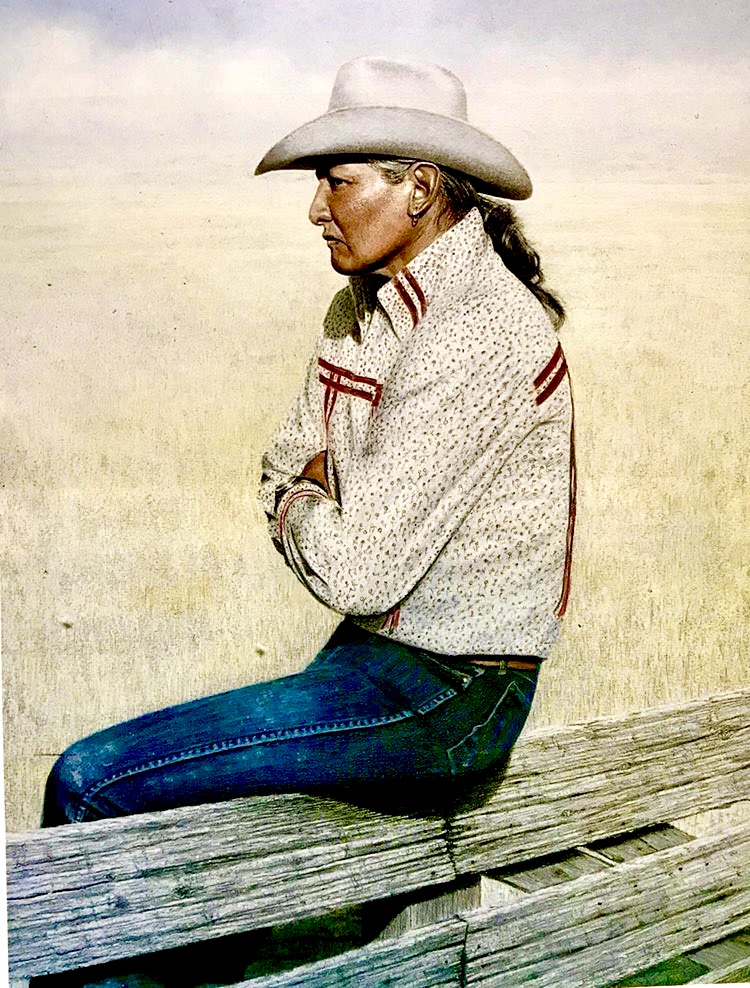
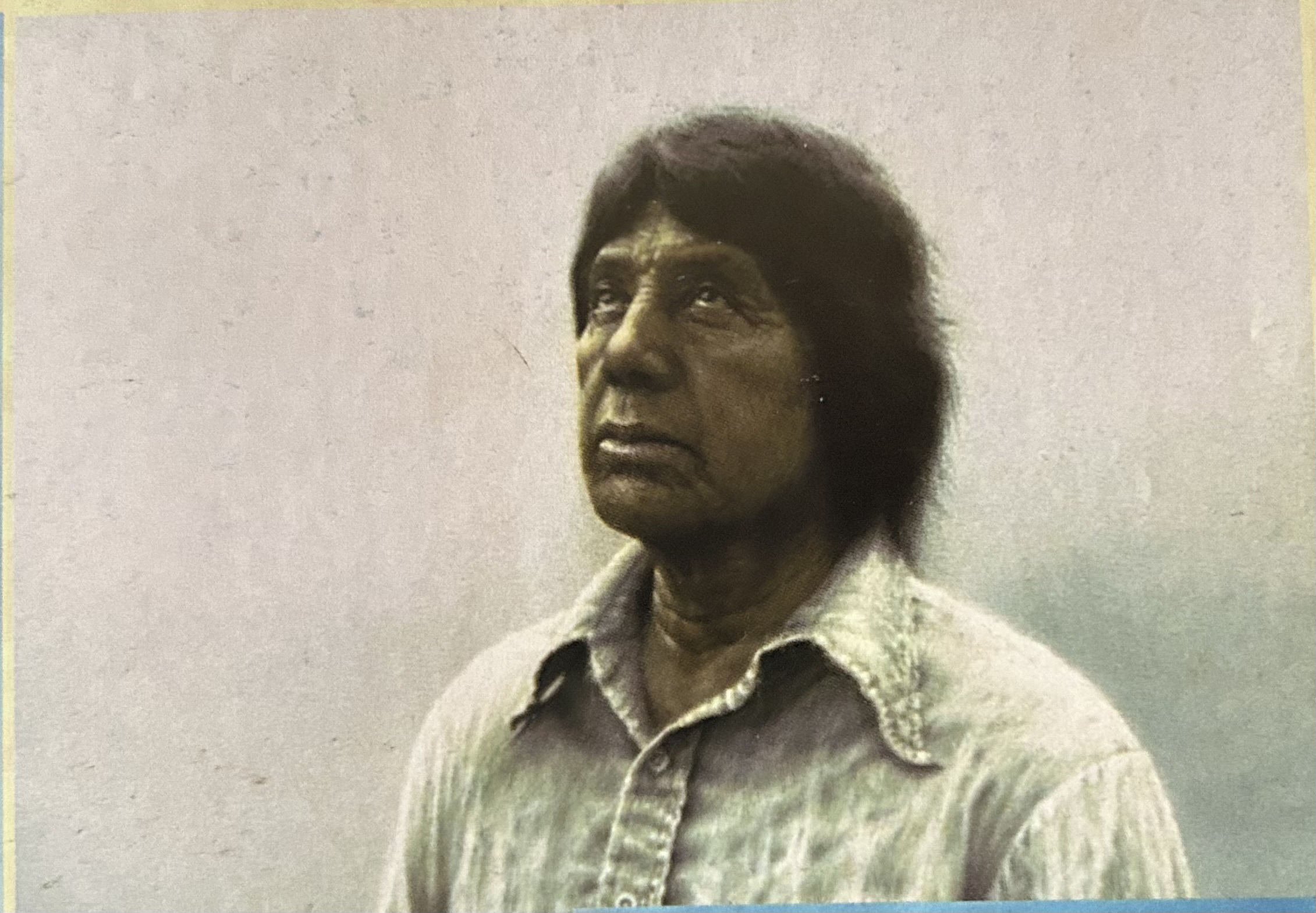
Image Credits
Credit: James F. Mueller