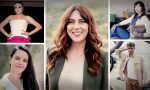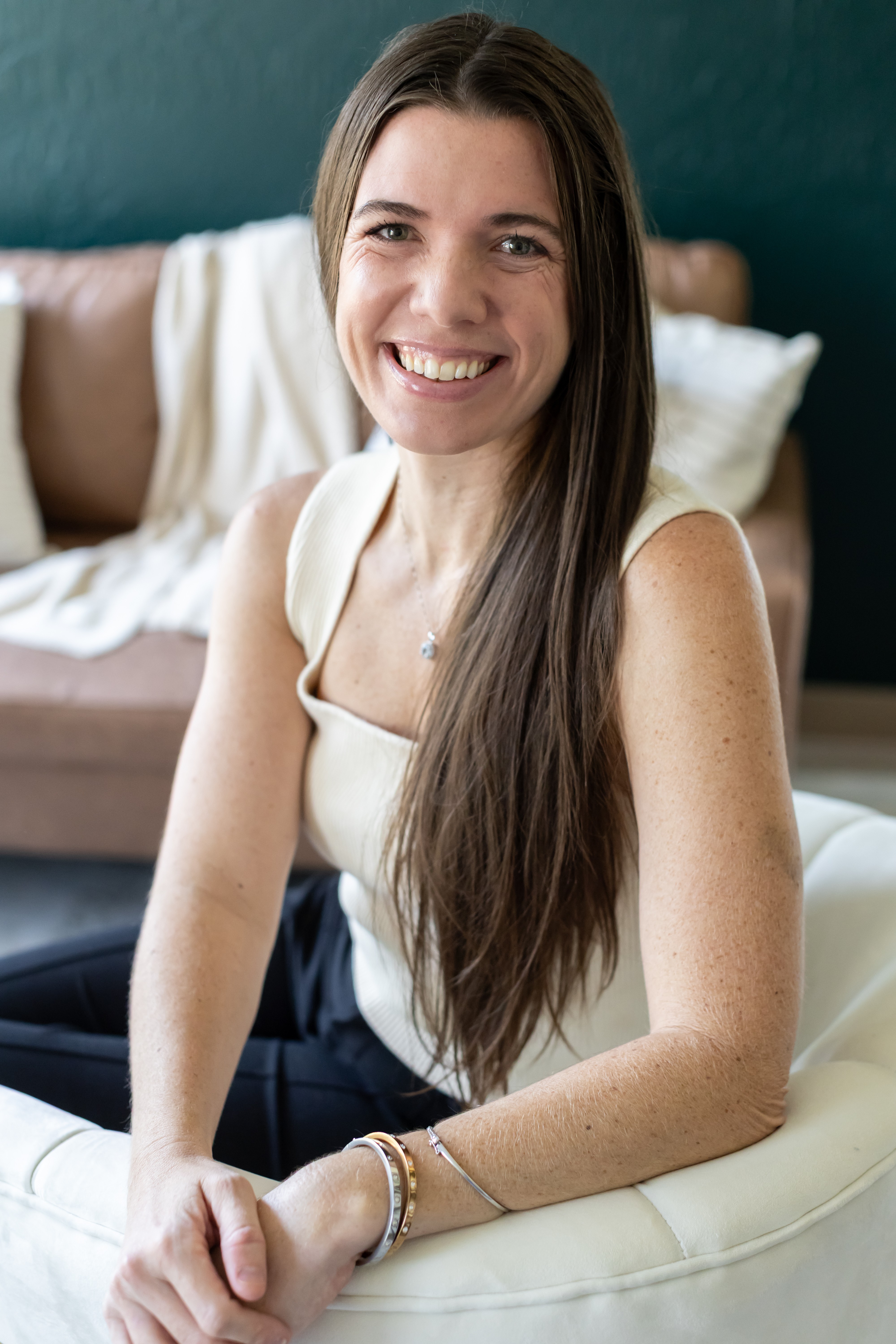
Shelley Treadaway shared their story and experiences with us recently and you can find our conversation below.
Good morning Shelley, it’s such a great way to kick off the day – I think our readers will love hearing your stories, experiences and about how you think about life and work. Let’s jump right in? What do the first 90 minutes of your day look like?
Always coffee. If I am up early enough I enjoy my coffee on the couch before the house gets up. Sometimes I read, and other times I check my personal and work email. Eventually I get my kids up and chaos ensues. Breakfast, getting dressed, feeding dogs, packing lunches, looking over homework and eventually getting myself ready for work!
Can you briefly introduce yourself and share what makes you or your brand unique?
My name is Shelley, I am a Licensed Associate Marriage and Family Therapist at Roots Relationship Therapy in the Biltmore area. We are a trauma‑informed, attachment‑based counseling practice and see individuals, couples, families, or any variation of the three, both in‑person and virtually.
The practice is deeply rooted in family systems theory, all of which our therapists are trained in! Our therapists explore how relational patterns, communication styles, and generational dynamics influence emotional well‑being—shifting focus from isolated symptoms to deeper relational roots. My colleagues Erin and Lolly are the most supportive and talented human beings on the planet, and I consider myself so incredibly lucky to work alongside their brilliance Monday-Friday!
Future-oriented, the three of us have dreams, goals, and aspirations to change and adjust the world of mental and behavioral health, both for clinicians and clients. We believe a supportive, transparent system can not only nurture clinicians who work in a vulnerable, heavy field, but also encourage associates, fully licensed practitioners and interns to feel empowered to learn, grow, and eventually forge their own path with confidence, resources, and support.
Thanks for sharing that. Would love to go back in time and hear about how your past might have impacted who you are today. Who taught you the most about work?
My parents are equally hard workers historically, and their unique perspectives and work ethic are profoundly important to me. My dad worked in a corporate environment, requiring a lot of time, hard work, and travel that resulted in a beautiful life in retirement. My mom was a stay at home parent and a teacher, showing me what balance looks like, and pursuing her own career goals later in life, much like myself!
I asked my dad once what made him so successful. He said luck and opportunity. He described some of the greatest moments in his career just fell into his lap, driven by luck and happenstance. Other opportunities were earned through dedication and compassionate leadership saturated in humility.
When did you stop hiding your pain and start using it as power?
My internal shift began quietly—long before I could name it. It wasn’t dramatic, and it didn’t happen all at once. It began in the deeply painful moments I experienced before having my son. At the time, I didn’t see it (my pain) as vulnerability; I only knew I was hurting. But over time, that pain invited me—maybe even forced me—to be honest with myself, to ask for help, and to share my truth in places and with people who felt safe.
Becoming a parent expanded that vulnerability in ways I couldn’t have anticipated. Suddenly, I was living in a constant state of uncertainty, risk, exhaustion and emotional exposure. And yet, that’s where I began to understand what Brené Brown means when she says vulnerability is not weakness, but the most accurate measure of courage. I had to show up fully, even without guarantees. That required strength I didn’t know I had.
As a therapist, I now witness daily the transformative power of vulnerability. There is nothing more powerful than individuals and couples who allow themselves to be seen—imperfect, afraid, hopeful. We work hard in the therapy room to create safety, foster trust, and offer tools that help people meet their pain with self-compassion rather than shame. When we stop hiding our wounds and begin understanding them, we don’t erase our pain—we relate to it differently. We make space for healing, connection, and growth. That’s power.
So a lot of these questions go deep, but if you are open to it, we’ve got a few more questions that we’d love to get your take on. Is the public version of you the real you?
No—and honestly, you should be grateful it’s not. 😄
All jokes aside, the public version of me absolutely reflects who I am—my personality, my values, my humor, and the way I show up in conversation and connection. That part is very real. I don’t put on a mask or pretend to be someone else just to “perform” in public or at work.
That said… the realest version of me is also the one at home in an oversized, breakfast-stained T-shirt, possibly in pajama pants, rocking a lopsided bun that defies gravity and logic. Okay fine, maybe that version sneaks into Zoom calls once in a while too. But truly, the core is the same—I just accessorize a little differently depending on the setting.
So yes, the public me is the real me—but with less pancake batter on my sleeve.
Before we go, we’d love to hear your thoughts on some longer-run, legacy type questions. If immortality were real, what would you build?
So, so many things, and anyone who knows me will not be surprised by my long-winded answer… so buckle up!
On a small scale, I’d start with a massive, sustainable wellness center—an accessible space for mental health care, physical health, emotional wellbeing, rest, play, nourishment, and connection to nature. A place where therapy, movement, food, and joy aren’t luxuries, but birthrights.
On a larger scale? I’d build a matriarchal society of human beings, not just human doings. A culture rooted in care—for each other, for our children, for the planet. One where people attune to their kids, learn how to fight and repair, and where community and accountability thrive.
People would read more than they watch TV. They’d climb trees, get muddy, and laugh more. Our schools would nurture self-esteem, curiosity, and playful learning on each child’s terms—not standardized testing or rigid benchmarks.
I’d create a fair food system—free of chemicals, rich in nourishment, where farmers are paid well and consumers are fed with dignity. I’d build a culture of inclusiveness, transparency, and repair—where we face hard truths, take responsibility, and commit to healing from generational and cultural harm.
We’d care for our elders like living libraries, and protect our children like they’re the most precious thing on Earth—because they are.
And when I wasn’t building that? I’d write book after book, and still read more than I write.
Need I go on? Because I absolutely could.
Contact Info:


Image Credits
Jen Wilbur Photos