Today we’d like to introduce you to Christopher Allen
Hi Christopher, thanks for joining us today. We’d love for you to start by introducing yourself.
I was born in Antioch, California in 1971, and I grew up in the Bay Area. My folks put all the kids through Catholic school from K-8th grade, and I was accepted at De La Salle High school, a very prestigious Catholic high school in Northern California. I went from there to the University of Idaho, but dropped out after about two and a half years because I felt that it was a waste of my folks’ money. I’d started playing the guitar at age 5 and taught myself how to play, which was really difficult back then. There weren’t online lessons and all the digital learning tools that the kids have today, but by high school I was starting to play in bands and sing. I obtained a reseller’s permit and started a small guitar repair business out of my parents’ garage that serviced about six local music stores in the area. This was also around the time I had started learning how to DJ. After sharpening my skills and learning a lot about music in college, I found myself in Tempe, AZ. It was 1992, and we actually had a sound here in Arizona. The Gin Blossoms, Dead Hot Workshop, The Refreshments, and many other bands defined the Arizona sound.
By then, I wasn’t just playing rock… I had learned about Jazz and Blues music and had even started to play country. Because Tempe had a great music scene at the time, I started working as a professional musician. I taught lessons, played guitar and bass with many bands and at many different spots here in the valley. The live music scene isn’t what it was back then, unfortunately. I went back home in1995 for a little while. I wanted to go to trade school and started studying to be an aircraft mechanic at the Spartan Institute of Aeronautics in Tulsa, Oklahoma. While my grades and my work in the shop were excellent, my time management skills were not. They had a pretty rigid class schedule, there was no makeup time whatsoever and if you miss any time you’re kind of screwed. Day class schedule only and class was at 7:00 A.M. I missed a lot of time because I had a night job working security at a strip club, and we generally got out of work around 3:00 A.M. Many mornings I would be late to class. Eventually, I timed out. The FAA says you need a certain number of hours in class, and you have to complete training in a certain amount of time. I had missed enough class hours that it became mathematically impossible to complete my training and I would have to start back in the beginning and retake everything that I already learned (and pay double the tuition) but I wasn’t too worried. By then I was making double what a starting aircraft mechanic was making at American Airlines. My club owner had come to see my band play a Blues show, and I broke a guitar string on the first song. I did what I normally do and chatted with the crowd and bar staff on the mic while changing the strings nonchalantly, telling jokes, etc. The club owner noticed that when the music stopped, nobody left because I kept everyone entertained on the microphone. The next night, when I went to work, he handed me a microphone and asked me, “How would you like to be the DJ tonight?” It seemed better than hanging out in the snow outside, watching the parking lot. That night changed my life.
I came home with way more money than I ever did make playing guitar. In cash, no less. For that one little Club in Tulsa, I wound up working all around that market and moved back home to the San Francisco area and I had a great run in the city. I worked in a variety of adult nightclubs. But it’s a tough business, and it’s not very forgiving. After a while, San Francisco and I got tired of each other. I had a chance to move to Phoenix and reconnect with somebody from high school. I thought, what the heck ? That was in 2006, and I worked steadily in every major gentlemen’s club here in the valley until I fell.
May 20th 2021 I fell asleep sitting on the edge of my bed. Eventually, my body tipped forward and the first thing that struck the ground was my forehead. That broke my C4 vertebrae, and then my body falling onto my right arm broke my right wrist. It was awful. I laid on the floor, totally paralyzed, and called to my wife for help. When the fire department got here and picked me up off the ground, my arms and legs started working again, but nothing felt right. I was admitted to John C Lincoln and spent one hundred nights in a hospital or rehab facility of some sort or another. The doctors at JCL told my wife that I’d never walk again. I am glad she never told me.
There were complications along the way. Something was wrong with my hemoglobin levels and I needed two blood transfusions. I developed a secondary infection in my arm when a nursing assistant forgot a critical step in changing the dressing where my staples from the wrist surgery. The infection went septic and it became a life-threatening situation. I was now on IV antibiotics for six weeks. I came home wearing a diaper and unable to stand or transfer myself in and out of my wheelchair. We had a hospital bed put in my living room. It would be another 11 months before I would walk again.
I was diagnosed with Central cord syndrome, which is fancy talk for when your spinal cord was injured, but not totally broken. Pretty much every neural pathway from my neck down is altered in some form, so my sensations don’t feel like everybody else’s. I had to make new neural pathways, which the body can do with a lot of time. One neurologist told me it was maybe 1mm per day. It’s like if the 202 is having construction, and you have to take a detour. You still get to work, but you’re late. Even today, that makes things like balance a little harder for me than most folks.
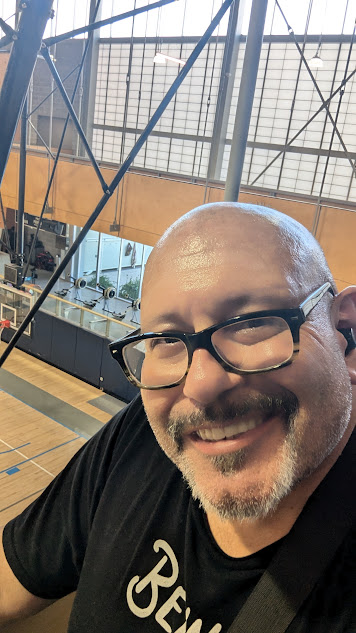
In June 2022 I was able to get an anterior discectomy at Barrow Neurological Institute here in Phoenix, and that gave me back my life. I am now fused from C3 to C7. The next morning after surgery, I had my grip strength back. Prior to this, I basically had the arm strength of a little kid. My wife had to open jars for me, even ones that were already opened. Along with the surgery came a one-year membership at ability360 here in Phoenix. It’s an amazing place where people of all abilities can exercise together. Many of the machines actually are wheelchair accessible, so you can roll into it after you move the seat to the side and, say, do lat pull downs or curls. There’s a lap pool, therapy pool and a hot tub. They have a track indoors that’s a tenth of a mile, and I’ve gone from barely being able to walk 100 feet to now being able to walk two laps on that track all by myself without anybody to follow me with a wheelchair in case I get tired I’m now able to finally walk with just a cane or even without a cane for short distances and I hope to get even better as time goes on.
I had to deal with a lot of different troubles going through this process. There’s been so much physical therapy, another in-patient stay for lymphedema, and dealing with a big weight gain. I’m currently in the Bariatric Treatment program at Honor health in Scottsdale. I’ve lost 94 lbs in the last 11 months. Getting back to work is top of the list, as I’ve been on Social Security Disability for three plus years now, and am actively seeking work in clubs as well as voice acting.
I have my wife to thank for all of this. Sarah never wanted to be a nurse, but when I came home, that’s what she was. She’s the one who has had a job, and worked 12-hour overnight shifts, then came home to take care of me. She still goes to doctor’s appointments with me when I need her there. I am lucky to have her in my life as I embark on my search for a new career.
Would you say it’s been a smooth road, and if not what are some of the biggest challenges you’ve faced along the way?
There were lots of obstacles and challenges to overcome, and probably one of the tough ones at the beginning especially was Social Security. I did my application myself and it took a while. I’m not going to lie, probably about a couple of weeks to fill it out. Now, typing on a keyboard was very difficult when I first returned home, due to my right hand being messed up, and I was on a lot of meds. There were follow-up questionnaires that were very in-depth about my case, and they ask you almost the same question 5 different times, and it is phrased a little different each time.
But I got it approved on the first try, which is not the usual result. The reason for that is most people don’t read the question carefully when filling out the application. You have to really read the questions that they’re asking, think about it for a second, and then type it exactly the manner they’re asking. Did you know that you aren’t even eligible to receive disability for the first five months after you get hurt? What’s that, you say? Not even eligible? Yes, that’s the truth. However, they pay you back for the time between five months and whenever they approve you. So I applied in November and I didn’t get my approval until June and around August sometime I got a check for all the back money that they owed me. Something like eight grand or thereabouts.
When you go through an injury like this you have to become your own advocate and that means you get educated and get tough with Social Security, the insurance company, doctors and hospitals – even nursing staff. I had to learn the hard way. I didn’t speak up when a nurse’s assistant did something odd while changing the bandage on my wrist where the staples were holding my skin together after my first surgery. She forgot an antibacterial covering that should lie across the top of the staples, and I got a staph infection in my wrist that went septic. That means the infection has now entered my bloodstream, which is life-threatening. I had an emergency revision surgery and the doctor found that the infection had eaten up a couple of the small bones in my wrist. That left me permanently disfigured, and I lost some functionality in the right hand. Now, when I’m in-patient at a medical facility, I have no problem asking for the charge nurse and getting something handled if need be. When I didn’t like what a physical therapist was doing, I spoke up, and got a new one along with a second opinion because I wasn’t so keen on the doctor that sent me to physical therapy in the first place. I learned that not all the staff are as nice as the others. Some are too preoccupied with other things to pay attention to what your needs are, and occasionally some just don’t really care. Don’t be shy and don’t be afraid to speak up for yourself because nobody else will.
As you know, we’re big fans of you and your work. For our readers who might not be as familiar what can you tell them about what you do?
First, I want to thank you guys so much for the opportunity to get my story out there, and I hope your readers enjoy it. I’m transitioning to a more mainstream area of employment, I’ve got to evolve and change. Asking me what I do isn’t an easy question to answer. Everybody knows what a DJ does. We play music. And hopefully we know enough about our audience to keep everybody’s feet Moving On The Dance Floor or the stage.
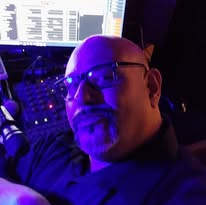
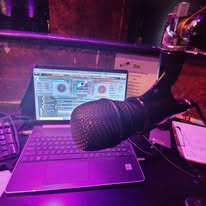
Working as a DJ in a cabaret is completely different from that. I mean, sure we play the music, that’s basic. That’s got to be automatic. The tough part of what I do is stage management. So I need to know what my entertainment rotation looks like. I need to know where entertainers and key staff are and why. I need to know the status of the VIP areas and which entertainers are not available for stage shows. Not only that, but I function as another set of eyes for my security team, and coordinate with them in any emergency event. If a fight is starting, I can usually see it from the booth before the guys on the floor can. Any public address to be made falls on my shoulders and unless it’s a fire, there had better not be one second of dead air, or else that sweet Friday night shift will be given to somebody who can do it better than you.
While all of this is happening, I have to sound to the audience and staff like a radio host. Speaking clearly, getting their attention and putting the proper emphasis on certain things as needed. I am like a morning show radio host, a jukebox with 70,000 songs and an air traffic controller all rolled into one. I do these things simultaneously while at the same time playing the music, handling requests, etc. In addition to that, I do a live voiceover after every song while I’m announcing the stage lineup, who will be next, playing the next song and driving sales. Then on top of that, I’m wearing an earpiece. The kind that the cops use when they have to do crowd control at a concert or something like that. Not like your regular earbud. We have the same radios too. That radio traffic goes on Non-Stop in my ear loud enough for me to hear over everything while I’m trying to talk on the microphone, it’s kind of like Controlled Chaos. I’m going to take my microphone experience and use it to my advantage in doing some voice acting in the future, and of course I’m a natural for most customer service roles because I know how to speak to people.
My specialty is high energy music incorporating Rock Hip Hop and EDM from the past few decades all together to give the audience a different take on popular music, and even introduce them to some new things. Any nightclub DJ will tell you that you want a certain Tempo range to get people out of their seats, and you have to break that Tempo and go kind of up and down like a wave. You play two to four songs are really high energy and people are moving on the dance floor, and you break it down and play something a little bit more down tempo that gives people a chance to catch their breath go to the bar by a drink, etc.
Then you bring it right back up, and repeat. So the more they dance, the more they spend. That goes for a cabaret environment, nightclub, or even a sports bar. Customers don’t spend money to slow stuff, they just don’t. I’m a proven performer when it comes to driving sales in that way, and I’m able to use my skill set to help all kinds of businesses.
Having had a strong sales background before I begin doing this helped me put it together. We are putting on a show and trying to make money for the venue and all the staff members, entertainers and other tipped employees at the same time.
What I am known for is my humor on the mic and in life. What I have been through wasn’t easy, and I had to have a sense of humor to be able to push through all the pain, setbacks and physical therapy to bounce back. When I am running the show, the audience never knows if I am having a bad day, or that a stressful situation is going on behind the scenes. My sense of humor is key to making that all possible.
We’re always looking for the lessons that can be learned in any situation, including tragic ones like the Covid-19 crisis. Are there any lessons you’ve learned that you can share?
The COVID-19 crisis hit us by surprise and no matter what industry you were in it definitely affected you. We had no idea about PPE and why it might be handy to have. We didn’t know it was going to shut everything down. I was stuck at home for two months and I did not get my unemployment money right away. I got the unemployment check owed to me about the same time I was finally able to get back to work. Incidentally, I caught COVID within 3 days of returning.
Luckily, I had some cash saved up in my bank account. My wife on the other hand worked for a major retailer that sells tools and outdoor equipment. They were deemed a necessary business because they sold things like tools cleaning supplies rubber gloves etc. Unfortunately, her store manager was so ill-informed as far as COVID, company policy and just how to treat people in general. He did not really care for my wife at all, in fact, he tried numerous of times to run her out of there before COVID. He obviously didn’t know very much of anything about the human body because he told her that if she didn’t have a 106 degree fever or higher, she could not stay home from work and would be fired if she didn’t show for her shift. A 106 degree fever is basically almost fatal. The memo from corporate said 100.6 degrees, not 106. A guy with 4 kids, and he didn’t know what a ‘fever’ actually reads like.
I got the okay to come back to work about 2 and 1/2 months after everything was shut down, and I got sick almost immediately. This was the “A” variant of COVID. The nasty one. It absolutely took the wind out of my sails, and I had what they call long COVID. My sense of smell didn’t come back for about 6 months and I would experience days when I would wake up with fatigue, aches, etc. It was just like I was sick again.
So here are some lessons that we learned. Stock up on shit that you know you’re going to need, like toilet paper. That’s about all you need to know on that topic right there. Have an emergency fund. You never know when the entire world is going to be plunged into some bullshit, and you won’t be able to get your unemployment check for 2 months because they made you quit working. Keep some masks, rubbing alcohol, Lysol and rubber gloves around. They don’t take up much room. Also, pay attention to your health. Keep current on your vaccines and not just COVID. I try to get a flu shot every year, there’s the pneumonia vaccine as well. If you are special and delicate, and you can’t get the vaccine because something you heard from somewhere by somebody said that vaccines are bad, then don’t blame me when COVID knocks you off your feet. The government isn’t trying to get you sick and neither are the medical companies I lost a fraternity brother and my best friend’s mother during covid because they refused to get vaccinated and thought it was a big joke. It’s just a bad flu. They changed that opinion by the time they were in the ICU about to pass away. And my friend’s mom died at home because her new husband had her convinced it was a bunch of bullshit. They were discovered about a week after their deaths at home in their recliners. Don’t get your medical advice from TV doctors, game show hosts, talk show hosts, etc. Nothing is perfect, no vaccine for anything is iron-clad 100%. But millions of people died when they didn’t have to.
The final lesson it taught me was to have a tiny bit more patience. Everything you have planned out may have to be rescheduled if something big like a pandemic pops up when you didn’t expect it to.
Contact Info:
- Instagram: @bignastydjaz
- Facebook: https://facebook.com/bignastydjaz
- Soundcloud: https://soundcloud.com/chris-allen-242