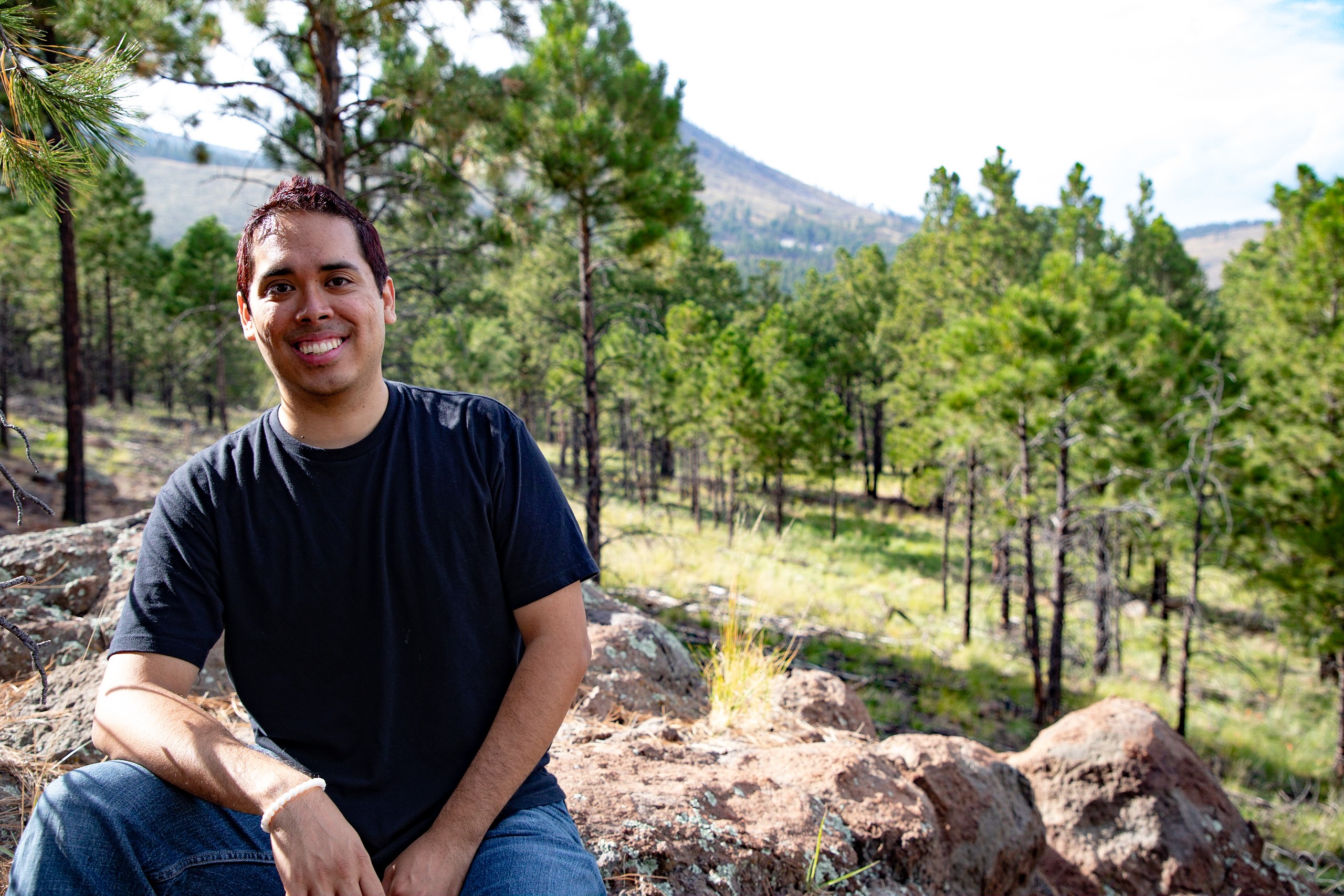
We recently had the chance to connect with Leo Jurgens and have shared our conversation below.
Leo, a huge thanks to you for investing the time to share your wisdom with those who are seeking it. We think it’s so important for us to share stories with our neighbors, friends and community because knowledge multiples when we share with each other. Let’s jump in: What do the first 90 minutes of your day look like?
I usually start with something grounding—coffee or tea, and a short moment to orient myself before diving into my routine. Then, I start the shower—cold water is not my favorite—and greet my cat. She was up all night standing guard keeping the spookies at bay, so I like to ask her how her shift was. After my shower (and shower coffee!), it’s dressing, hygiene, and my intense commute from my bedroom to my office…on the other wise of the house.
Can you briefly introduce yourself and share what makes you or your brand unique?
My name is Leon, and I work at the intersection of structure and creativity. A lot of my work is about building systems that make things clearer, smoother, and more usable—whether that’s developing quality rubrics, designing clean data processes, or documenting creative details like handwriting ligatures for a custom font or storytelling elements for a book project.
What makes my work unique is the balance: I love diving deep into technical precision (like WCAG alignment or data deduplication) but also give equal space to personal, human-centered creativity. I see my “brand” as creating things that are both functional and expressive—bridging analytical rigor with design, storytelling, and cultural nuance.
Right now, I’m especially focused on refining how we evaluate the quality of deliverables, while also carrying forward personal creative projects that showcase individuality and craft.
Amazing, so let’s take a moment to go back in time. Who were you before the world told you who you had to be?
I was a curious kid who loved to take things apart—whether it was a toy, a story, or the VCR—just to see how it worked, and then put it back together in my own way (sometimes with “extra parts” left over). I drew letters and shapes for fun, wrote little stories, and asked “why” more than “what.” I wasn’t worried about whether something was practical or impressive—I was just deeply interested in creating and understanding.
That spirit still lives in my work today. I try to hold onto that mix of playfulness and precision—finding joy in experimenting, but also caring about the details that make something meaningful and lasting.
If you could say one kind thing to your younger self, what would it be?
I’d probably need a whole day to sit myself down, but if I only have a few moments, I’d tell him, “You don’t need to rush into fitting every expectation. The things that make you curious and the way you see connections between details—that’s not something to hide or downplay. Trust that your mix of creativity and precision will matter, and give yourself permission to grow at your own pace.”
So a lot of these questions go deep, but if you are open to it, we’ve got a few more questions that we’d love to get your take on. What are the biggest lies your industry tells itself?
One of the biggest lies is that checking the box equals quality. In many spaces—whether accessibility, data processes, or creative deliverables—there’s a tendency to believe that meeting the minimum requirements is the same as delivering true value. But real quality isn’t just about compliance; it’s about alignment with purpose, usability, and human impact. Another lie is that creativity and structure are opposites. Too often, the industry separates “the creatives” from “the technicals,” when in reality the most meaningful work happens where those two meet. Systems can be expressive, and creativity can thrive within thoughtful constraints.
Okay, we’ve made it essentially to the end. One last question before you go. If you knew you had 10 years left, what would you stop doing immediately?
I’d stop pouring energy into busywork or projects that only exist to look good on paper but don’t truly matter. I’d stop second-guessing whether something is “worth” pursuing just because it doesn’t fit into a standard mold. Instead, I’d double down on creating things that feel personal, human, and lasting—whether that’s systems that make work more meaningful, or creative projects that carry a piece of me into the world.
Contact Info:
- Instagram: @chdleoj
- Linkedin: https://linkedin.com/in/chdleoj