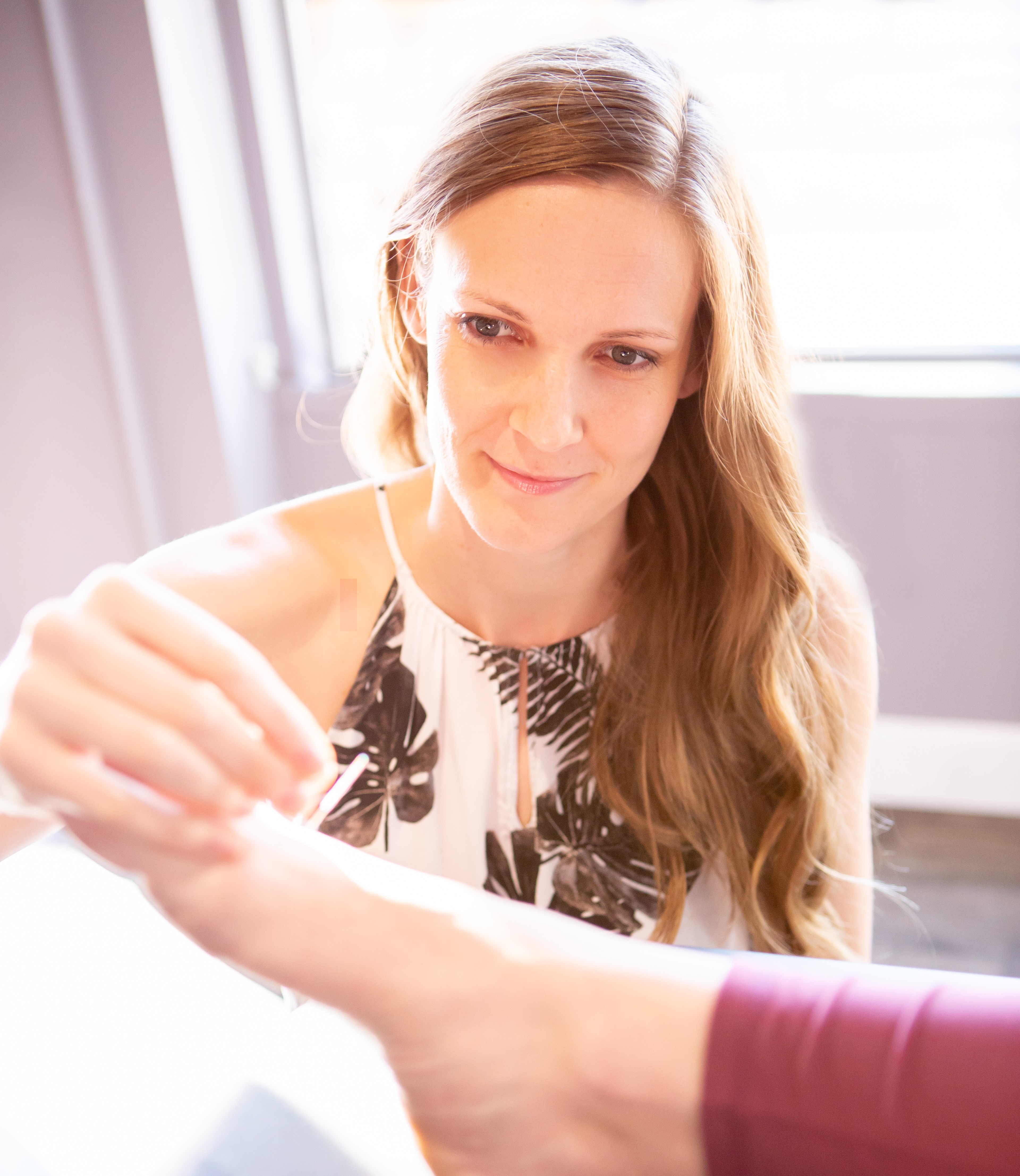
Kiya Hunter shared their story and experiences with us recently and you can find our conversation below.
Kiya, it’s always a pleasure to learn from you and your journey. Let’s start with a bit of a warmup: What do you think is misunderstood about your business?
I believe acupuncture is deeply misunderstood, and that shows up in my business. Most people call me after they’ve tried everything else and still don’t have answers. What they don’t realize is that acupuncture is part of a complete medical system that has guided healthcare for thousands of years. For more than 2,000 years, it was the primary medical system in China, treating everyday health, epidemic response, fertility, pediatrics, trauma care, and more — right up until Western medicine entered about a century ago.
Today, both systems are practiced side by side in China, and ideally, we’d see more of that integration here. Western medicine is outstanding for acute, emergency situations, surgeries, and infectious disease. Chinese medicine excels at chronic issues — both pain and internal medicine — as well as post-surgery recovery, post-infection healing, and preventive care. What makes it unique is that it addresses the individual’s terrain. By treating the root imbalance, we don’t just manage symptoms — we resolve problems and prevent future ones.
At my clinic, we do that deep detective work. Acupuncture in the U.S. is often framed as symptom relief, but when used properly, it goes much deeper — it helps people truly heal and get their lives back.
Can you briefly introduce yourself and share what makes you or your brand unique?
My name is Kiya Hunter, and I’m the founder of Scottsdale Family Acupuncture. What makes my clinic unique is that we don’t just chase symptoms — we practice Chinese medicine in the way it was intended: as a complete medical system that gets to the root of health problems. Most of my patients come to me after they’ve ‘tried everything’ without answers. That’s where our detective work begins. By restoring balance to the body’s terrain, we help people not only resolve their current issues but also prevent future ones.
My passion is treating complex, stubborn conditions — the ones people are often told they just have to ‘live with.’ I’m also working on expanding beyond the clinic through writing, teaching, and creating resources that show the public what Classical Chinese Medicine can really do. At its heart, my work is about giving people their lives back — naturally, safely, and in a way that honors both science and the deeper wisdom of the human body.
Okay, so here’s a deep one: What’s a moment that really shaped how you see the world?
A moment that shaped how I see the world was when I visited the Vatican years ago. I had a vision of Mary holding her Son after His suffering and death. That moment pierced me — it showed me both the depth of human pain and the even deeper reality of redemption and hope. It led me to explore the Catholic faith, which has since shaped not just my personal life, but also the way I approach healing. I see every patient not as a collection of symptoms, but as a whole person with dignity, purpose, and the ability to be restored. That vision shifted me from just wanting to fix problems to wanting to walk alongside people in their suffering and help them return to wholeness.
What did suffering teach you that success never could?
Suffering taught me something success never could — that strength doesn’t come from pushing harder, but from learning how to be rooted when everything feels uncertain. Success can be loud, but suffering is quiet; it strips you down to what’s essential. It taught me compassion, because I know what it feels like to be broken and searching for answers. And it showed me that true healing isn’t about perfection or achievement, but about restoration — of health, of faith, of wholeness. That perspective is what I carry into my clinic every day: to meet people in their hardest places and help them find a way forward.
So a lot of these questions go deep, but if you are open to it, we’ve got a few more questions that we’d love to get your take on. What are the biggest lies your industry tells itself?
One of the biggest lies in my industry is that acupuncture is just for pain or stress relief. That’s the story we often tell to make it more palatable in the West, but it sells short what acupuncture really is — a complete medical system that has treated everything from epidemics to fertility to pediatrics for thousands of years.
Another lie is that we should explain acupuncture in purely Western terms — as if we need to translate it into neurology or biochemistry to make it legitimate. Those explanations are useful bridges, but they miss the beauty and precision of the system itself. Chinese medicine doesn’t need to be validated by another framework — it stands on its own.
And finally, we sometimes lie to ourselves that symptom management is enough. Acupuncture is not just about getting someone temporary relief. When practiced correctly, it addresses the person’s terrain at a root level, preventing future illness and giving people their lives back. That’s the truth I try to practice every day.
Okay, so before we go, let’s tackle one more area. What do you understand deeply that most people don’t?
What I understand deeply, that most people don’t, is that symptoms aren’t the enemy. They’re signals — the body’s way of speaking when something in the terrain is out of balance. In Western culture, we’re taught to silence or suppress those signals as quickly as possible. But if you listen closely, symptoms tell a story about the whole person — their history, environment, emotions, and physiology.
I’ve also come to see that true healing doesn’t just mean removing what’s wrong; it means restoring what’s been lost — stability, resilience, and even joy. That perspective changes everything: you stop asking, ‘How do I make this go away?’ and start asking, ‘What is the body asking me to repair and restore?’ That shift is where real healing begins.
Contact Info:
- Website: https://www.scottsdalefamilyacupuncture.com/
- Instagram: https://www.instagram.com/kiya.hunter/
- Youtube: https://www.youtube.com/@kiya.hunter


Image Credits
Tami Carda Photography