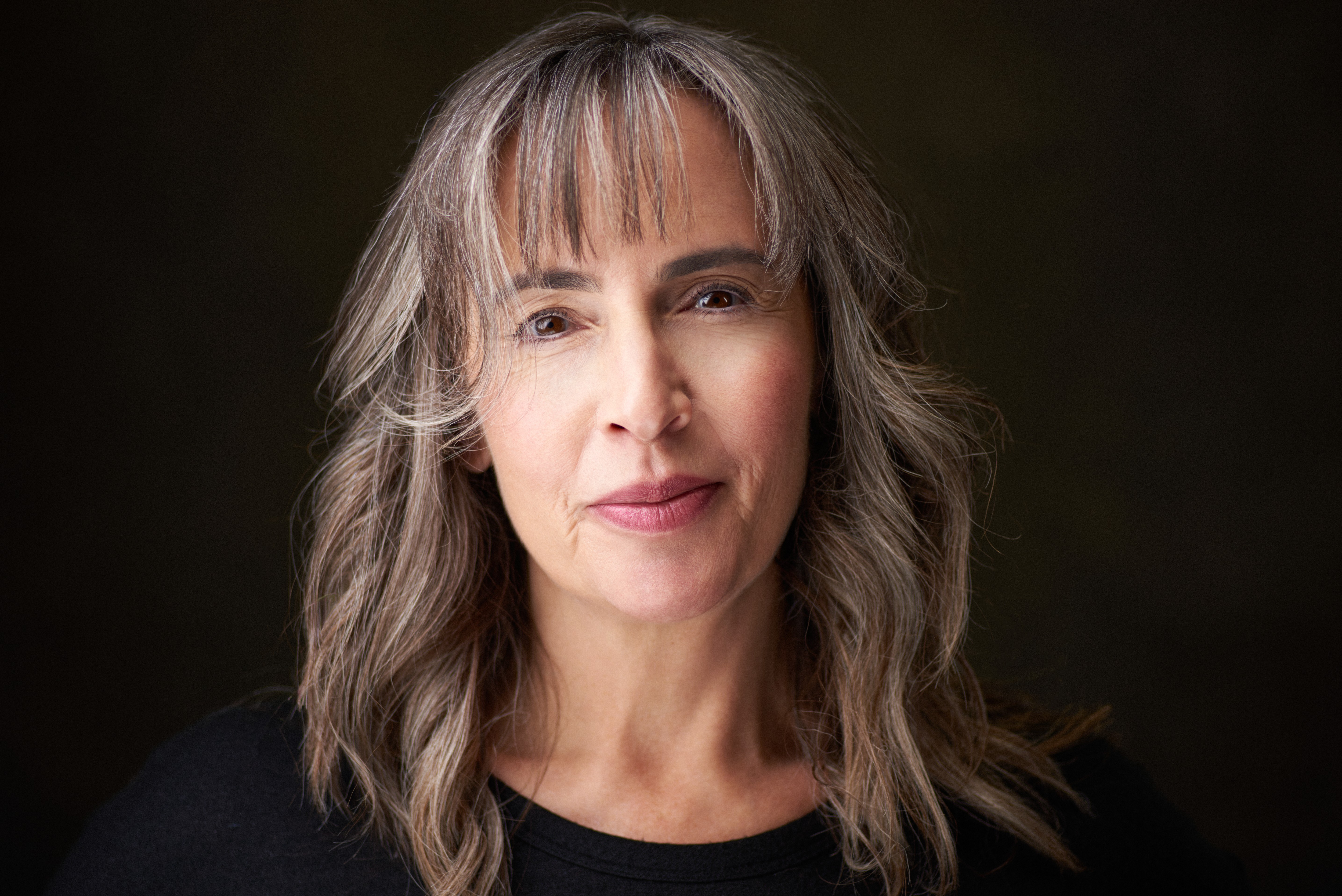
We recently had the chance to connect with Brandy Hotchner and have shared our conversation below.
Brandy, so good to connect and we’re excited to share your story and insights with our audience. There’s a ton to learn from your story, but let’s start with a warm up before we get into the heart of the interview. What do you think is misunderstood about your business?
That’s such a good question. The biggest misunderstanding about acting as a profession and so also teaching acting and performance is this one: “acting is being a good liar,” the idea that acting is lying or deceit.
The opposite is true. Great acting is invisible. You can’t detect it in the artists’ work. The performance feels real; it’s not just believable, it’s relatable whether it’s an over-the-top Marvel movie or an indie drama. Those are the performances that haunt us. Sometimes those performances are transformative for the audience (and the performer).
An actor doesn’t achieve that through deceit or fakery; it’s achieved through truth. That actor is expressing, experiencing, living, and breathing their own truthful response to imaginary circumstances within a play or screenplay. That’s no easy accomplishment. We’re taught before we can talk, to “shut up.” We’re conditioned to conform to societal norms and expectations, or we face real consequences.
So, we, as humans, learn reflexively to shut down emotional responses, control our behavior, edit ourselves. An actor has to remove all those long-conditioned habits and do something very vulnerable; expose parts of themselves they’ve been taught to keep hidden. I think it’s incredibly brave. I know it’s valuable to society. I wish everyone had to take at least one good acting class in their lifetime. They’d learn so much about each other.
Can you briefly introduce yourself and share what makes you or your brand unique?
I’m Brandy Hotchner, an artist first, wife and mother first, and the founder of Arizona Actors Academy in Phoenix Arizona. We (I have the most amazing staff of teaching artists) train adults in truthful, craft-driven acting through a three-level core program (Foundations, Essentials, Technique) and electives like Shakespeare, On-Camera, and Improv. What makes AZAA different is the mix of rigor, access, and care: immersive training that’s comprehensive and affordable, in a community where bravery and honesty matter more than tricks.
My teaching blends classic technique with specialized tools like Dream Work, First Folio approach to Shakespeare and Memory Mapping, to connect an actor’s inner life to text without pretense. Both Memory Mapping and First Folio I’ve developed over the last 20 years. Right now I’m expanding our Shakespeare track, growing an ongoing Stage Combat series, and building a virtual creativity course for non-actors who want better communication, presence, and confidence in everyday life.
Arizona Actors Academy is always evolving and expanding. We work hard a team to build a culture that’s inherently exclusive and tuned in to what will truly allow our community to thrive.
Appreciate your sharing that. Let’s talk about your life, growing up and some of topics and learnings around that. Who saw you clearly before you could see yourself?
Her name was Barbara Poitier. She was my teacher in my first year at grad school. She was a force of nature, whose presence of power, knowledge, intensity, and love for the craft of acting; actually seemed to move the space in the room. You knew when she entered. You knew, without a word, if she was displeased.
She inspired in me the greatest courage to take risks I’ve ever known. She did this not by making me feel strong or invincible or “seen.” She did this by forcing me to see myself. To see my messy, imperfect self and love her with conviction.
She taught me that the actor is a mirror to society, and the mirror tells the truth. It doesn’t sugarcoat the reflection.
Seeing my whole self; not the fractured way in which I did when I entered her class, was a revelation. We can’t live in fractured pieces, holding one part of ourselves up because we get affirmation there and leaving a more broken bit in the shadow.
We have to celebrate our whole selves, bruises and scars, triumphs and failures, pretty and ugly.
Barbara did this with such respect and love, though her ways were hard. She broke you down to build you back up. I don’t think that old-school form of teaching could flourish now or would be allowed, but I cherish it. Every hard, painful moment.
My artistic and personal growth under her tutelage could not be measured. She died years ago. I had the great privilege of being there at the end. The parade of grateful students and peers from The Actors Studio was innumerable. I was among so many whose life courses as artists were changed by Barbara Poitier.
What did suffering teach you that success never could?
Resilience. I believe it is the single most important attribute of a life well lived. Success may celebrate it but suffering creates it.
I think our readers would appreciate hearing more about your values and what you think matters in life and career, etc. So our next question is along those lines. Where are smart people getting it totally wrong today?
Too many leaders feel entitled to the talent they employ. There’s a pervasive attitude in the American workforce that a worker is lucky to be there and employed. With this comes a tyranny of entitlement that, at best, is veiled by useless (to the worker) HR policies and programs meant to keep workers happy.
Your employee owes you nothing but the expertise, skill, and labor you hired them for. They don’t have “skin in the game.” They don’t enjoy the praise that comes with a company’s success (largely due to their efforts) and they rarely enjoy the financial gain. Yet they are burdened, overburdened, with pressure tactics to improve performance, to work at all hours, and to sacrifice their well-being without commensurate pay, real decision-making power, or a share of the upside.
Pay people like adults, tie rewards to results, give them real authority over the work and the culture. Measure leaders by team growth, quality, and retention; not by performative busyness.
Okay, so let’s keep going with one more question that means a lot to us: How do you know when you’re out of your depth?
I love this question. In leadership, it’s more often than any leader probably wants to admit. If you’re heading a company, it has many moving parts; I can’t be an expert in every aspect of my business. Not remotely.
Today, no company is spared the effects of fast-moving technology on sales. For example, right now, I’m preparing for what I suspect will be a sea change in how people discover an acting school like mine, or any performing-arts business. Discovery is shifting from keyword search to AI-driven answers and recommendations; we’re adapting accordingly.
I need to find the talent to help me through this challenge.
Each member of my staff is a vital organ in Arizona Actors Academy’s anatomy. Their contribution to our staying relevant, dynamic, and aligned with our mission is unique and reflects a gap I couldn’t fill alone. I’m out of my depth often but I’m great at finding and empowering the people who aren’t.
Contact Info:
- Website: https://www.azactorsacademy.com
- Instagram: @azactorsacademy
- Linkedin: https://www.linkedin.com/in/brandy-hotchner-2b81b732
- Facebook: @azactorsacademy
- Yelp: Arizona Actors Academy
- Youtube: https://www.youtube.com/@arizonaactorsacademy


Image Credits
Paparazzo Film
WulfenBear Media