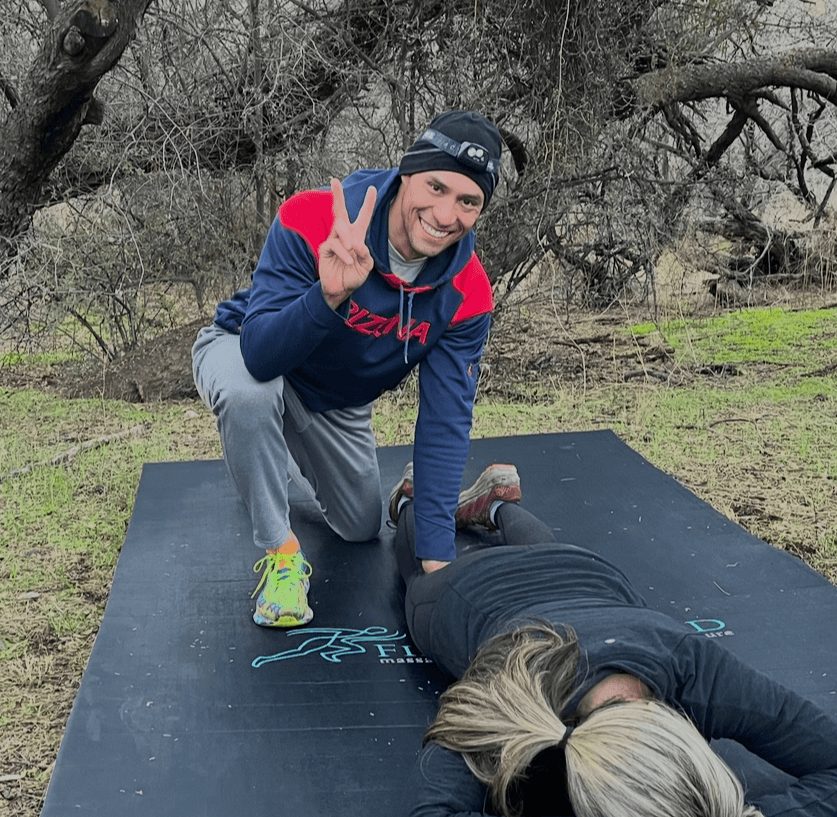
Allan Phillips shared their story and experiences with us recently and you can find our conversation below.
Good morning Allan , it’s such a great way to kick off the day – I think our readers will love hearing your stories, experiences and about how you think about life and work. Let’s jump right in? What do you think others are secretly struggling with—but never say?
People often fear success more than failure. Progress brings expectations, added responsibility, and greater scrutiny. It can also change your social standing, making others view and treat you differently. The thought of these changes can feel unsettling, leading many to avoid opportunities for growth. Some top athletes, for example, reach the peak of their sport—or come close—only to realize the view might actually feel more comfortable below the summit. With failure, the only direction left is upward. It’s human nature: we are more averse to losing something we’ve gained than missing something we never had, even if both situations leave us in the same place.
Let me give you an example from my world. Many people say they want to recover from their injuries, but their actions don’t always align with that goal. At first, this may seem ridiculous. But when you realize that an injury provides a convenient excuse, it starts to make sense. An injury allows someone to say, “I didn’t reach my potential not because I wasn’t good enough, but because this outside factor—an injury—held me back.” Once they recover, that excuse disappears. If they fail to perform, the responsibility falls squarely on them.
Can you briefly introduce yourself and share what makes you or your brand unique?
I am a licensed physical therapist by training, but what I truly do is help people overcome injuries and pain that limit their ability to perform at their body’s full potential. High standards and attention to detail define my work. I am results-driven, treating every patient’s situation as a “zero-fail mission.” I’m deeply invested in their outcomes—perhaps to an unhealthy degree. I constantly review my work, asking myself what I could do better. If I’m not achieving the result I want in a patient’s case, I carry that home with me, and it weighs on me until we get it right.
What also makes my practice unique is the perspective I bring. I’m writing this from Africa, where I am currently deployed to Djibouti as a physical therapist in the Army Reserve. Over the past few years, I’ve been deployed during parts of 2020, 2021, 2023, and now again in 2025. In some ways, it feels like a throwback to earlier centuries, when craftsmen would close up their shops to serve in the military. Returning to civilian life each time and having to rebuild has presented its own unique set of challenges.
Amazing, so let’s take a moment to go back in time. What part of you has served its purpose and must now be released?
When I was coming up through school and early in my career, success seemed to depend on packaging yourself to gain approval from the professional corporate establishment. You had to dress a certain way, act a certain way, attend the right functions, and ensure your résumé checked the appropriate boxes. It often felt like a game—one that I chose to play because I believed it was simply what was required. At that time, personal branding was measured by how well your résumé aligned with those expectations.
What I have since let go of is the part of me that was subservient to that system. I don’t believe I was wrong for adapting to society’s demands then, but the world has changed. More importantly, my values have evolved. Conformity no longer serves me, and releasing that part of myself has allowed me to align more authentically with who I am and what I stand for today.
Is there something you miss that no one else knows about?
I miss being a dedicated musician—I was a trumpet player. Of course, I can still pick up the horn and play whenever I want, but it’s not the same as living the lifestyle. There was something uniquely fulfilling about being fully immersed in the pursuit of mastery, having such a powerful creative and expressive outlet, and connecting with others in ways only music can provide. I also remember the thrill of being in the “hot seat” as lead trumpet, where there’s no place to hide—you’re either the hero or the goat (and I’ve been both!!).
While music will always be a meaningful part of who I am, my priorities have shifted. At this stage of life, there are other pursuits that bring me even greater fulfillment and joy. I have no regrets about the path I’ve chosen, but I look back on those experiences with gratitude and deep appreciation.
Next, maybe we can discuss some of your foundational philosophies and views? What’s a belief you used to hold tightly but now think was naive or wrong?
Patients don’t necessarily care about credentials, the letters after your name, or how smart you sound. They assume training and intelligence are a given since you hold a degree and a license. What they truly value is whether you can help them solve their problem.
I often compare this to my own experiences outside of healthcare. When I take my car to a mechanic or have the A/C serviced, I completely tune out when the technician starts explaining the technical details. I don’t care about the certificates hanging on the wall—I just want my car back on the road quickly, and I want an honest bill. That realization was a turning point for me: it clarified how patients often view their own care.
Of course, there are patients who enjoy discussing anatomy, biomechanics, and the technical side of treatment. But most simply want the same thing I want when I take my car to the shop: fix the problem efficiently and don’t rip me off with the bill.
Okay, we’ve made it essentially to the end. One last question before you go. Are you doing what you were born to do—or what you were told to do?
In a general sense, I can now say that I am doing what I was born to do. In an ideal world, there might be differences in how I provide my services, but at the core, my purpose would remain the same: helping people explore and reach their full human potential.
That wasn’t always clear to me. When I graduated college, it felt as though I had four options: medical school, law school, academia, or finance. No one explicitly told me that these were the only paths, but in the academic and social environment I was in, it seemed implied that success meant choosing one of them. I chose law school and realized fairly early on that I was in the wrong place. It took nearly a decade to make the course correction that led me to my current path.
Today, I often say that even if I suddenly had unlimited money, I would still do what I am doing now. The work might look a little different with unlimited resources, but the mission would remain the same.
Contact Info:
- Website: https://www.ventanapt.physio
- Instagram: @thekettlebelldoc