We recently had the chance to connect with Karam Moon MD and have shared our conversation below.
Good morning Karam, it’s such a great way to kick off the day – I think our readers will love hearing your stories, experiences and about how you think about life and work. Let’s jump right in? What is something outside of work that is bringing you joy lately?
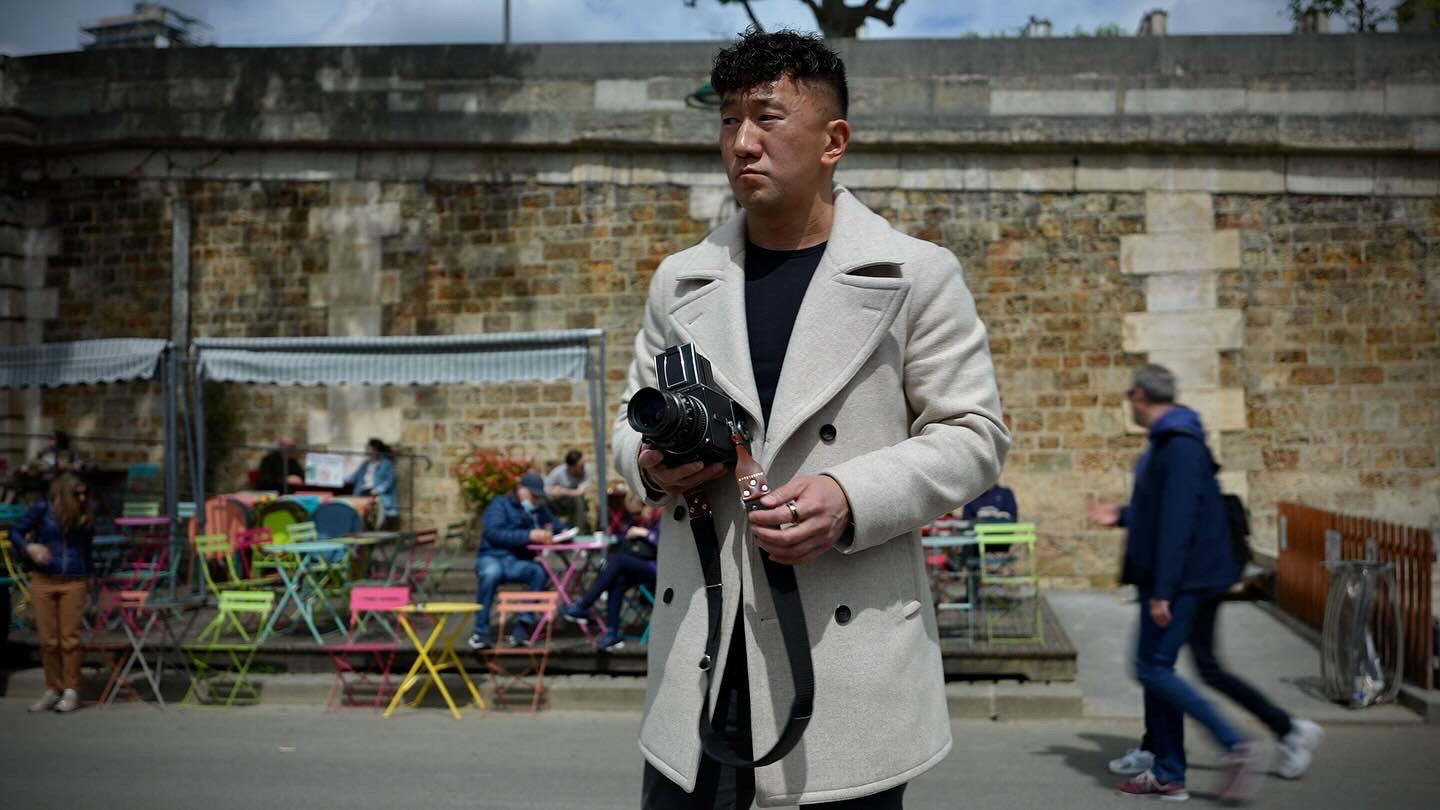
For the last 15 years, I’ve been cultivating a passion for photography. I began with the original Fuji X100, trekking across the U.S. during my time off in neurosurgery residency. That little camera saw so much, and I became obsessed with framing the world through its viewfinder. Over the years, I’ve upgraded to multiple cameras, including a vintage film camera that I adore. Shooting film has been humbling—it forces me to pause, to be intentional, and to compose in ways digital often doesn’t demand. More recently, I’ve also enjoyed experimenting with documentary-style indie films alongside people I’ve met along my journey. Today, I travel internationally as often as I can, seeking beautiful moments and places to capture in both stills and video.
Can you briefly introduce yourself and share what makes you or your brand unique?
My story began in Paris, France, where I was born to Korean immigrant parents. I later moved to the U.S. and grew up in Washington state, though I’ve always adored French culture and return often. I’ve been practicing locally as a neurosurgeon for nearly a decade after finishing my training at Barrow Neurological Institute.
Our group is called SWAN Brain and Spine, short for Southwest Associates of Neurosurgery. Based primarily at HonorHealth facilities, we manage a busy and diverse practice—ranging from common spine conditions to complex brain aneurysms and tumors, as well as niche conditions such as trigeminal neuralgia. We also promote wellness practices through a more holistic approach to patient care. What sets us apart is our commitment to embracing innovation. We continually adapt to new techniques and technologies, aiming for safer surgeries, smaller incisions, faster recoveries, and ultimately restoring function. Rather than being anchored to tradition, we strive to evolve with the field.
Okay, so here’s a deep one: What’s a moment that really shaped how you see the world?
A specific evening in Paris comes to mind. Around sunset on the butte of Montmartre, I found myself on the steps of the Sacré-Cœur, camera in hand, ready to photograph the skyline. What I witnessed instead was something far more powerful: hundreds of people from every walk of life gathered together, singing along to local musicians. The energy was electric—hands joined, voices united, strangers swaying together in the open air.
In a divided world—especially in America—this celebration of life reminded me of our shared humanity. It was spontaneous, organic, and profoundly beautiful, far beyond anything a rigid travel itinerary could ever script. This was certainly not a moment that I had planned for, and one that would have been missed going only from point A to point B. For me, that moment defined Paris—not in luxury goods or curated experiences, but in the soul of its everyday life.
If you could say one kind thing to your younger self, what would it be?
I would tell my younger self to acknowledge weaknesses and face them head-on rather than hiding from them. To understand that the human experience requires both pain and pleasure. I grew up in a strict household, often terrified of making mistakes—to the point of being dishonest with myself and others. I wanted to be everything to everyone, running from discomfort, and never truly living in the moment.
I still catch myself slipping into that pattern from time to time, but with age I’ve learned to give myself grace, and realized that working through hardship is what allows growth—as a surgeon, as an artist, and as a person.
Next, maybe we can discuss some of your foundational philosophies and views? Whom do you admire for their character, not their power?
The late Anthony Bourdain is the easy answer. Though influential, what I admired most was his civility, diplomacy, genuine curiosity, and respect for people around the world—qualities too often overshadowed today. He did all this while embracing his flaws, reminding us that imperfection does not preclude impact.
As an avid traveler, I’ve taken his ethos to heart: wandering without rigid plans, meeting locals, capturing unfiltered moments, and immersing myself in the less-touristy side of life abroad. His approach continues to shape how I see the world.
Okay, so before we go, let’s tackle one more area. When do you feel most at peace?
This is a tough one. Peace, I think, is deeply personal and evolves over time. For me, it comes in moments of surrender—to nature, to stillness, to presence. While my trips often revolve around photography, the deeper purpose is finding this sense of quiet.
I’ve felt it staring across the surreal landscapes of Iceland and the Lofoten Islands, where the immensity of nature makes me realize how infinitesimally small we are in this world. And yet, still connected by core values. More recently, I experienced it in Place Émile Goudeau, Montmartre, one early morning before tourists arrived. I sat on a graffiti-covered bench with my camera, a cappuccino and a canelé. The air was brisk, sunlight flickered between clouds, pigeons wheeled overhead in perfect rhythm, and the only sound was my own breath. Nothing needed to be done. Nothing demanded my attention. I was simply present.
And in those moments, I find peace.
Contact Info:
- Website: https://karammoon.com, https://swanbrainandspine.com/
- Instagram: https://www.instagram.com/wine_and_brain/, https://www.instagram.com/drkarammoon/
- Youtube: https://www.youtube.com/@kmoonphotography