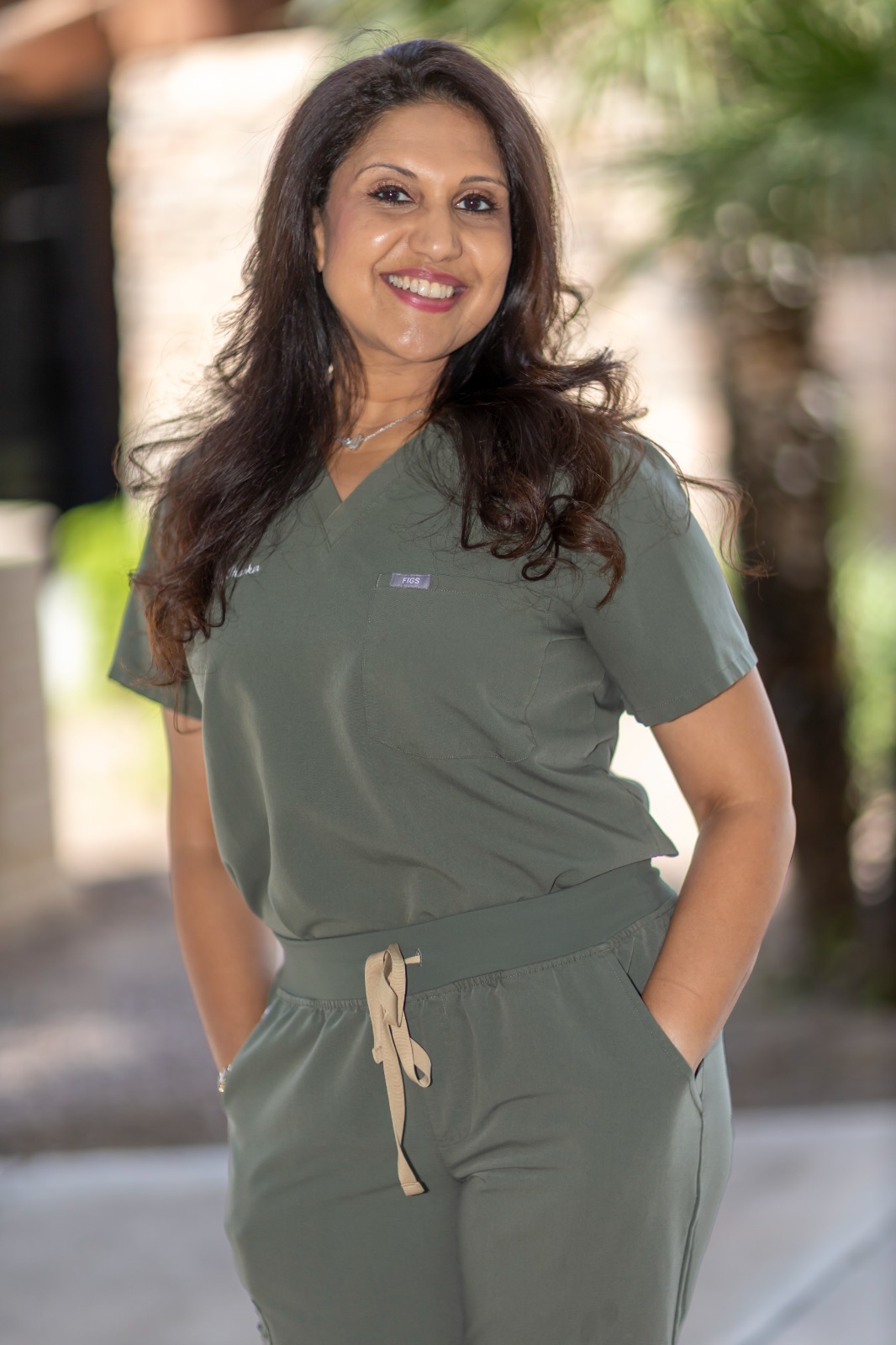
Today we’d like to introduce you to Meghna Thacker.
Hi Meghna, it’s an honor to have you on the platform. Thanks for taking the time to share your story with us – to start maybe you can share some of your backstory with our readers?
I would love to share my journey of becoming a naturopathic doctor and building Feel Your Best Self Naturopathic Medicine.
I grew up in Mumbai, India, and from an early age I was drawn to natural medicine and the idea of helping people heal from the inside out. I initially studied Homeopathic Medicine in Mumbai, which gave me my first foundation in looking at the whole person rather than simply treating a symptom.
When I moved to the United States, I continued my education at Sonoran University of Health Sciences (formerly SCNM) in Tempe, Arizona, and became a Naturopathic Medical Doctor. That journey opened my eyes to the incredible intersection of conventional medicine, nutrition, lifestyle, functional testing, hormones, thyroid health, and natural therapies.
After years of working with patients, I began to see a common theme: so many people were being told that their symptoms were simply something they had to live with. Fatigue, weight changes, thyroid issues, hormonal changes, brain fog, and feeling “not like themselves” were often treated individually rather than looking deeper for the root causes.
That became the inspiration behind Feel Your Best Self.
I started my practice organically, one patient at a time, without a large corporate structure or a big marketing machine behind me. Much of my growth has come through word of mouth—patients referring their friends and family and sharing their experiences with others. Watching that happen has been incredibly rewarding because it tells me that the work is making a meaningful difference in people’s lives.
Today, my practice focuses especially on women’s health, hormones, thyroid, metabolism, and healthy aging. I take an individualized approach and use detailed history, laboratory testing, nutrition, lifestyle, and appropriate therapies to help patients understand what is happening in their bodies and create a plan that is right for them.
I also believe that being a physician is about continuing to learn. I regularly attend conferences and advanced trainings because medicine is constantly evolving, particularly in areas such as longevity, metabolic health, genetics, hormones, and emerging therapies.
Building this practice has been one of the most rewarding journeys of my life. It has taught me that success isn’t always about how quickly you get somewhere. Sometimes it is about staying true to your vision, continuing to learn, serving people well, and allowing your work to grow organically.
At the heart of everything I do is a very simple goal: helping people feel like the best version of themselves—physically, mentally, and emotionally. And that is really where the name Feel Your Best Self came from.
We all face challenges, but looking back would you describe it as a relatively smooth road?
It definitely has not been a smooth road, and I think that is an important part of the story.
Building a private practice from the ground up takes a tremendous amount of courage, patience, and perseverance. When I started Feel Your Best Self, I was not handed a roadmap for how to build a successful practice. I had to learn so many things along the way—from being a physician and taking care of patients to being a business owner, marketer, administrator, and everything in between.
There were definitely moments of self-doubt and uncertainty. Building a practice organically, primarily through word of mouth, takes time. There were periods when I wondered whether I was doing enough or whether the practice would grow the way I envisioned it. Balancing being a physician, business owner, and a mother has also been challenging. There are only so many hours in a day, and learning when to push forward and when to give myself grace has been an important part of the journey.
Another challenge has been staying true to my philosophy of individualized, root-cause care in a healthcare environment that can sometimes prioritize quick fixes. I have always believed that patients deserve to be heard and that we need to look beyond the symptom to understand the bigger picture. Staying committed to that approach, even when it isn’t always the easiest or fastest path, has been incredibly important to me.
But I have learned that the struggles are often where the greatest growth happens. Every challenge has taught me something—about medicine, business, leadership, and most importantly, about myself.
Today, I look back at some of those difficult moments with gratitude. They helped me become more resilient, more confident, and more intentional about the kind of physician and practice I want to be.
Alright, so let’s switch gears a bit and talk business. What should we know?
Feel Your Best Self Naturopathic Medicine is a direct-care, patient-centered practice in Gilbert, Arizona, where we focus on helping people understand the “why” behind their symptoms and take a more personalized approach to their health.
My areas of focus include women’s hormonal health, perimenopause and menopause, thyroid health, metabolism, healthy weight management, and healthy aging. We also work with patients on nutrition, lifestyle, functional laboratory testing, genetics, supplementation, and other individualized therapies when appropriate.
What sets Feel Your Best Self apart is our philosophy: we don’t believe in a one-size-fits-all approach to healthcare. Two people can walk into my office with the same diagnosis or symptom and have completely different underlying reasons for feeling the way they do. I want to understand the whole person—their history, symptoms, lifestyle, nutrition, stress, sleep, hormones, thyroid, metabolism, and other factors that may be contributing to their health concerns.
I often tell my patients that we want to look at the layers rather than simply putting a band-aid over the symptom. Sometimes finding the real answer requires asking better questions and doing the appropriate testing.
Our approach may include comprehensive laboratory testing, nutritional and lifestyle recommendations, targeted supplementation, bioidentical hormone therapy when appropriate, metabolic and weight-management support, and other integrative therapies. The goal is always to create a plan that is individualized rather than simply following a protocol.
But perhaps what I am most proud of is the trust we have built with our patients. I started this practice organically, and much of our growth has come through word of mouth. Patients who have had a positive experience often tell their friends, family members, and colleagues about us. To me, that is one of the greatest compliments a practice can receive.
Our brand name, Feel Your Best Self, is also very intentional. I don’t want health to be about chasing perfection. I want people to feel energetic, confident, strong, healthy, and comfortable in their own bodies. I want them to feel like themselves again—or perhaps discover a version of themselves they haven’t felt in years.
I am also proud that the practice continues to evolve. I invest heavily in continuing education and stay current with emerging research and therapies in areas such as hormones, metabolic health, genetics, longevity, and functional medicine. At the same time, I believe that the basics—good nutrition, movement, restorative sleep, stress management, relationships, and a healthy lifestyle—will always be foundational.
If I could leave readers with one message about Feel Your Best Self, it would be this: your symptoms are your body’s way of communicating with you. Don’t just silence the message—take the time to understand it.
Ultimately, our goal is simple: to help each patient uncover the layers, understand their unique health story, and create a personalized path toward feeling their very best.
Where do you see things going in the next 5-10 years?
I think we are entering a very exciting time in healthcare. Over the next 5–10 years, I believe we will see a significant shift away from a “one-size-fits-all” model toward much more personalized and preventive healthcare.
We are already seeing the beginnings of this with advances in genetic testing, biomarkers, wearable technology, continuous health monitoring, and precision medicine. Instead of simply asking, “What disease does this person have?” I think we will increasingly be asking, “What is unique about this individual, what is driving their health concerns, and what can we do to prevent problems before they become disease?” Precision medicine is specifically designed around differences in an individual’s genes, environment, and lifestyle.
I also think metabolic health, healthy aging, and longevity—or perhaps more appropriately, healthspan—will become much bigger areas of medicine. People are not just interested in living longer; they want to remain strong, energetic, mentally sharp, metabolically healthy, and independent as they age.
Women’s health is another area where I expect to see tremendous change. Hormonal health, perimenopause, menopause, thyroid health, metabolic changes, and the unique health needs of women have historically been under-recognized. I believe we will continue to see a much greater emphasis on understanding and supporting women through these transitions rather than simply telling them that certain symptoms are “normal” or something they have to accept.
Artificial intelligence will also become increasingly integrated into healthcare. I see enormous potential for AI to help physicians analyze large amounts of information, recognize patterns, support research, and make healthcare more efficient. The FDA is already developing frameworks around responsible use of AI in medicine and drug development.
But I don’t believe technology will replace the human connection in medicine. In fact, I think that connection will become even more important. A sophisticated lab test, wearable, genetic report, or AI tool can provide information, but someone still needs to understand the person behind the data—their history, goals, concerns, lifestyle, and individual circumstances.
One of the biggest shifts I hope to see is a move from reactive healthcare to proactive healthcare. Instead of waiting until someone becomes sick, we should be looking much earlier at the factors that influence health and helping people make meaningful changes while they still have the opportunity to prevent or delay disease.
That is ultimately where I see naturopathic and integrative medicine playing an important role. The future isn’t about choosing between conventional medicine and natural medicine. I believe the future is about taking the best evidence-based tools from different areas of healthcare and using them thoughtfully and individually for each patient.
There will certainly be more technology, more data, and more treatment options. But I hope that at the center of all of it, we never lose sight of the most important thing: the person sitting in front of us.
Contact Info:
- Website: https://Feelyourbestself.com
- Instagram: https://www.instagram.com/feel.your.best.self
- Facebook: https://www.facebook.com/drmeghnathacker
- LinkedIn: https://www.linkedin.com/in/drmeghnathacker