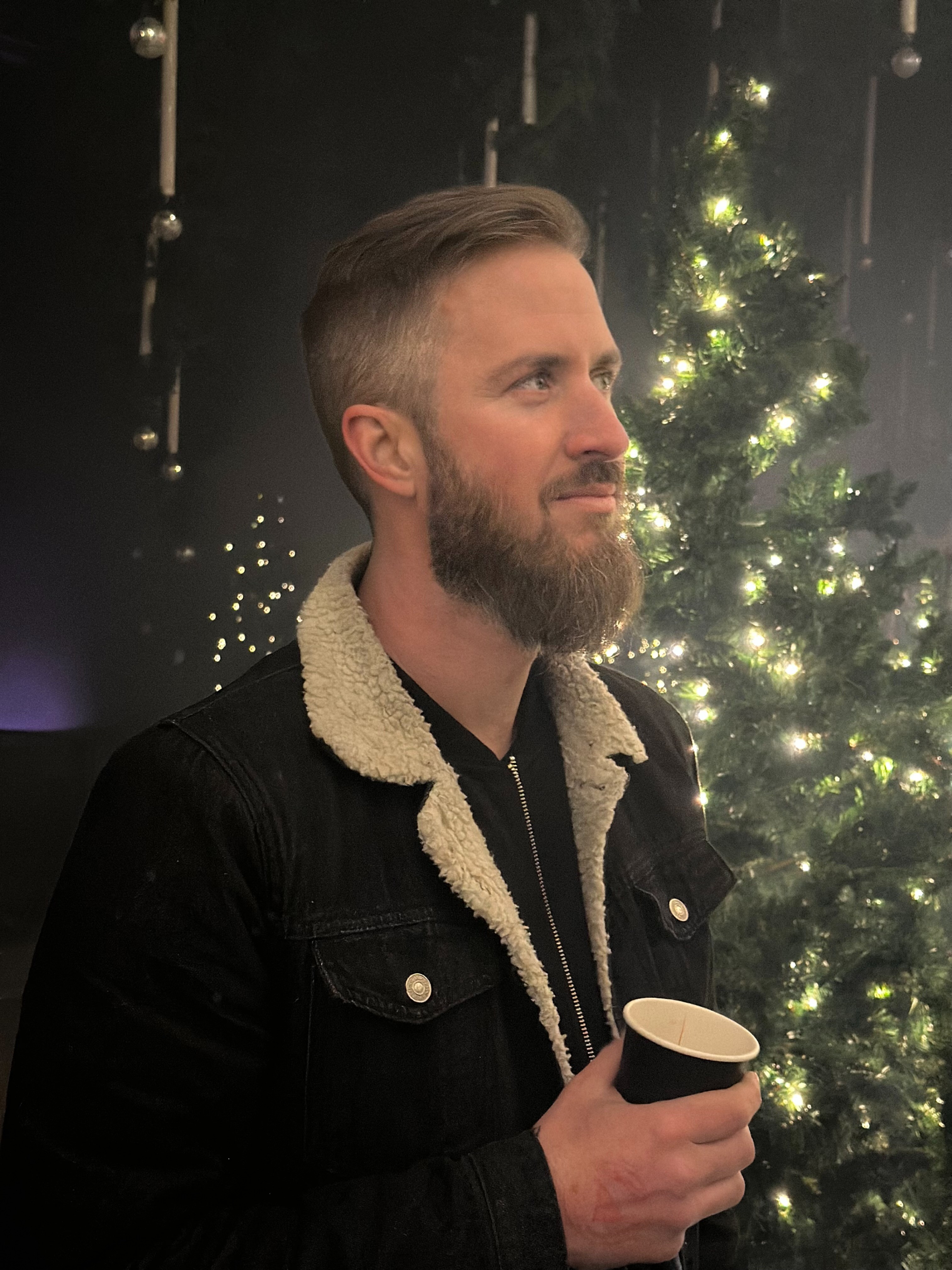
We recently had the chance to connect with Brandon Kellum and have shared our conversation below.
Brandon , we’re thrilled to have you with us today. Before we jump into your intro and the heart of the interview, let’s start with a bit of an ice breaker: What are you chasing, and what would happen if you stopped?
I’m chasing growth — creatively, emotionally, spiritually — and I think that’s what American Standards has always been about. From our earliest days in the Phoenix hardcore scene to the final moments of Future Orphans, we’ve thrived in motion. Moving is living. And heavy music, when it’s honest, reflects that. It should evolve. It should challenge you. It should be uncomfortable in the best way possible.
If I ever stopped chasing that — if I stopped pushing myself to feel more, to write deeper, to scream louder, to risk falling flat on my face — I think the fire would go out. And that’s not just about American Standards or this final album. That’s life. The second you stop moving, you start settling. You start shrinking into a version of yourself that’s easy but hollow.
This band was never about staying in one lane. We’ve blended chaotic hardcore, punk, metalcore — not because it was trendy, but because it was true. We were always chasing what felt urgent and raw. And Future Orphans is the result of that chase — a final, unfiltered burst of everything we’ve become through 15 years of discomfort, grief, growth, and evolution.
If this album connects with people, I hope it’s because they feel that same pull — to keep going, to keep growing, to scream back at the void instead of going quiet. Heavy music isn’t about perfection; it’s about progression. That’s what I’m chasing. And if I stopped… well, I think I’d lose the very thing that’s kept me alive.
Can you briefly introduce yourself and share what makes you or your brand unique?
Absolutely. I’m Brandon Kellum — vocalist for American Standards, a hardcore band born and raised in the Phoenix, Arizona DIY scene. For the last 15 years, we’ve been making loud, chaotic music that blurs the lines between metalcore, punk, and pure emotional catharsis. We’ve always done things our own way — no label, no fluff, just raw energy and a whole lot of heart.
What makes American Standards unique isn’t just the sound — though yeah, we’ve definitely been known to throw a wrench into traditional song structure. It’s the intention. Every lyric, every show, every release has been about being honest, being uncomfortable, and being unafraid to question everything — from societal norms to personal grief. We’ve opened for bands like Every Time I Die, Norma Jean, He Is Legend, Comeback Kid, and Knocked Loose, but we’ve also played countless floor shows in basements, garages, and VFW halls where we connected with people on a deeply human level. That’s always been the point.
Right now, we’ve just released what will be our final album, Future Orphans. It’s a conceptually driven, emotionally loaded farewell that captures everything we’ve stood for over the years. It’s not a “greatest hits” — it’s a final exhale. A thank you. A protest. A eulogy. A celebration. It’s the most complete version of who we are, and we poured every last ounce of ourselves into it.
Whether you’ve followed us since Still Life or you’re just discovering American Standards through Future Orphans, my hope is that this record speaks to the people who still believe in heavy music as a vehicle for truth, growth, and real connection.
Thanks for sharing that. Would love to go back in time and hear about how your past might have impacted who you are today. What’s a moment that really shaped how you see the world?
One moment that really shaped how I see the world wasn’t some big dramatic event — it was just the day-to-day reality of growing up. I was raised in Phoenix by a single mom with a disability, and we were poor. Not “tight budget” poor — I mean lights getting shut off, wondering how we’d get through the week kind of poor. There wasn’t much structure or safety net. You learn fast that no one’s coming to save you.
But that kind of struggle builds something in you. You get resourceful. You get resilient. You stop expecting life to hand you anything and start figuring out how to make the most of what little you’ve got. That survival mindset taught me how to be adaptable — not just in life, but creatively. That’s a huge part of what shaped American Standards.
We never had a huge label with financial backing or a manager telling us what to do. We just figured it out — booked our own tours, made our own merch, recorded however we could. That DIY drive didn’t come from some punk ethos we read in a zine — it came from necessity. It came from being used to building something from nothing.
When I look at Future Orphans, our final album, I see that survival instinct in every riff, every lyric. It’s loud, messy, defiant — just like the life that made it. And if there’s any takeaway, it’s that struggle can be fuel. You don’t have to be born into comfort to create something that matters. You just have to keep moving.
What did suffering teach you that success never could?
Suffering taught me how to be honest — brutally, unapologetically honest — in a way success never demanded. When you grow up scraping by, there’s no room for pretending. You learn to adapt. You learn to endure. You learn that your pain has to mean something — or it’ll eat you alive.
That mentality became the foundation of American Standards. From our first record Still Life to our final release Future Orphans, we’ve used chaotic hardcore and metalcore as a vehicle to process grief, mental health struggles, and the cracks in the systems around us. Songs like “The Still Life,” “Misery Relapse,” “WEEP”, and “Cancer Eater” weren’t just aggressive for the sake of it — they were exorcisms. Success never made me write like that. Suffering did.
And that’s what makes this band different. We’re not just another heavy band from Phoenix — we’ve always been rooted in real-life struggle, DIY ethics, and raw emotional storytelling. We weren’t chasing charts or clout; we were trying to survive. Trying to process death, depression, and everything in between — sometimes with a sense of humor, sometimes just with a scream.
Future Orphans is the most honest we’ve ever been. It’s not about triumph. It’s about transformation. Because suffering taught me that you can’t fake growth. You either break or you build from it. And this record is everything we built — loud, messy, real. Success never taught me that. Life did.
Alright, so if you are open to it, let’s explore some philosophical questions that touch on your values and worldview. How do you differentiate between fads and real foundational shifts?
For me, the difference between a fad and a foundational shift comes down to intent and impact. Fads chase attention. Shifts chase truth. One burns fast; the other builds something that lasts — even if it’s built slowly, painfully, and far outside the spotlight.
Being in American Standards, a hardcore band from Phoenix that’s operated DIY from day one, you get good at spotting the difference. We’ve watched trends roll in like waves — sounds, aesthetics, even ideologies. Some bands shape-shift to ride the wave. But we’ve always asked: What’s going to matter when the noise dies down? What’s going to stand when everything else crumbles?
When we released Anti-Melody or Hungry Hands, it wasn’t because we saw something trending. It was because we had something we needed to say — about grief, about mental health, about a world that often feels like it’s collapsing in slow motion. And now, with Future Orphans, that urgency is louder than ever. This record isn’t following a wave — it’s pushing back against one.
Foundational shifts feel uncomfortable. They ask questions instead of chasing applause. You see it in the way communities build movements, not moments. You feel it when music doesn’t just sound cool — it moves you. That’s what we’ve always tried to do in American Standards. Not capitalize on a fad, but contribute to a shift — toward something more honest, more human, more unignorable.
Fads fade. Foundations crack, evolve, and still stand. We chose the latter.
Thank you so much for all of your openness so far. Maybe we can close with a future oriented question. What do you think people will most misunderstand about your legacy?
I think the biggest misunderstanding about American Standards might be thinking we ever wanted to be the loudest band in the room — when really, we just wanted to be the most honest.
From the outside, especially with how aggressive our music is and how chaotic the live shows can get, it’s easy to assume it was all anger, all noise. But under every dissonant riff and scream, there was always heart. Always intention. A lot of people might not realize that so many of our songs come from grief, from anxiety, from losing people we loved. Still Life was written as a way to navigate the path to adulthood. Anti-Melody came from losing my father to cancer and friends to suicide. Future Orphans? That’s every lesson we’ve carried, bleeding out in eight final tracks.
We never set out to be the biggest band, or the tightest, or the trendiest. We just wanted to connect — to the kids who felt overlooked, unheard, like they were screaming into the void. And if people remember us for anything, I hope it’s that we made them feel seen, even in the chaos.
If that part gets misunderstood, that’s okay. Because we know the impact we had didn’t always happen on playlists or press — it happened in basements, in backyards, in conversations after shows where someone said, “Hey, your lyrics helped me through something.” That’s the legacy we’re proud of. And we’re incredibly thankful for everyone who let us be part of their story, too.
Contact Info:
- Website: https://linktr.ee/americanstandards
- Instagram: https://www.instagram.com/AmericanStandards
- Twitter: https://x.com/americanstndrds
- Facebook: https://www.facebook.com/AmericanStandards?mibextid=JRoKGi
- Youtube: https://www.youtube.com/@AmericanStandardsAZ
- Other: https://open.spotify.com/artist/6umD0mkxpmhNFEn5AgPAhp?si=VuThO-wRRr62KWsUwaEipQ