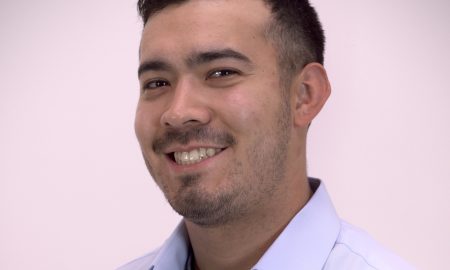
Today we’d like to introduce you to Julianne Colwell.
Julianne, please kick things off for us by telling us about yourself and your journey so far.
My love for music and the arts began when I was three years old and started taking ballet classes. Being immersed in music and dance really did a lot for me and gave me so much to do as a young person. I always wanted to be as creative as possible, and luckily I have great supportive parents who are always there for me. My dad introduced me to jazz music when I was very young. Artists like Dave Brubeck and Paul Desmond, Billie Holiday and John Coltrane were always being played in my house or in the car when I was growing up. I never thought of jazz as something that wasn’t normal. I had been singing since I was really small, and if I wasn’t singing for my parents and my sister, I was singing in the shower.When I started playing the saxophone in 5th grade, I was always so thrilled to spend some time learning melodies I heard from movies or tv by ear. My grandpa gifted me with a tiny electric keyboard too, and I was always messing around on that, writing my own songs or learning other music by ear.
Music always came pretty natural to me, and I knew that it would continue to stay in my life one way or another. In high school, I joined the marching band and the jazz band, and my sophomore year we had a student teacher come in and show us more about jazz, and I remember the day that he showed us a legendary recording by Dexter Gordon, ‘3 o clock in the morning’. I knew that I wanted to pursue jazz after that day. I joined the Tucson Jazz Institute for my latter half of high school and was able to play in their top jazz big band. Being able to travel to places like Monterey California and New York City was such an amazing experience for me, and being able to play alongside so many talented young people really inspired me to move forward with music into my college years. They became some of my closest and dearest friends to this day, and the bond I shared with them showed me how wonderful and powerful music could really be. When I began school at ASU and started to work with Michael Kocour and Bryon Ruth, I had many moments where I wasn’t quite sure that I had what it took to become a jazz musician. I struggled a lot with anxiety and depression, that actually caused me to drop out temporarily. I knew that I would never stop playing music, but I needed to give myself the time to get to know myself and believe in myself. These people were amazing mentors though, and they continuously gave me so many resources to help me learn and grow, at my own pace. I am forever grateful to them because they believed in me and they helped me learn how to use my strengths to my advantage, and work on all of the parts of music that never came naturally to me. All of these opportunities through ASU and the jazz studies program taught me so much about myself and showed me what I am truly capable of as an artist, musician, and human.
Can you give our readers some background on your art?
I would definitely call myself a jazz musician, though I don’t feel limited to that genre of music by any means. I have always been excited to explore other genres of music, and being in music school helped me learn how to integrate it in my own way. My music is deeply personal to me. The nature of improvisation for me is to express the deepest innermost feelings of your soul. Music has the amazing ability to heal, strengthen, and release. I feel that music, improvisational music and vocal music, in particular, gives me the power to dig very deep and release a lot of emotional feelings I have beneath the surface. When I am on stage, I close my eyes, and I end up in a trance-like state, allowing the sounds and vibrations of the atmosphere around me to take over. I think of when I was doing ballet as a child, and I feel the rhythm as if I were still dancing on stage. I am constantly swaying and moving as I play, whether singing or playing the saxophone. The baritone saxophone is an instrument that I have a deep connection with as it was the first instrument that I truly felt like myself while playing. I use it as a vessel to unleash all of my thoughts and feelings through a certain energy. I believe that the energy we put into our music is the key to allowing it to not only come to life but allowing it to speak to other people. It is difficult for me to put into words the challenges that I have already faced as a young woman in jazz.
Being one of three women for almost all of my undergraduate degree, I often felt alienated by my other male peers, and sometimes had difficulty making friends with the other women around me. The competitive nature of music in an academic setting was something that both the men and women experienced, and with one woman, in particular, I felt that we could never get along due to her feeling that she had to compete with me, which most likely came from the toxic and overtly masculine energy around us during our time in the jazz program. Many of the men in the program would not take me seriously, would often sexualize me or manipulate me, and I consistently felt like I needed to be pushed back, behind my peers because I never felt fully confident in asserting myself as a leader, or an equal to them. I was able to overcome a lot of these struggles in my community, but only after I also overcame a string of harmful rumors and mistreatment from a number of people who I thought were close friends of mine. I take my vulnerability and my ability to easily trust in other people and put it straight into the music I create, whether it be original music I have worked on or one of my favorite jazz standards. Listening to Billie Holiday was a huge influence in my process of healing and finding my individual voice because her haunting and crushing voice and emotional depth and strength was something that I identified and resonated so strongly with. I also write a lot of poetry and have been working on creating unity between my poetry and my music, through music and spoken word, or through creating music with an r&b and jazz flavor that has lyrical content taken from my poems. Writing poetry would always be a way for me to escape from my anxieties and fears as a musician, and as a woman. All of my experiences, even the darkest and most difficult to face, will come out in my music from time to time because music is the way that I heal and grow. My emotions are consistently on display, and I take real-life situations and experiences and put them out into the world when I perform. I just want people to listen to my music and identify with it in some way. I want to bring light into people’s lives, and I also want to show young people how strong they are, and how much they can overcome. If I can do it, so can they. The message is that music heals, and the passion that I have for it comes from how it has healed and shaped me into the young woman that I am today. My happy place is sharing the bandstand with my friends, having a conversation with one another through improvisation on our instruments.
In your view, what is the biggest issue artists have to deal with?
I’m not sure I know how to answer the question. I know that for me, one of my biggest challenges is deciding whether or not I want this to be the only way I make money. Artists often have to support themselves by working other jobs, like retail, food service or call center type jobs. I work to support myself through my musical endeavors, as well as through teaching and working on social media for music venues and small businesses. I have decided over the past year that my only goal is to be a musician and to help others pursue their musicianship as well. Working in social media allows me to learn more about how to market myself, as well as other artists in my community. My love for writing and poetry is also a way that I can support myself, as I sometimes help other artists build their websites and write their bios, etc. I have already decided that I will support myself through artistic outlets one way or another, but I am sure that other artists and musicians have a much harder time coming to this conclusion. Being an artist is endlessly challenging, and requires so much emotional energy and attention to detail. It is also grossly underappreciated in today’s society, so fighting all of these realities is the biggest challenge for me
What’s the best way for someone to check out your work and provide support?
I have a lot of poetry on my Instagram page, @shmoolianne. I am working on publishing my poetry in the next year, but for now, it is scattered about my social media as I see fit.
I am currently in the process of writing and releasing new music, as well as working on a brand new project that integrates my love for jazz and soul/r&b music through vocals and heavily grooves based percussion. My facebook page at Julianne Colwell as well as my Instagram is where I update people on upcoming gigs and performances, and I am also working on building a website. It has only just begun for me!
Contact Info:
- Email: juliannencolwell@gmail.com
- Instagram: shmoolianne
- Facebook: Julianne Nicole Colwell; Julianne Colwell (Music Page)


 Image Credit:
Outdoor photos taken by Amanda Martin
Vocal photo with bass player taken at the Nash by Neil Schwartz Photography
Capturezine.com
All other photos taken by Theresa Morgan
Getting in touch: VoyagePhoenix is built on recommendations from the community; it’s how we uncover hidden gems, so if you know someone who deserves recognition please let us know here.