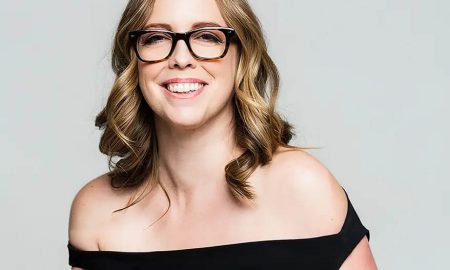
Today we’d like to introduce you to Sandra (Sandy) Price.
Sandra, let’s start with your story. We’d love to hear how you got started and how the journey has been so far.
I moved to Phoenix by myself as a young adult and almost immediately realized that the community was growing hand-over-fist and needed all willing community builders to step up. Unlike older cities, no pedigree, money or connections were necessary to jump in. Anyone who had a skill and the desire could pitch in and make a difference. I came of age, so to speak, alongside Phoenix.
Over the years, I’ve had many opportunities to serve the community. Most recently, I’m a faculty member at Arizona state university and among other opportunities here, I’m an ASU Piper Fellow exchange for resiliency fellow. I was selected for that honor because of the work I do to build bridges between the community and ASU to better the well-being of the community. One of my recent projects was an idea presented to me by friend and colleague Jessica berg, program manager at St. Vincent de Paul. Jessica had heard about a program in San Francisco called “miracle messages,” that helps street people find and reconnect with their families. The organization’s website says that 40 percent of those who are reconnected to the family are off the streets within a year. About half return to family, but the other half who leave the streets are probably benefited by the extra emotional and physical support provided by the reunion. Although miracle messages started with a young man who approached individuals on the streets, https://youtu.be/gu0jehexkri – I would not need to take my students onto the streets. St Vincent de Paul has a large population of guests who might be benefitted from this program. Additionally, using social media and computer skills to sleuth out relatives seemed perfectly suited to a generation of students born to technology. And I was sure we could find a fair number of family members within the semester time-frame. From Jessica’s side, she was hopeful that a pilot would teach ds what it needed to know to successfully add the program into the services sad offers its guests. The project was also perfect to achieve the following goals for students of my voluntary action and community leadership class:
1. Help students build leadership skills
2. Embolden them to take action to prove to themselves that they can, even at their age and stage, make a real difference in their communities.
3. Reduce their fear around the unknown, and particularly the tension between wanting to help while simultaneously fearing the population they want to help.
4. Make a real and lasting difference in the community that would outlast the semester.
The project worked. Just in that semester, we were able to connect 12 or 14 svdp guests to their family members. Perhaps just as importantly, students were able to identify elements of program success and failure, enabling svdp to tweak the program for full implementation.
One of the many things I’ve learned working with students is that they want to make a difference and they are better at that when someone models skills and allows them to practice. For example, we talked in the classroom about what to expect when we arrived at St. Vincent de Paul’s resource center, and even role played “small talk,” interviewing, and more. But when we arrived, my students backed themselves up in a clump at the resource center door. Realizing their hesitancy, I grabbed three students and told them to come with me, asked the rest of the students to watch, and said I’d be back to get them shortly. I took my three up to the nearest svdp guest, introduced myself and my students, and told them my class was here to offer some help to the folks at the resource center. I asked the guest if they’d like one of my students to explain what we were up to. One at a time, I deposited the three students with svdp guests and went back for more students. It took just a few minutes to connect all my students to svdp guests, but without the modeling, it would have been much more difficult.
Choosing homelessness as the subject matter for my projects was not an accident. There are many transient souls near ASU’s downtown campus where I teach, and I see that my students both want to help them and are, at the same time, afraid of these individuals. We have a lot of subconscious (and conscious) bias about people who are not like us. So taking my students down to St. Vincent de Paul is a way of helping them see the humanity in someone who maybe didn’t have a bath today. Having them listen to svdp guests is a way for them to learn that each guest is someone’s sister or brother, mother or son. Much of the work I do now with my students is intended to humanize the “other.” I try to get my students out of the classroom and into spaces they might not have gone without me. In a class called inclusive community development, we study a real city of Phoenix community development project x using federal hud monies to renovate subsidized housing projects in Phoenix. We talk to the city of Phoenix assistant housing director, and to the researchers who helped collect information about the neighborhood. But then we go down to the community and get a tour from the residents, who share their current experiences and their dreams. From this, we learn that there are (at least) three different perspectives about what subsidized housing residents want or need. We learn how difficult it is to leave the housing projects – not because the residents can’t work or don’t have money, but because of landlord policies that disqualify and blacklist residents – for a petty crime someone may have done as an 18 year old kid, or because someone had a life-threatening illness and missed a rent check. It’s important to debunk the idea that poor people must have deserved it. It’s important to understand how a single incident in someone’s life can change everything. It’s important to see people who are oppressed, disadvantaged, “without” as persons just like we are.
Years ago I started a Facebook page to demonstrate “civil discourse” for my students. I have one rule: you may not insult another poster. All viewpoints are welcome, but insult is not. Over the years, I’ve collected a couple of thousand Facebook friends, and have come to realize that adults, too, have hearts of gold but are hesitant to do good because they experience so much fear. They are afraid of failing, of interacting with people unlike themselves, of making mistakes, of being harmed by the very people they’d like to help. Because we are not in a classroom and I can’t assign homework to help them connect, I’ve taken to storytelling. Whenever I have an interaction with someone who is down on their luck, I share it. These stories tend to get a lot of “oh, you’re such a good person, sandy” comments, and I have to back up and say, this isn’t about me. It’s about showing how much good we can do when we step up to help. I was raised in a place and time when girls were taught not to toot their own horn, and even my religious teachers taught that good done anonymously was the best kind of good. So it’s almost painful for me to post all that I do publicly and online. But our society has become so vicious that modeling compassion is going to be crucial if we are going to find a way to return to our most important communal values. I know this works because I get so many private messages.
Where can I volunteer to help the homeless?
I want to help a family this Christmas. Can you help me find one?
I encountered someone on the street today and first I almost walked past, but then I channeled my “inner sandy price” and bought them a sandwich.
I promised you another story. I’ll give you two. One is another svdp story. I attended their annual fundraising breakfast a couple of months ago. On the table, by each place setting, was a champagne glass with a rolled up $20 bill. One of their donors had given enough money to give each of the 1,400 attendees a $20 bill and at the end of the breakfast, we were asked to take that money and use it in an act of compassion. I could not resist showing up on Facebook and asking my fb friends to hand over another $20 to me (I’m not a 501(c) 3 but people are generous anyway) and let me see what we could do together to create even more compassion. Eventually, I collected about $600, and I called Jessica. I asked her what she thought about paying it forward – splitting the $20s into two $10 bills, and inviting svdp guests to keep a $10 for themselves and use the other $10 in an act of compassion. Jessica loved the idea and a couple of weeks ago, we attended the weekly meeting of svdp’s transitional housing residents and presented the idea and the money. We’ve already heard about some of the ways that these svdp guests paid it forward. Bought a friend a bus pass. Shared a meal with someone. Gave $10 to a friend in a bad way, and so forth. This was a really beautiful demonstration of fishes and loaves. I started with a $20 and others who wanted to show compassion joined in to make so many people’s lives a tiny bit better than they were before.
One more personal story from Facebook: tonight in my women’s group, the subject matter was homelessness. The conversation started with the question, what do you feel when you see someone standing on a street corner, begging for money?
The typical responses. Some give, some don’t. Some think the people at the corner are a racket. Some worried they will use the money for alcohol. Some give McDonald’s coupons. Some used the opportunity for a conversation with their children. Some offer that if you give away money, it is not up to you what the recipient does with the gift. Nobody is quite sure they are doing the right thing. At some point, the conversation got around to whether it was better to give money to organizations who helped people on the streets professionally, or whether to personally step up to help.
I used the animal rescue community in Phoenix as an example. It has grown enormously through the use of social media and is an environment in which people who care do what they can, small or large. I tend to take in a couple of foster dogs a year. Other people pick up animals from the shelters and chauffeur them to weekend adoptions and if they aren’t adopted, bring them back. Some people dedicate their entire lives to these animals. Each gives according to their ability and level of concern I suppose. One thing to come out of this new social media rescue environment is that all of the official organizations are reaping far more in donations then they used to before social media. People are more educated, more aware, more invested in helping, can feel like they’re part of a helping community. Thanks to social media and the involvement of so many members of our community, millions of fewer pets are euthanized in the greater Phoenix area than ten years ago.
What if people stepped up to help their neighbors who are less fortunate in whatever way they could? How much more resilient would our communities be? What if we built on-and offline cultures of caring individuals who were there for each other when the need arose? How many fewer people would be homeless if there were more helping hands?
I was heartened as I was speaking these things to see heads bobbing up and down, yes, yes, yes. And then one of the women said, “The homeless people are not adorable and soft and fuzzy like puppies.”
Yes, yes dogs are fuzzy. But my heart broke right there on the spot. How has it come to be that we can find love in our hearts for an animal, but not for a human who is equally in need of human kindness? X how is it that we have become so hard-hearted that we look at someone who maybe a week or a month away from a bath and instead of wanting to bathe them, we turn away in disdain, want to run away as fast as we can? How is it that we have become so afraid of people whose lives have tragically veered off the path, maybe because of ptsd, maybe because of an unanticipated illness that cost them a job, maybe because of domestic violence, or mental illness in an era when we no longer have mental illness funding or housing? How is it that we feel right to judge these people, these people who there but for the grace of god might have been us?
On the one hand, I know that it is a long journey I am on, from the day I realized that I needed to walk the walk, to treat the people whose lives are scary – their lives, not their selves – with the respect and dignity I afford to those whose lives are comfortable, stable. I have made decisions to be intentional even when I am uncomfortable. And while I allow myself to avoid an encounter if I am truly afraid , I have over time stopped being afraid of human beings whose lives happened to be scarier than mine, whose bodies happened to be dirtier than mine, who’s next meal happens to be less certain than mine.
My mother taught me that within every human soul is a spark of holiness. If you look for the spark, if you address the soul of the human in front of you as though he or she is, in fact, holy, deserve respect, they are so likely to respond to you from that very holy, respectful place inside of themselves.
Be the person you would like to meet if your life takes a wrong turn. Lift yourself, and you will lift others with you. Lift others, and they will lift you as well.
Great, so let’s dig a little deeper into the story – has it been an easy path overall and if not, what were the challenges you’ve had to overcome?
If I experience obstacles, they’ve had to do with a lack of guidance as a young female. I was raised in a very provincial community in Kansas, at a time when girls were expected to marry young and work only as a fallback. I was encouraged away from art – which I loved – and toward secretary, nurse or teacher. Today’s obstacles still flow from gender discrimination. I’ve faced and still face the typical obstacles that women have always faced. I still find it difficult to be taken seriously – sometimes even at ASU. During my life I’ve encountered the glass ceiling, I’ve been paid less, had to prove myself harder, deal with sexual harassment, work more hours and do almost all the childcare. Nothing new there.
Please tell us about your work.
Arizona state university is the largest public university in the country. As an enormous university, it has an untold wealth of resources at its disposal. My current goal in life is to figure out how to connect those resources with the communities we serve. And, the best thing about ASU is its charter, which sets the tone for me to be able to do the work I want to do:
“ASU is a comprehensive public research university, measured not by whom it excludes, but by whom it includes and how they succeed; advancing research and discovery of public value; and assuming fundamental responsibility for the economic, social, cultural and overall health of the communities it serves.”
Our charter is short but specific. We are inclusive. We value diversity. We consider ourselves successful only if those we include are also successful. We intend to be collaborative partners for the well-being of our communities. These are big hairy commitments and we are not there yet. We still have a lot to learn as a large institution about what it means to co-create well-being with our community, but I have come to believe we are sincere, and that we will continue to work toward these goals. In fact, as an ASU piper knowledge exchange for resiliency fellow at ASU, I’ve been allowed to plan a leadership conference to open our first university-wide dialogue about some of the institutional features of a university that inadvertently create barriers to fulfilling our charter – and to begin creating alternative pathways. That will happen this coming march 2020.
What moment in your career do you look back most fondly on?
There are a couple of really amazing moments for me – and in both cases, part of what made them astonishing was the achievement, but equally important was that I was part of amazing teams that pulled off difficult but very important achievements.
The first goes way back, all the way back to the days when I was a practicing attorney, lobbying on behalf of the city of Tucson, among other clients. The environmental protection agency threatened to take over regulatory enforcement in Arizona because the state was so deeply embroiled in lawsuits over groundwater pollution, which for decades had prevented the actual pollution clean-up. The process of revising our superfund code took two years and required the collaboration of stakeholders who normally were at each other’s throats. But thanks to the EPA’s threat, we all came together and made enormously important changes. We celebrated by throwing a huge party. I mention it only because I wrote comic lyrics to several popular tunes, which a group of us performed during the bash!
The second occurred in 1994 when I was the public affairs officer for the nature conservancy. Because of my position, I led a group of women representing several environmental and conservation organizations running a successful $174 million dollars open space bond initiative in pima county. That bond initiative supported the purchase of 47,000 acres, expanding parklands and conservation areas, provided for environmental mitigation for 20 years of future development, added seven new trailheads and 77 miles of new trails and recreation land, and, including impacts on grazing lands, protected over 200,000 acres of environmentally sensitive lands in pima county. Although I was the titular lead because tnc provided most of the funds to run the campaign, the project was joyful from the start because of the unparalleled collaboration, mission-driven energy and sisterhood I experienced working with that group of brilliant women.
Contact Info:
- Address: 411 N Central Ave Ste 550
- Phone: 602-317-4546
- Email: seprice@asu.edu
- Facebook: https://www.facebook.com/pricesandra
- Twitter: @sandrae_price


Suggest a story: VoyagePhoenix is built on recommendations from the community; it’s how we uncover hidden gems, so if you or someone you know deserves recognition please let us know here.
Popular
-

Phoenix’s Most Inspiring Stories
-

Building Love With Purpose: Darryl & DeLonda Tucker on Faith, Resilience, and Expansion
-
Andrea Savarese Is Redefining Veterinary Care Through Calm, Connection, and Compassion
-
Sun Cities 4 Paws Rescue Is Building a Sustainable, Compassion‑First Future for Feline Welfare