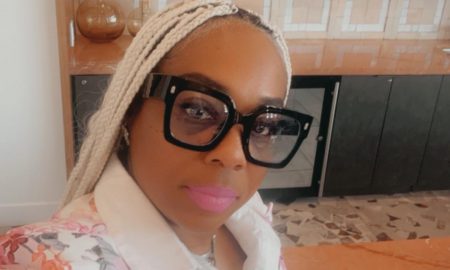
Today we’d like to introduce you to Rachel Lauver.
Every artist has a unique story. Can you briefly walk us through yours?
Art has always been about processing in my life. There is obviously a clear shift in the complexity of what is being processed between the art I made as a child to the art I create now but in any part of my life, creativity and connection have always driven my work.
I was constantly asking questions throughout childhood and art was my way to process through any thought, emotion, experience, or concept that seemed too big to understand. My brain has always worked in metaphors and I’ve always been attracted to existential questions. I recently found stacks of little kid drawings with globes as melting ice cream cones or polar bears standing on ice cubes when I learned about climate change in elementary school. This kind of allegorical processing has carried out in my art throughout my entire life.
Introspection has always been a powerful and dangerous practice for me but I try to take time to reflect on what my actions mean about the person I am. There have been a handful of moments in my life that have challenged every idea I had about my identity and forced me to rethink what I thought I knew. I had a therapist who asked me what percentage I’m to blame for my traumatic experiences. Her interrogation led to me give up on therapy but did spark a new age of rebuilding and reinterpreting my identity. I had spent a lot of years warping my memories to create an enemy out of who I was. My memories were distorted and twisted to shift blame in my direction and I built a fictional identity for myself that was one of unforgivable cruelty. I had been so struck by the idea that forgiveness is the only way to achieve freedom for suffering. Not because I believed the idea, but because I could never see myself reaching the point of forgiveness. The fuel behind my distrust was perpetuated so often and by so many people that I didn’t see how letting go of anger could be a simple solution. It was easier to blame myself for actions I couldn’t explain than to deal with being angry when I knew forgiveness would be a painful journey.
For a long time, I distanced myself from addressing trauma in art. I didn’t consider anything I created to really be “art” in a traditional sense because I was primarily drawing musicians I liked or painting Audrey Hepburn from every angle possible. There wasn’t any thought behind the aesthetic or the meaning of it. It was hard for me to be vulnerable with anything deeply personal and even if nobody saw my art, I would find myself censoring my paintings to distance myself from the parts of my mind I wasn’t ready to face. There were a lot of memories that hid in my subconscious and putting them out into the universe seemed to give them power whether they manifested on paper, canvas, out loud, or even just creeping into my conscious mind. It took me a while to be at a point where I was strong enough to access these thoughts without giving them power over me.
In college, I listened to an artist named Azin Seraj speak about trauma in art. She spoke about an alchemical process in which medicine is found within poison as a metaphor for using the wounds we distance ourselves from as a necessary catalyst for healing rather than as a barrier. The idea that there was healing within trauma changed how I viewed art.
I had the realization recently that creating allows me to have control, which is a feeling I crave when it doesn’t seem like I have control over my circumstances. Because I had built a barrier of self-hatred that stood in the way of healing, what helped me most was to create or study the experiences of other women. Placing myself as an outsider to my own experiences led me to realize that this barrier was built by being conditioned as a woman to blame myself for my experiences regardless of my actions. Women exist in a paradoxical expectation that places us in the wrong in every situation. It is incriminating enough just to be a woman in this world. This thought became the starting point for most of my recent art.
As far as my personal story, I grew up in Tucson but live with my girlfriend in Flagstaff currently. We recently graduated from Northern Arizona University and in a few weeks we are moving and I’m starting grad school. I currently work as a designer and help oversee training in the university’s financial aid, student accounts, and admissions office. I have no idea what the future holds but have found that there is a lot of freedom in the unknown.
Please tell us about your art.
I try to create art in any form that I can. Primarily, I’m a painter and photographer, but I have dabbled in printmaking, ceramics, and any form of art that I’ve had the materials to do. Regardless of the medium, my art is for me before it is for anyone else but I hope that through my own experiences I can offer an avenue for healing in others. I try to make art that is thought-provoking or at least inspires people to look into what I’m talking about or referencing. My hope is not to tell people what to think, just to encourage them to think about it.
My art is typically drawn from specific periods in art, religion, mythology, fables, and my own experiences. A lot of my work is inspired by Dutch baroque paintings and art nouveau prints. There is so much intricacy and rich symbolism in these eras that are beautiful both aesthetically and allegorically. In college, I studied studio art, religion, photography, and advertising. Learning comparatively about religions allowed me to pick away at the common threads that connect every faith and seem to drive all of humanity. Being able to draw connections from art and religion to my own life has created meaning that I can apply to whatever I’m processing or going through. I try to carry the symbolism and technique from classical/classicized art into my art and put deep thought into the significance of every aspect.
I recently made a series of linocut prints based on fables about trust and manipulation. I have had to continuously walk a fine line between kindness and caution in my life because trust is taken advantage of far too often. This is another paradox I’ve seen with expectations of women in interacting with men. Women are often blamed for leading men on if they show any kindness, yet retaliated against if they do not. These fables seem to suggest that the middle road of general caution is the only one that sees any success. While the shift from kindness to caution is one I’ve seen in my own life and that in itself gave this series meaning for me, my overall takeaway in both this series and my photography series mentioned below is that myths and fables seem to always place responsibility on the victim rather than the aggressor.
My most recent project was completed for my undergraduate photography capstone titled “What Lies in Grey Areas”. The series is a study in control and blame. Each photo references baroque vanitas still lifes to explore and challenge the mythological, biblical, and historical grey areas relating to violence against women and place focus on the present-day parallels of these women’s stories.
Grey areas are born out of an unwillingness to accept an action as unequivocally good or evil. While arguably no situation is morally black or white, grey areas can be used to further an individual’s own biases or create doubt in an otherwise solid conclusion. As the gatekeepers of stories have historically been males existing within an imbalanced power structure, grey areas have often been used to strategically justify and excuse assault or redirect blame towards victims.
The stories of Proserpina, Susanna, and Medusa are presented in this project through poems and allegorical still lifes, highlighting the part of their story that has been manipulated to shift blame away from their abusers: the pomegranate seeds, the oak leaves, and Medusa’s curse. All of these are elements used to debate these women’s role in the violence enacted against them. If you don’t know the stories of these women, I highly recommend looking into them and making your own opinions. These women all exist in a space where their innocence or condemnation depends on a reader’s ability to cherry-pick intentionally vague or contradictory details to reach a conclusion. The common denominator of these women is that the grey areas in their stories exist in consideration of their behavior, not the man’s. In each story, the man’s violence is not questioned. The woman’s actions become the focus and create a reason to question if the man’s actions were truly condemnable.
Whether people are familiar with the narratives referenced in my work or not, I hope the stories are explored again and applied to the treatment of women in the modern day. It’s important to take note of any place where something is left unsaid or unanswered, where a variation in interpretation would change who is at fault. Consider who benefits from each interpretation of the story and what the motivations of its gatekeeper may have been. Recognize whether or not the first instinct was to question which of the woman’s actions could have justified the man’s violence.
My hope with this project is to encourage the consideration of how assault is talked about today. There are elements of each story that I still see as relevant in the present and I hope people take the time to consider the implications of that. While researching these stories and interpretations of them, it seemed that the common discourse focused on the actions of women rather than an acceptance that the man’s actions were objectively wrong. This still seems to dominate discussion surrounding assault today as well. The systemic oppression of women is perpetuated by the idea that male actions can always be justified and fault can always be found in women’s actions.
I am not suggesting that anything should be taken as black or white. Only that we all take into consideration who benefits from each interpretation of grey areas, and who ultimately holds the power in deciding the outcome.
Given everything that is going on in the world today, do you think the role of artists has changed? How do local, national or international events and issues affect your art?
Everyone has a social responsibility to speak out against injustice, especially those with privilege, and especially in times like this, I don’t believe this is unique to artists. There has always been debate over whether art is for the individual or society. In my opinion, even the most deeply personal art can have meaning for everyone because there are common threads of human experience that connect us all. That being said, not everyone creates art with the intent of creating meaning for their audience. There is a fine line between social consciousness and censorship and art should not be made more palatable to appeal to the masses.
The role of art has changed drastically and, in my opinion, has become more individualized. A lot of what people think of when they think of famous art was commissioned and expresses the opinions of its patron far more than its artist. Art was political but more in a sense of giving power, religious favor, and status to its patron. Art historians use art to draw conclusions about how society thought in that time period. Artists retroactively hold the responsibility to speak for their society; when in reality they often spoke for their patrons. In contemporary art, it’s much less common to assume that someone’s art speaks for all of society and much more common to think of art as an expression of that artist’s emotions. However, in contemporary art, I think in times of tension there is always a rise of political art. The role of artists changes to inform or critique local, national, and international issues rather than express emotions individual to themselves. I don’t think this is a new phenomenon, but I think it’s seeing a resurgence given the state of the world.
My art is deeply personal and also deeply societally critical. My photography project was sparked from the treatment of women’s bodies in media, history, religion, mythology, and politics both past and present. The overarching commentary of my project is that women locally, nationally, and internationally have historically been second-class to men and valued only for how they can benefit men. I wanted to explore the concept of blame and see how the paradoxical expectations placed on women carried out in my own life and in this country. In the beginning stages, there is never a universal meaning to what I create; for this project, I wanted to understand why it was my natural instinct to blame myself for actions done against me. The more I researched that more I realized how common it is for women to be taught to blame themselves and the focus of my work became much broader. With the #metoo movement, time’s up, and the current abortion policies, it is clear that the concept of female blame and the justification of violence against women is still extremely relevant.
I am extremely cognizant of my privilege and even with the current assault on women’s rights in America, I still recognize that there are so many countries where it is far more dangerous to be a woman; especially a gay woman. Having a platform to speak freely alone is a luxury I don’t take lightly. This does not mean that I will remain complacent about the treatment of women in this country. In the end, while my work is deeply based in what I see as a fairly universal experience, it is personal to me because I cannot speak for others, nor do I want to. I hope to spark dialogue and encourage people to think about what is going on; I hope through these discussions to give an opportunity for others to speak about their own experiences if they are comfortable. I do not have the power to change the world, but by encouraging people to think I hope to at least have the power to change the conversation.
How or where can people see your work? How can people support your work?
My undergraduate capstone project is currently on display at Northern Arizona University. My website goes more in depth about the project. I don’t claim to be an expert in anything I talk about and don’t claim to speak for the experiences of all women so please please leave me a comment! Tell me if you see this in your own life, tell me if you think I’m wrong or if you’ve read something that would add a whole new layer to what I’m talking about. Creativity and connection have always been drivers in my life and I want more than anything to create a space where people can speak openly about their experiences and interpretations.
If you are interested in buying prints of any of the still life photos or art on my website, please email me or use the contact form on my website. I also do freelance portraits and am hoping to get more into photography for branding and marketing. If you are interested in booking a session with me, please review my website and contact me.
I have personal and business Instagram accounts that you’re welcome to follow!
Contact Info:
- Website: RachelDawnPhotos.com
- Email: Rachel@RachelDawnPhotos.com
- Instagram: instagram.com/racheldawnphotos
- Other: instagram.com/rachel___dawn


Getting in touch: VoyagePhoenix is built on recommendations from the community; it’s how we uncover hidden gems, so if you know someone who deserves recognition please let us know here.
Popular
-

Phoenix’s Most Inspiring Stories
-

Building Love With Purpose: Darryl & DeLonda Tucker on Faith, Resilience, and Expansion
-

Andrea Savarese Is Redefining Veterinary Care Through Calm, Connection, and Compassion
-

Sun Cities 4 Paws Rescue Is Building a Sustainable, Compassion‑First Future for Feline Welfare