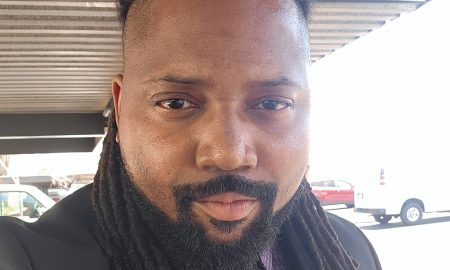
Today we’d like to introduce you to Peter Costa.
Every artist has a unique story. Can you briefly walk us through yours?
My story has always been at the intersection of arts and technology. During high school I spent most of my time either writing and practicing to be a concert pianist, tinkering with computers and playing drums in a band called Scary Kids Scaring Kids. Right after I graduated, our band got a lot of attention, and we ended up signing to a record label and touring around the world. I eventually left the band to pursue an education at Arizona State University and received degrees in both Physics and Music Composition. During my time at ASU, I worked writing and producing music for TV, video games, and producing. Somehow, I also found time to work in a biophysics lab and have three kids.
I loved being an artist, I loved science, and I loved being an entrepreneur. I started working with new technologies like Virtual Reality and Augmented Reality and started a company right after graduating from ASU. Our company is Baltu Studios, and we are at the intersection of technology, science, and arts. We use new emerging technologies to enhance human capability.
Please tell us about your art.
Baltu means ‘Living Beings’ in Old Sumerian, one of the first written languages in the world. Baltu reflects the idea that all human beings have a common ancestor in culture and communication.
Though not art in the traditional sense, Baltu Studios is taking the functionality of technology and forms of art to help enhance human capability. We’ve augmented human experience through interactive installations taking data in multiple forms and translating it in the form of lights, sound, and symbols and are passionate about educating others in creative ways.
We’ve created a VR experience that allows the user to be immersed in an animated performance of a string quartet, almost like being in Fantasia. We’ve also taken users outside the Earth’s atmosphere to experience an interactive meteor museum in outer space. Baltu Studios has also collaborated with NASA, universities, museums, and sensor companies to solve complex problems as well as create amazing pieces of art.
As an artist, how do you define success and what quality or characteristic do you feel is essential to success as an artist?
I address success through my personal level of happiness. My personal level of happiness is usually based on three main pillars:
1) Do I enjoy what I do? Do I have enough time for my personal life?
2) Do I make enough money to provide for my needs?
3) Do I enjoy the people who I work with?
My past experiences have given me the insight to disregard the idea of success being based on “am I the best” or relating it to fame, recognition, or the amount of money someone makes.
How or where can people see your work? How can people support your work?
Our work ‘In Harmony’ can be viewed publicly at the i.d.e.a. Museum in downtown Mesa, Arizona. We are currently collaborating with the artist, Tania Candiani, the ASU Art Museum to create an audio-visual piece that addresses the issue of the extended border wall which would disrupt animal migrations between northern Mexico and southern Arizona.
We have some great art-based VR experiences that use programmatic audio/visuals that are currently being developed. We would love to find a place in which they can be housed.
We also host a monthly meetup, “Phoenix VR for Good.” Our community of 250+ members engages in interactive discussion addressing all of the benefits of VR and how it can have a positive impact on society. Our most recent meetup addressed the application of using VR for Meditation and Mindfulness.
Contact Info:
- Address: 136 W Main St. #208
Mesa, AZ 85201 - Website: www.baltustudios.com
- Phone: 4807519650
- Email: peter@baltustudios.com
- Instagram: /baltustudios
- Twitter: @peteycosta @baltustudios


Getting in touch: VoyagePhoenix is built on recommendations from the community; it’s how we uncover hidden gems, so if you know someone who deserves recognition, please let us know here.
Popular
-

Phoenix’s Most Inspiring Stories
-

Building Love With Purpose: Darryl & DeLonda Tucker on Faith, Resilience, and Expansion
-
Andrea Savarese Is Redefining Veterinary Care Through Calm, Connection, and Compassion
-
Sun Cities 4 Paws Rescue Is Building a Sustainable, Compassion‑First Future for Feline Welfare