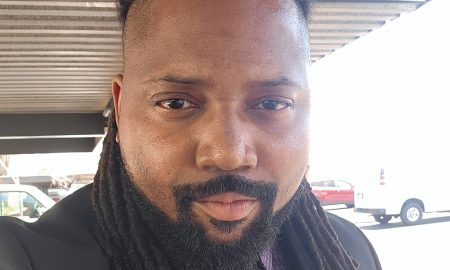
Today we’d like to introduce you to Miguel Fernandez.
Thanks for sharing your story with us Miguel. So, let’s start at the beginning and we can move on from there.
I started in 2005 as just another successful but standard-issue tenured composition and literature professor at Chandler Gilbert Community College. In 2011, after a positive experience with a veteran in the classroom, I decided to request from advising that they direct student veterans into my Spring 2012 classes. I am not a veteran but was deeply influenced by my father (Korean war Veteran) and by my 6th grade teacher (A WWII Veteran who came to Harlem NY to teach K-6th grade, seeking a mission after combat, and so deeply influenced my life and way of thinking that I wrote a TED Talk Blog about finding him after 31 years since 6th grade).
By the 2nd day in Spring 2012 loaded with veterans, I knew I was terribly under-prepared to teach, much less able to help succeed, the mostly non-officer veterans returning to school — entering the college classroom, By 2013 I submitted and earned a six month sabbatical to study up on practical ways to best serve in the college classroom, those who had served in the military and had separated, honorably or been medically discharged. This included supporting those who were ready to be general college population, but also helping those dealing with the complexities of transition to civilian life, in some cases PTSD, and in many cases, those who had been out of classroom settings long enough to feel like college was a hostile foreign ‘land.’ By 2014 I had successfully researched and put together a toolkit of techniques and best practices to share (for free) and train other professors in improving the educational and transition success rates of student veterans. From 2014 to the present day I have done faculty training,and presented at dozens of conferences, advocated for support of veteran services offices on campus, and shared teaching techniques from the toolkit across the Maricopa Community Colleges, Arizona, and eventually across the country. I have promoted the value veteran students bring to college, and practiced the community-centered belief that veterans are best served integrated among young and re-careering students in the classroom, rather than secluded in veteran-only cohorts, or left to find their own way at colleges as a mostly invisible minority on campuses. As a volunteer FacultyLiaison for Student Veterans for the last six years at Chandler Gilbert Community College, I have worked face-to-face and issue-by-issue at helping retain military connected students and aiding faculty in understanding how to work with student veterans. I have learned and applied techniques to improve learning techniques for Veterans (for example checklist-building ) and ways of improving communication between faculty and student veterans to everyone’s benefit. My greatest current success is in creating and teaching a highly praised and highly student-reviewed Introduction to Literature Course focused on the Veteran Experience for non-veteran freshman students.
Typically filled with younger students, the course has encouraged and built an understanding of both the differences in life experiences and the in-common humanity of civilian and veteran life. Unintentionally, exit surveys and discussion groups have shown a bridging of the military-civilian divide on a personal level, as young and non-military service students better understand the active duty, reserves or veterans in their communities, at their colleges/workplaces, and most importantly in many cases, among their families.
Has it been a smooth road?
Being a non veteran, it was a slow and difficult road gaining trust, without seeming over-valorizing or patronizing. As faculty, I understand the classroom issues and teaching needs from a professor’s point of view and finding common ground where there is ‘accommodation but not exception’ for Veteran student needs.
The Introduction to Literature on the Veteran Experience was initially intended for Veterans but failed to find those students. However, once I re-developed it as a course for civilian freshman students, especially younger students straight out of high school, it becomes not only a hit but a great way to break the wall of the military civilian divide.
We’d love to hear more about your organization.
Chandler Gilbert Community College is open to all students but is especially of value to those who aren’t already on a higher educational pathway because of background, high school success, or socio-economic expectations. Military connected officers are typically going straight to University; Community College allows the typical enlisted veteran to learn and align to any future they seek beyond their time serving in the military.
Is our city a good place to do what you do?
Chandler-Gilbert Community College is positioned perfectly for both University transfer and direct to workforce transition. Serving two of the most prosperous and fastest growing cities in Arizona with future workers and leaders from ANY cultural or economic background is part of the college’s educational mission and part of the Arizona promise.
Contact Info:
- Address: Chandler Gilbert Community College
2626 E Pecos Rd, Chandler, AZ 85225 - Website: https://www.cgc.edu/Students/Veterans/Pages/Home.aspx
- Other: The original sabbatical for best practices for faculty working with student veterans: https://www.cgc.edu/Students/Veterans/Pages/Faculty-training-and-resources.aspx


Suggest a story: VoyagePhoenix is built on recommendations from the community; it’s how we uncover hidden gems, so if you or someone you know deserves recognition please let us know here.
Popular
-

Phoenix’s Most Inspiring Stories
-

Building Love With Purpose: Darryl & DeLonda Tucker on Faith, Resilience, and Expansion
-
Andrea Savarese Is Redefining Veterinary Care Through Calm, Connection, and Compassion
-
Sun Cities 4 Paws Rescue Is Building a Sustainable, Compassion‑First Future for Feline Welfare