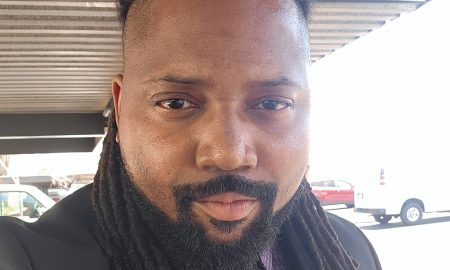
Today we’d like to introduce you to Luke Anable.
Thanks for sharing your story with us Luke. So, let’s start at the beginning and we can move on from there.
I moved to Tucson, AZ in 2008 and took a job at a 24-hour diner called ‘Grill.’ At the time, it was one of the few places open after 9pm in downtown Tucson, a kind of rallying point for all strange and inspired people who lived downtown in those days.
The owner had a great, old world, palate: he stubbornly stuck to the classic English, Irish and German ales–unfashionable at the time of craft beer’s burgeoning but also unassailable in their own right. That bar started me on a path of exploration and tasting (and avoiding the hype) which I’m still on today – exploring by region, by process, by ingredient and always minding the fringes which is where the exciting things are happening. Everything was new at that point – we were discovering cocktail culture, Belgian sours, real sherry, amari, mezcal, all the esoteric old-world fruit distillates, etc. We really wanted to taste everything. The larger movement of industry folks was and remains oriented towards more authentic, less industrial expressions of wine and spirit and we were definitely on that train.
For me, those years in Tucson were one of the expansive periods of time when the path you’re on feels completely new and uncharted and yet as you get to certain milestones it becomes obvious (in a gratifying way) that you’re on a well-worn path of tasting and seeking authenticity: allowing taste to be a compass in the world. What I’m learning now is that this compass leads, ultimately, (via farming, fermentation and the primacy of raw ingredients) back to the earth.
My coworker and colleague took a job in Brooklyn around that time which was important because it meant I had a couch to crash on in New York where, it seemed, just about everything important in F&B was happening. Eventually, and I suspect this is true of most people, my interest in taste and taste’s connection to place and process lead me to wine. It was a great time to be living in Tucson and traveling to New York. In New York, there was no barrier between great wine, great cocktails and great food, unlike the rest of the US where wine had been relegated to the uninspired environs of the ‘wine bars’ of the time.
So, I was tasting wine in New York and coming back to Tucson and trying to find places to buy it. A lot of it was here in the classic portfolios – Neil Rosenthal and Kermit Lynch – but some of it wasn’t, and even what was here was often overlooked or ignored by the companies who owned the wine: in that moment the quality wine distributors were getting big enough that the smaller portfolios they held where being neglected in favor of the bigger ‘value’ portfolios. The profound thing about this business is that really great wine truly belongs in the hands of small companies who know how to value it and speak about it: wine made by hand in small quantities demands a different set of values than wine made in bulk and sold in volume. This basic fact has always defined our mission and purpose.
I eventually found a husband and wife in Arizona who were distributing what I thought was the best natural wine importers and I started working with them, selling the wines in Tucson, and traveling with them in Europe to the bigger natural wine fairs. I bought the company soon after and have been slowly growing since, anchored by a handful of key accounts in Flagstaff, Phoenix and Tucson who have been with us from day one and continue to make everything possible for us. Those are the people that really deserve our attention, the visionary restaurants and small wine bars and retail shops that always drive the industry forward.
This is all to say that wherever I am, I got here by pursuing taste. Taste has always been enchanting to me, it is poetic and strange. One does not have to get too far from the shore to realize that the limited vocabulary we have for the sensation of taste is inadequate. We are thrown into a more experiential and metaphoric language as we try to express experiences which are composed of flavor and texture and dynamism. This last point we miss so often, especially in wine – that the brilliance is always in the change and gradients between change, not in the static encounter with a one-dimensional ‘flavor’.
Great, so let’s dig a little deeper into the story – has it been an easy path overall and if not, what were the challenges you’ve had to overcome?
I know more about organic growth now than I did then. One thing, for instance, that organic growth implies is that you don’t know where you’re going and you don’t really try to understand where you’re going until you get there. So we try not to spend too much time looking forwards or backward–a mentor of mine always says to ‘do the work that’s in front of you,’ and I think this is what she’s talking about.
What I appreciate more and more is the network of people who we are aligned with – farmers, small wine importers, independent restaurants and retailers. Everyone with a real, human story and a real human task. People who are dedicated to what they do and are making some kind of stand for it (and are therefore always out on a limb to some degree).
This alignment means we don’t lose our way or forget why we’re doing what we’re doing. It’s important that farmers who are doing the work of learning, practicing and spreading sustainable and regenerative agriculture are able to get their wines to market. It’s also true that these wines have a special connection to the experience of taste, a fact which continues to draw industry people into their gravity. And it’s important that people are able to experience something more authentic and connected to the earth in their eating and drinking habits.
Alright – so let’s talk business. Tell us about The Natural Wine Co – what should we know?
We are a small, locally-owned wine distribution company in Arizona. We sell wine to restaurants and wine shops throughout Arizona. We specialize in organic, biodynamic, and natural wines. We are specialists in this niche and probably a little too myopic about our little corner of the wine world. That said, I think it’s important to go deep rather than wide. So we go deep into the wines we love which are wines which are fermented naturally, grown traditionally and reflect their unique terroir.
Has luck played a meaningful role in your life and business?
Luck is everything! But I think one has to meet luck halfway – take a chance, try not to suffer needlessly, know what you’re interested in and what animates you. Also, listen to people, try not to lie. And give up the idea of hustling or hacking your way to some vaguely defined notion of success. Then maybe you can be lucky and have some faith, and even when things go south it’s not as catastrophic as we sometimes like to imagine.
Contact Info:
- Address: The Natural Wine Co
395 S Convent Ave
Tucson, AZ 85701 - Website: www.thenaturalwineco.com
- Email: luke@thenaturalwineco.com
- Instagram: @thenaturalwineco


Image Credit:
Luke Anable
Suggest a story: VoyagePhoenix is built on recommendations from the community; it’s how we uncover hidden gems, so if you or someone you know deserves recognition please let us know here.
Popular
-

Phoenix’s Most Inspiring Stories
-

Building Love With Purpose: Darryl & DeLonda Tucker on Faith, Resilience, and Expansion
-
Andrea Savarese Is Redefining Veterinary Care Through Calm, Connection, and Compassion
-
Sun Cities 4 Paws Rescue Is Building a Sustainable, Compassion‑First Future for Feline Welfare