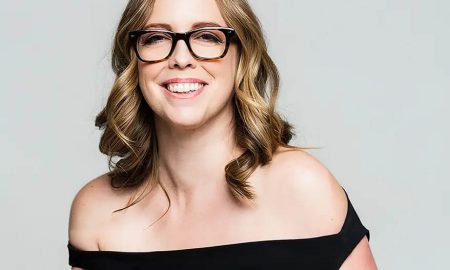
Today we’d like to introduce you to Kandice Kardell.
Kandice, can you briefly walk us through your story – how you started and how you got to where you are today.
It’s difficult for me to think in timelines; it feels as though I’ve lived multiple lives during my 36 years. I can say with certainty that I was born to learn, create, and teach—my history tells me so. Visual art, just as any language, isn’t created in a vacuum. The muse of a landscape painter is the external landscape, for a portrait painter, it’s people. My love of learning keeps me creating, and the love for my students keeps me grounded.
After graduating from Arizona State University in 2005 with a BFA in Art, I moved to Chicago. Honestly, I wanted to get as far away from Arizona as I could to experience a kind of diversity my home couldn’t offer me. My family has been in Scottsdale for six generations; I have a deep connection to the land here, but I maintain a love/hate relationship with “home.”
The desert is a remarkable place to reflect, introspect, digest—it can also wear you out, slow you down, delude you. So, I moved to Chicago with a couple of duffle bags and no job, but life unfolded for me. I worked a pivotal three years as a teaching artist with culturally and linguistically diverse populations. The immigrants and refugees I worked with taught me so much and inspired me creatively, spiritually, and intellectually.
My world expanded immensely in Chicago, and it didn’t stop there. I knew I wanted to work internationally and contribute in some meaningful way, but who was going to hire a (then) monolingual American artist? Anyone! As long as you agreed to teach English, not art. Everyone has a friend, cousin, ex-girlfriend, or uncle who teaches English abroad, right? They aren’t necessarily qualified, but they do it and so did I, after receiving three months of training.
Strangely enough, I fell in love with this practice, became a Master of Teaching English to Speakers of Other Languages (ESL/ELF), and lived abroad for eight years. I was able to use arts integration in my language classes, and the mix of intense experiences and relationships I forged has undoubtedly informed my visual work.
In 2017, I came home to Arizona for a visit and never left. It wasn’t my intention to stay, but an inexplicable feeling kept me here. Perhaps it was time to let the desert work its magic and integrate everything the past decade had taught me.
Since coming home I’ve been teaching at various higher education institutions, and most recently became a Studio Artist for the Tempe Elementary District. I now have my own studio thanks to the Studio Artists Program—this may seem like a small benefit to many, but after living out of a suitcase for eight years I finally have a stable space to create!
We’re always bombarded by how great it is to pursue your passion, etc. – but we’ve spoken with enough people to know that it’s not always easy. Overall, would you say things have been easy for you?
As stimulating as it is, traveling can be both lonely and logistically difficult for a visual artist to maintain their practice. I had to reestablish myself in multiple countries, develop friendships, and seek out other artists. Oftentimes the establishing, developing, and seeking were unsuccessful.
To say it was difficult to meet other artists in small-town Honduras or locate art materials in Myanmar would be an understatement. I also think having multiple identities creates struggle/tension. I see myself as a Traveler, capital T, just as much as Teacher and Artist.
Sometimes people are uncomfortable with that, they’re not quite sure how to package you. This becomes especially difficult in terms of employment or establishing a legitimate membership within certain communities. I have no regrets or complaints though. Struggle will always exist so long as there is desire.
We’d love to hear more about your art.
I’m a mixed-media visual artist who works with mostly fiber, printing, and alternative photographic processes. Although my work can take form on canvas or paper, as three-dimensional sculpture or artists’ books, my treatment of material, the layered and textural quality, remains consistent.
Conceptually I most often work with death in mind—death denial, cultural differences in mourning rituals and the adornment of the dead. I find it fascinating how Western culture, generally speaking, shies away from these themes. I’m not morose, I swear!
While living in Chicago, I was introduced to a book by Jonathan Dollimore titled Death, Desire and Loss in Western Culture. I continue to read and reread individual chapters; the book has remained a source of inspiration since 2006. My grandmother passed that same year.
Prior to her passing, I was forced to decide whether to keep my new job in Chicago or travel to see her in Arizona one last time—I decided to consider my employer’s feelings over my own. During this time, I had earnest conversations with my Moroccan friend, Mohammed, about mourning in his culture.
That might have been when my interest in cultural differences of death and mourning first piqued. Experiencing grief and death outside of the United States has further motivated me to continue this body of work, regardless of the unmentionable topic.
In Honduras, I saw flashy morgues pop up like new restaurants, and watched young children reenact murderous drug-violence for school plays. In Myanmar I observed dead bodies in open-air caskets being mourned in public for days and was invited to meet the dying grandparents of a student—these scenes are a far cry from our American obsession with youth, beauty, and ambition, aren’t they?
When I’m not musing about America’s #1 taboo, I create quick pieces for a body of work I call Accuracy vs. Fluency. For these pieces, I use whatever I happen to have lying around—horse hair, oil paint from high school, old pieces I’ve torn up… This body of work breaks up the larger, planned pieces. This is simply where I flow with intuition, where I relax.
Any shoutouts? Who else deserves credit in this story – who has played a meaningful role?
My students. When I say that my students keep me grounded, I mean it. The art world can be so self-absorbed that it becomes empty—to me. My students, especially those with developing English language skills, have taught me a lot about vulnerability and expression of the self/ego. We discuss speaking/writing with accuracy vs. fluency and the balance one must cast.
Although accuracy is incredibly important for effective communication, most students struggle with fluency—really owning the language, risking misunderstanding. Constructing a perfect sentence can be safe, but expression takes guts. I see visual language no differently. In addition to my students, there are countless unsung heroes… the people who let me stare, observe, partake, and relate around the world—they are my landscape, my muse.
Contact Info:
- Email: kandice.kardell@gmail.com
- Instagram: https://www.instagram.com/thekandice


Image Credit:
Robert Brandan Martinez
Getting in touch: VoyagePhoenix is built on recommendations from the community; it’s how we uncover hidden gems, so if you know someone who deserves recognition please let us know here.
Popular
-

Phoenix’s Most Inspiring Stories
-

Building Love With Purpose: Darryl & DeLonda Tucker on Faith, Resilience, and Expansion
-
Andrea Savarese Is Redefining Veterinary Care Through Calm, Connection, and Compassion
-
Sun Cities 4 Paws Rescue Is Building a Sustainable, Compassion‑First Future for Feline Welfare