Today we’d like to introduce you to Hart Shafer.
Thanks for sharing your story with us Hart. So, let’s start at the beginning, and we can move on from there.
My wife, Kerrie, has fought chronic daily migraine since she was a teenager, and in 2003, the attacks became intense enough that she had to stop regular work. We’ve tried everything we could find that might help her, including countless drugs, physical therapy, Botox, acupuncture, Chinese herbs, and even an implanted experimental nerve stimulator.
During a visit to a neurologist at Mayo Clinic in 2011, Kerrie was wearing her sunglasses because even normal indoor lights were so painful. The doctor was sympathetic to why she needed the sunglasses but warned us that wearing sunglasses indoors could make her sensitivity to light worse over time as her body adapted to the dark. During that appointment, the neurologist recommended we look into glasses with a special precision tint that filters the light that can trigger or aggravate light-sensitive conditions like migraine.
It took us a while to find glasses with the right tint, and ordering them was a pain and took a long time, but we were glad once she got them. Kerrie noticed an immediate difference with them and could once again go out of the house to any place with bright or fluorescent lights. Even better, they also seemed to help with her computer monitor.
While the tint was great, the glasses were far from perfect. They weren’t very sturdy, and they let in too much light around the lenses, especially from above. I thought, “I don’t know anything about glasses, but I could do better than that!” It took a few months of making calls and trying different things before I made her a pair that wrapped around and protected her from light from all directions. They were a tremendous improvement and made a huge difference for her.
Kerrie has been writing about migraine and chronic illness for years and has made friends with many people who have similar problems with light. We decided to make a few pairs for people she knows that had similar issues. It was when they told us how much of a difference those prototypes made for them that I knew that I needed to find a way to help all the people with these same issues, and TheraSpecs was born.
Has it been a smooth road?
It’s never smooth! The first big challenge was just getting the lenses and frames right in the first place. The lenses need to filter very specific wavelengths of light in specific amounts in order to be effective, and it is an ongoing effort to make sure that every lens we make is filtering correctly. That fundamental requirement, plus the challenge of finding reliable mass-production partners, has been a years-long struggle with reliably sourcing product that meets our high-quality standards. I feel like we’re just now getting a handle on all those issues seven years into the journey.
Personally speaking, health insurance was a huge challenge early on. Leaving a steady job with benefits and starting a company when Kerrie has a preexisting chronic condition definitely felt emblematic of that entrepreneurial analogy of, “jump off a cliff and assemble an airplane on the way down!” After the COBRA coverage from my last job ran out, Kerrie and I went as far as to enroll at community college students so we could get basic student emergency coverage for a semester to tide us until the Affordable Care Act went into effect. It was a huge relief when TheraSpecs had grown enough that we could enroll our entire staff in a group plan.
We’d love to hear more about your business.
TheraSpecs are precision-tinted glasses that help with migraines, post-concussion syndrome, and other issues triggered or worsened by fluorescent lighting, computer and device screens, or sunlight. They work by filtering the wavelengths of light that cause the most pain response and by protecting from the faster-than-you-can-see pulsing in fluorescent lighting and device screens that can cause issues for many people.
Clinical research shows our precision-tinted lenses can reduce migraine frequency by 74% and provide reduce painful light sensitivity better than sunglasses. We develop our own styles that blend fashion and protection and can also put our lenses into just about any frame people send to us, with or without a prescription. We’re now the leader in glasses for light sensitivity and have helped tens of thousands of people get out of the dark and back to their lives.
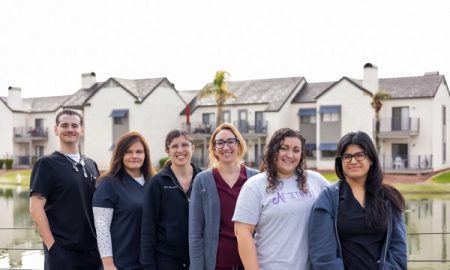
I’m most proud of the team we’ve built at TheraSpecs. It is the most engaged, caring, compassionate group of people I’ve ever had the pleasure to work with, and how much they care is reflected to us every day in the comments and thanks we receive from our customers. It is extremely gratifying every time I hear from a customer that their TheraSpecs helped them get back to their lives, and even more when they tell me our team made them feel not just helped, but actually cared for.
Is our city a good place to do what you do?
Phoenix has been a great place to start and grow a business. Our costs are lower than in other cities of comparable size and big enough that I’ve been able to find great people. I’d absolutely recommend Phoenix as a great place to start a business. That said, things could always be better. There are two main areas of improvement for Phoenix that are at the top of my mind: education and, well, weirdness.
First, education. A first-rate educational system all the way through our universities is critical to our future success. Arizona has long since stopped being able to depend on natural resources to keep our economy vibrant. Our only hope for future prosperity as a city and a state is to through the information economy, and a well-educated populace is the only way that will be possible. Phoenix needs to continue to fight for state policies that keep education at the forefront.
Second, “weirdness.” One of the things that makes innovative, dynamic cities like San Francisco, New York, Seattle, Austin, and Boulder really work is that they heartily embrace people who are comfortable being themselves, whatever those selves might look like, through both government policy and general culture. Austin’s famous “Keep Austin Weird” bumper sticker encapsulates that idea so well.
The most creative, engaged people want to live in a culturally vibrant place where people from all walks of life are comfortable to express themselves, even if mainstream society might deem them “unusual.” Striving to make Phoenix an inclusive city for everyone will attract more talent and make this an even more interesting city to live in.
Pricing:
- Indoor TheraSpecs from $99
- Outdoor (polarized) TheraSpecs from $129
- Prescription TheraSpecs lenses from $125
Contact Info:
- Website: www.theraspecs.com
- Phone: 602-456-6896
- Email: contact@theraspecs.com
- Instagram: https://www.instagram.com/theraspecs/
- Facebook: https://www.facebook.com/TheraSpecs/
- Twitter: https://twitter.com/TheraSpecs


Getting in touch: VoyagePhoenix is built on recommendations from the community; it’s how we uncover hidden gems, so if you know someone who deserves recognition please let us know here.
Popular
-

Phoenix’s Most Inspiring Stories
-

Building Love With Purpose: Darryl & DeLonda Tucker on Faith, Resilience, and Expansion
-

Andrea Savarese Is Redefining Veterinary Care Through Calm, Connection, and Compassion
-

Sun Cities 4 Paws Rescue Is Building a Sustainable, Compassion‑First Future for Feline Welfare