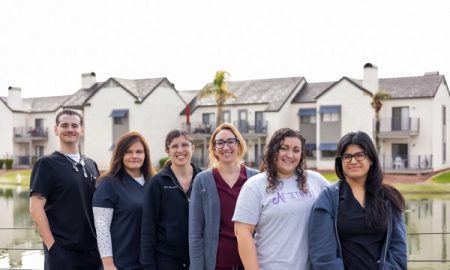
Today we’d like to introduce you to Grant Vetter.
Every artist has a unique story. Can you briefly walk us through yours?
My story as an artist started with drawing a lot when I was very young, whether it was comics, copying drawings by other artists or trying to understand books on human anatomy and different rendering techniques. Both of my parents worked full time and we didn’t have a lot of other family nearby, so I like to think that I had an early studio art practice because of this. LOL! My love of art progressed to painting in college, both figurative and abstract, but my abiding interest in art finally developed into writing and curating later in life when I was working on my Ph.D. My uncle was a painter, and my father was a bit of a poet as well as an English teacher, so I guess I got something essential to my creativity from each of them. Both were heavily influenced by modern and postmodern trends in painting and poetry, so I grew up thinking that talking about contemporary art at home was pretty normal. But like all artists, I struggled my way through learning how to make art, and then followed writing and curating as a general broadening of my creative activities. That said, I’ve done a little of everything over the years at one time or another, including being a comic book artist, an artist assistant, an illustrator, an art teacher, a gallerist, a book editor, an art critic, etc. All of these experiences have only helped to broaden my definition of what it means to live and work in the arts today.
Please tell us about your art.
I made abstract paintings for a while that were about the experience of beauty and the feeling of the sublime. I was heavily influenced by process based-abstraction at that time but always managed to sneak some social or political content into the work, however obliquely. By the time I wrote my first book, The Architecture of Control, I was fully engaged in the critique of western structures of power and domination that emerged with the rise of techno-capitalism. And yet, behind all of my properly “artistic activities,” I consider the press releases, exhibitions and essays I’ve written in the past few decades to be a deeply meaningful part of my “artistic” output too. Most recently I’ve been working on my next book which applies consciousness studies to the fields of curatorial practice, art history, art theory, and art criticism. I feel it’s my most important work to date and I hope it will give people an entirely new way to think about art.
Given everything that is going on in the world today, do you think the role of artists has changed? How do local, national or international events and issues affect your art?
I do think that the role of the artist has changed dramatically between the periods of modernism, postmodernism, and pluralism. Today everyone is concerned about global issues whereas in the past people were more interested in thinking about art production from a more limited historical horizon of concerns, influences and developments. This change has occurred because we are all now world citizens and as the world gets more and more crowded we are increasingly aware of how everything affects everything else and how our individual actions have a direct impact on the living world all around us. From this perspective it is impossible to continue to discuss art in terms of the limits of the medium… and even the dominant themes of postmodernism are now giving way to a much broader definition of artistic value and critical engagement.
How or where can people see your work? How can people support your work?
My current work is centered on writing and my curatorial practice. You can check out my upcoming projects at Fine Art Complex 1101 or stop in and say hi at an opening which is a great way to support artists from all over the valley and across the nation.
Contact Info:
- Website: http://www.grantvetter.info
- Phone: 480.760.1709
- Email: grantvetter@gmail.com
- Instagram: https://www.instagram.com/vettergrant/
- Facebook: https://www.facebook.com/grant.vetter
- Other: http://www.fineartcomplex1101.com


Image Credit:
Grant Vetter
Getting in touch: VoyagePhoenix is built on recommendations from the community; it’s how we uncover hidden gems, so if you know someone who deserves recognition please let us know here.
Popular
-

Phoenix’s Most Inspiring Stories
-

Building Love With Purpose: Darryl & DeLonda Tucker on Faith, Resilience, and Expansion
-

Andrea Savarese Is Redefining Veterinary Care Through Calm, Connection, and Compassion
-

Sun Cities 4 Paws Rescue Is Building a Sustainable, Compassion‑First Future for Feline Welfare