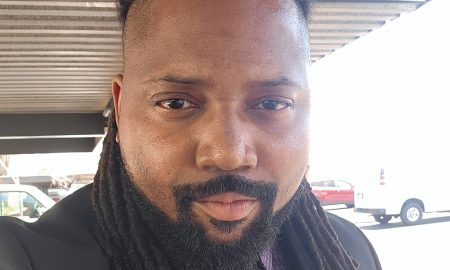
Today we’d like to introduce you to Francisco Pinto.
Francisco, before we jump into specific questions about your work, why don’t you give us some details about you and your story.
I was influenced by my father from my early life, also form an uncle who lived with us by that time, my uncle Adrian was studying painting and commercial drawing and his influence and learnings marked my path towards my future. Although my father was not an artist he had different hobbies like painting, assembling scale models, crosswords and many similar things he used to do as a therapeutic exercises. He also used to listen to good music from different genres, Barry White sound repeatedly at home.
My father was in charge of a photography studio called Zerda, very well known in Caracas at that time and part of the photos he used to exhibit were from my brother and I; he influenced us in a good way. One of my brothers took music as a career and is currently a DJ and my youngest brother is a photographer who lives and work in Canada.
I remember my father bringing toys on a monthly basis to me and my brothers and I think that memories from these toys have an influence in my current work.
My first steps in painting were on primary school, I used to draw everywhere, I collaborated in the monthly school newspaper, I loved drawing cartoons characters which I could finish very quickly with no major effort.
I remember the first time my uncle took me to a museum, I was really impressed by the social works of the Venezuelan painter Hector Poleo and from that moment I had no doubts the path I wanted to follow. My uncle took me my first nude models painting courses at one of his teachers, Pedro Centeno Vallenilla.
My uncle also took me to street public performances of Juan Loyola, a remarkable and irreverent artist. I managed to become a friend of Juan Loyola and became part of his collaborators. Thanks to Juan Loyola I met great artists and open my eyes to modern arts. Following Juan Loyola´s death I took a time to pause for reflection, to think about life and death. I cultivated my spiritual life particiating in different catholic groups, I was introduced to an Indian guru called Sai Baba and after visiting a Sai centre I felt something electric on that visit.
I became a devout follower and met the woman who became my wife during 17 years, we currently share a beautiful daughter. I visited the Sai Baba´s asram in India and spent a month over there, I believe the most marvellous thing that I have ever lived apart from my daughter’s birth was this moments India where my passion for arts reborn.
On my return to Venezuela I started working on Sai Baba and Hare Krishnas related subjects. In 2006 started my career in visual arts with, I enlisted to drawing and painting classes with Patrizia Rizzo disciple of master Pedro Centeno Vallenilla.
In 2008 I started participating in national arts exhibitions and entered into the gallery circuits and started selling my work. I participated in exhibitions in Bogotá – Colombia and Sevilla – Spain.
I also became aware of Jean Michel Basquiat´s life and art and his works marked a inflection point in my career, to look at my ancestral roots, my African heritage as Caribbean and in 2012 I made a fresh start and the black art became part of my life, I now try and project myself internationally dealing with subjects as racia discrimination, slavery, identity and power within a contemporary and universal language. In my work I used supports, toys and found objects, iconography, graphic signs, characters from vignette cartoons, appropriation and reinterpretation, archive photos.
I use in my work collages, drawing, assembly and installation with an unfinished aesthetic made on purpose, closer to pop art. I found the Venezuelan multiculturalism to have a link with the Latin America who was neglected their African influence, I am cantered in portraying the life of the astute slave “the Cimarron” as on the first free characters in the Americas who remained in resistance during a long period and who became a legend in the course of history.
We live a present where the past is not dead in terms of racism and violence. In Venezuela we do not feel much discrimination in terms of your skin colour, in a country where white, black, yellow, etc, are all well mixed, the racism comes from social status and not from skin colour. It is common to be called “negro” by friends or family in a relaxed way.
Venezuela is now living its worst social and politic crisis but we are resilient and prepared to keep fighting to fight against adverse situations.
Overall, has it been relatively smooth? If not, what were some of the struggles along the way?
The subejct Black as visual languga could result in being marginated and sicrimianted in white circuits guilds which are still very segregated, I have found classism in some circles which is something I did not expect. Focused black art Galleries have inspirated me. My art is not conventional nor submissive in exchange for favours or power quotes, I am fighting to find my place in this art and have faith in myself and my vision. I am specialized in studying black art and their representatives, from the first begging I had the assurance I wanted to represent this as a beauty cannon, black beauty which is not common to find in museums or galleries. I recapture historic narratives in a new contemporary narrative with the aim of reclaiming the past.
I am actually collaborating with a platform and I am collaborating closes with artists which have helped me a lot, the platform is africanah.org and Rob Perree, his director frequently posts valuable and interesting information about African, Afro-American and Caribbean art.
I keep reading and investigating these subject including Jean Michel Basquiat´s legacy and thanks to relationship with friends of him in the 80´s New York era I can know life experiences of him which are not in the art books. Among them is Eric Justin Johnson, Stephen Torton and Al Diaz. Al Diaz is an artist of the urban scene in USA and along Basquiat created the acronym SAMO which we all know. I have a courteous friendship with Al Diaz who retook this legacy and you can watch now the SAMO Not Dead in the urban scene of NY.
Another artist works I admire mainly due to his humbleness is Umar Rashid (Frohawk Two Feathers), he lives and work in LA.
I use social networks to maintain contact with them and I try to exploit this a much as I can to learn from them.
I am grateful to God, to VoyagePhoenix for the opportunity, with those who in some way are linked to me and my visual art. The de Val del Castillo family, Ilia Filippi (a very special friend in my first steps in the arts and partner in my spiritual cause, my muse), to the Afro-American Museum of Venezuela, to their directive for their support and appreciation, to Amy Andrieux, executive director of Mocada Museum in Brooklyn which have provided unconditional support, to investigator Jonathan Square Harvard proffessor who I am currently collaborating with, to Rob Perree, investigator and curator for his friendship and good publications, to Francisco Canton, architect and gallerist for his support and advice, to investigator Itala Scotto for her wisdom, to my 20 year old daughter Govinda who is very heart talented and is my engine, to my mother for her collaboration with her textile experience, to my uncle Adrian for all his influence, to my father who left this world on 2001 for his love and education.
If you had to go back in time and start over, would you have done anything differently?
I would have corrected my errors, I would have initiated formal art studies at an early stage, as well as graphic design and computer programs.
I would have loved to learn to play piano and cook better.
Contact Info:
- Address: instagram cimarron09
- Email: franciscopinto610@gmail.com
- Instagram: instagram cimarron09
- Facebook: franciscopinto


 Image Credit:
Luis Becerra, Francisco Pinto
Suggest a story: VoyagePhoenix is built on recommendations from the community; it’s how we uncover hidden gems, so if you or someone you know deserves recognition please let us know here.
Popular
-

Phoenix’s Most Inspiring Stories
-

Building Love With Purpose: Darryl & DeLonda Tucker on Faith, Resilience, and Expansion
-
Andrea Savarese Is Redefining Veterinary Care Through Calm, Connection, and Compassion
-
Sun Cities 4 Paws Rescue Is Building a Sustainable, Compassion‑First Future for Feline Welfare