Estil, can you briefly walk us through your story – how you started and how you got to where you are today.
I grew up in Phoenix, I used drugs in Phoenix, I lived homeless in Phoenix, and when I thought my life couldn’t get much worse, I surrendered, and my life changed miraculously in Phoenix. I sobered up in the summer of 2004 with no resources, no skills and very little hope of recovery. Through the love and guidance of a sober living facility in central Phoenix, I was introduced to an entirely different way of living which over the course of six months resulted in a “spiritual awakening.”
When I say “spiritual” I mean I was shown how to search deep within for strength and intuition I didn’t know I had access to, a power I didn’t know I had access to, a Power greater than myself. Over the next 14 years, I became increasingly involved in the 12 step recovery community here and joined the board of the sober living organization that saved my life. The beauty of that place is that it’s “grimy,” it’s no frills, no bullshit hard-core abstinence-based addiction recovery. The trouble with it (in my view), it also doesn’t have any clinical trauma work or case management.
In the summer of 2017, my wife Nicole and I started researching what it would look like to open a treatment center that combined the clinical approach with spirituality, the gut-level “grimy” kind of spirituality that we know works so well. By October we had a business plan and pro forma, by December we had funding, and by March of 2018, we were licensed, staffed and started accepting clients. Now it’s been over a year, and several of our early clients have a year of sobriety accompanied by productive, purposeful lives.
Has it been a smooth road?
From my experience, working in start-ups is never smooth. There were plenty of complications we hadn’t planned on at all that could’ve tanked us if we hadn’t moved quickly.
The first issue was where to find clients; about two weeks before we opened Google and Facebook restricted the 1500 most common keywords from their ad platforms making paid search almost impossible.
We built our marketing plan to include at least 1/3rd of our client acquisition from paid search with the rest coming from good old fashion relationships within the recovery community. With Google and Facebook yanking behavioral health keywords from the market, 100% of our admissions came from our “good name” in the community, so we had to work really hard to let people know who we were and our philosophy on recovery. Fortunately, our public reception has been very good, and we take the trust of the community very seriously. Many of our early clients were friends of friends.
The other issue was understanding how to navigate insurance companies. Early on we accepted anyone referred to us that was appropriate, regardless of their financial situation. By late summer, it was clear that we weren’t going to survive if we didn’t get a lot smarter about insurance policies fast. Because insurance companies typically don’t reimburse us for months, the way we manage cash flow has become a lot more strategic. We still have a scholarship program and the bottom line is we’re passionate about helping this population because we are this population.
So let’s switch gears a bit and go into the Cornerstone Healing Center story. Tell us more about the business.
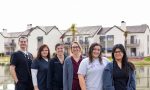
Cornerstone Healing Center is very different from other treatment centers. By overlapping science with spirituality, we create an environment where a seemingly miraculous healing event, sufficient to overcome addiction can happen in a short amount of time.
Abstinence-based: It may sound counterintuitive to say that we’re “abstinence-based,” but the fact of the matter is that many substance use disorder treatment centers today make heavy use of medication-assisted treatment also known as (MAT). Among these medications, there are a couple that are part opiate-blocker and part opiate, and by default mind-altering. While we view these types of “anti-craving” medications highly effective during the detoxification process we believe (for our clients) that complete abstinence is most effective and that we can make the strongest overall impact from that starting point.
Length of Treatment: SAMHSA studies show long term treatment facilities are more successful in achieving and maintaining sobriety than 30-day programs. The brain and body need time to heal, and we provide treatment and aftercare that lasts anywhere from 3 months all the way up to a year.
Fitness: The U.S. Department of Health and Human Services states that regular physical activity is one of the most important things people can do to improve their health. That includes weight training. The department recommends that adults do muscle-strengthening activities of at least moderate intensity for all major muscle groups at least two days a week. At Cornerstone Healing Center, physical fitness is a huge part of our program includes daily yoga, group fitness, and resistance training with highly reputable Certified Fitness Instructors.
Spirituality: Discovering purpose in life and finding and alignment with personal values ignites the human spirit in a way that is life-altering for the better. While we are not affiliated with any religion, people from various religious backgrounds including agnostics and atheists find our approach to spirituality a simple yet surprisingly effective starting point. Mindfulness and meditation are woven throughout all of the activities, classes, and groups.
Tell us about your favorite and least favorites things about our city.
I love Phoenix. I grew up in the Arcadia area skateboarding at the Wedge in south Scottsdale. I love the food, the skateboard, and outdoor culture, I love the sunshine and general friendliness of most people out here. I’m not of fan of the extreme heat, to be honest, anything above body temperature is uncomfortable, but I feel the good outweighs the bad.
Pricing:
- Partial Hospitalization is $20,000 for the first month and $10,000 for each additional month. (most insurance accepted)
- Intensive Outpatient (evenings) is $5,000 total for 3 nights a week for 2 months. (most insurance accepted)
- Individual Therapy is $150 per session (cash only)
- EMDR Therapy is $150 per session (cash only)
- Family Therapy is $150 per session (cash only)
- Sensory Therapy is $150 per session (cash only)
Pricing:
- Partial Hospitalization is $20,000 per month and $10,000 for each additional month. (most insurance accepted)
- Intensive Outpatient (evenings) is $5,000 total for 3 nights a week for 2 months. (most insurance accepted)
- Individual Therapy and EMDR Therapy is $150 per session (cash only)
Contact Info:
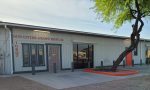
- Address: 7655 E Redfield Rd STE 4. Scottsdale, 85260
- Website: https://www.scottsdalecornerstone.com/
- Phone: 1-800-490-1781
- Email: estil@scottsdalecornerstone.com
- Instagram: https://www.instagram.com/scottsdalecornerstone/
- Facebook: https://www.facebook.com/scottsdalecornerstone/


Getting in touch: VoyagePhoenix is built on recommendations from the community; it’s how we uncover hidden gems, so if you know someone who deserves recognition please let us know here.
Popular
-

Phoenix’s Most Inspiring Stories
-

Building Love With Purpose: Darryl & DeLonda Tucker on Faith, Resilience, and Expansion
-
Andrea Savarese Is Redefining Veterinary Care Through Calm, Connection, and Compassion
-
Sun Cities 4 Paws Rescue Is Building a Sustainable, Compassion‑First Future for Feline Welfare