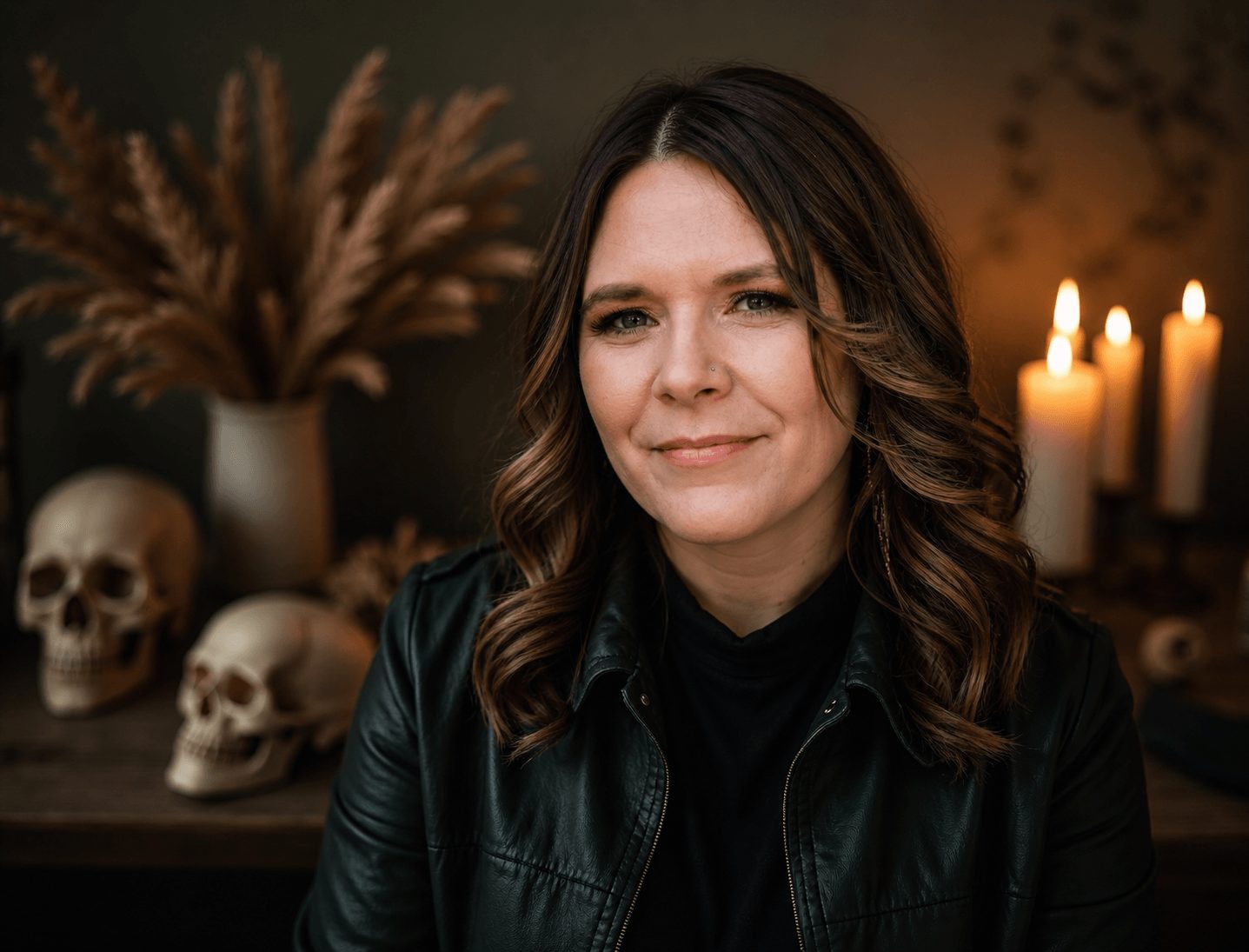
Today we’d like to introduce you to Dr. Melissa Kim Corter.
Hi Dr. Melissa Kim, we’re thrilled to have a chance to learn your story today. So, before we get into specifics, maybe you can briefly walk us through how you got to where you are today?
My path has been a strange winding road hinged on unusual synchronicities that continued unfolding way back in early childhood. For as long as I can remember, I’ve always been drawn to the things people hide, how the psyche speaks in symbols, and why suffering transforms some people while deeply disturbing others.
Early on in my educational pursuit, I studied criminalistics, criminology, and psychology. I paused my pursuits after a series of traumatic events, and eventually picked up again, this time trusting my curiosity as it led me to study depth psychology. I earned a PhD in Jungian and Archetypal Studies, where I focused on the symbolic language of the unconscious, mythology, fairy tales, dreams, and shadow work. Yet my earlier interests haunted me, and I began weaving forensics back into my world. The darker edges of human experience somehow felt familiar and comforting. I immersed myself in the study of psychopathy, predatory behavior, forensic psychology, and the patterns that influence individuals and cultures. Instead of turning away from darkness, I became interested in understanding it… psychologically, symbolically, and compassionately. As a psychologist, author, educator, and certified medicolegal death investigator, I help people recognize the hidden patterns influencing their lives through Jungian psychology, mythology, fairy tales, nightmares, and the mystery of the human shadow.
I’m sure it wasn’t obstacle-free, but would you say the journey has been fairly smooth so far?
Not at all. If anything, my path has felt like a constant disappearing act, forcing me to trust what I naturally saw and sensed, even when it wasn’t welcomed. From an early age, I noticed patterns, contradictions, and invisible dynamics hidden within my exchanges with those around me. There was a cost to that. I was often misunderstood, told I was “too much,” “too intense,” or that I should focus on the positive. Like many people, I learned to minimize parts of myself to fit in. Professionally, I also chose an unconventional path. Rather than specializing in areas that felt more comfortable or commercially popular, I found myself drawn toward shadow work, mythology, forensic psychology, psychopathy, nightmares, and the symbolic dimensions of suffering. These are subjects that can make people uncomfortable, but they’re also deeply human. There were moments when I questioned whether I should soften my message or make my work more mainstream. What changed everything was realizing that my greatest strength wasn’t fitting into someone else’s expectations; it was my willingness to enter into the spaces where others instinctively looked away. Once I stopped apologizing for that, my work became much more authentic. Today, I see those struggles as essential to finding my voice. They taught me that depth requires courage and that meaningful work often begins where certainty ends. This answer communicates resilience without centering hardship, and it reinforces one of the defining themes of your work: that your willingness to face difficult realities became your greatest professional asset.
As you know, we’re big fans of you and your work. For our readers who might not be as familiar what can you tell them about what you do?
I’m a psychologist, author, educator, and certified medicolegal death investigator. My work explores the mythic patterns between fairy tales, nightmares, and the symbolic dimensions of the psyche, with a particular interest in the places where myth and forensics unexpectedly intersect. One of the things that most distinguishes my work is my belief that the same archetypal patterns found in myths and fairy tales also emerge in real life. Whether I am studying a centuries-old folktale, a recurring dream, a crime scene, or a family system, I am asking the same question: What else is beneath this? The Robber Bridegroom, Bluebeard, Little Red Riding Hood, and Vasilisa the Beautiful are more than stories, they contain psychological patterns that continue to unfold in relationships, institutions, and even criminal investigations. In many ways, forensic work and fairy tales ask us to notice what has been hidden, follow seemingly insignificant clues, to uncover the truth beneath appearances. I’m known for bringing together disciplines that are rarely placed in conversation with one another. Rather than separating mythology from psychology or intuition from careful observation, I explore how symbolic thinking can deepen our understanding of human behavior without losing intellectual rigor. My work invites people to develop discernment, to recognize patterns of manipulation, resilience, transformation, and meaning that often remain invisible until we know how to look. What I’m most proud of is creating a body of work that gives people permission to engage with the darker aspects of life without sensationalizing them or turning away from them. Whether through books, courses, research, or teaching, my goal has always been the same: to help people see that darkness is not merely something to fear, it is where truth waits for our attention.
We all have a different way of looking at and defining success. How do you define success?
For me, success isn’t measured by titles, recognition, or even the number of lives I’ve touched. I measure it by whether I’ve helped someone bring something that haunted them, into consciousness. I think of my work symbolically, as in helping people exorcise their internal ghosts, not supernaturally, but psychologically. We all carry unfinished stories, inherited patterns, unprocessed grief, and unconscious fears. Like ghosts in an old house, they make themselves known through nightmares, compulsions, repeating relationships, anxiety, or the feeling that something unresolved still wanders in the psyche. I don’t believe we are supposed to banish what haunts us, but to listen to them, understand their story, why are they here, and what are they trying to tell us? Then, I find, we can integrate them more coherently within the psyche. If someone leaves my work with greater discernment, a deeper relationship with their authentic self, and the ability to recognize patterns that once unconsciously interrupted or created chaos in their life, I consider that a success. Every time someone becomes less haunted, I feel I’ve fulfilled the work I was meant to do.
Contact Info:
- Website: https://www.melissacorter.com
- Instagram: https://www.instagram.com/melissakimcorter
- Facebook: https://www.facebook.com/melissa.corter
- Youtube: https://www.youtube.com/@MelissaKimCorter