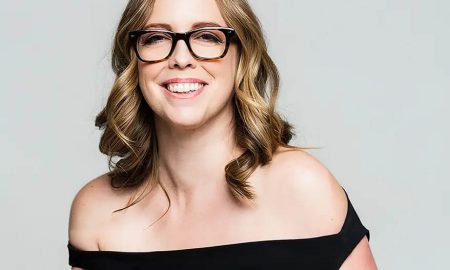
Today we’d like to introduce you to Diana Clauss.
Every artist has a unique story. Can you briefly walk us through yours?
I grew up in Philadelphia where most of my childhood was spent making things. My interest in art began at an early age drawing animals so my parents enrolled me in after school art classes. My grandmother was a skilled seamstress and she taught me how to sew when I was ten years old. I was creating my own stuffed animals – a leopard with rhinestone eyes comes to mind – and over the years graduated to constructing my own clothing. I learned embroidery and beadwork – even our buttonholes were hand stitched.
I received my degree in Fibers and Textile Design from Moore College of Art in Philadelphia. Their program encouraged students to study abroad and also take advantage of being surrounded by the cultural hubs of New York and DC only a short train ride away. It was an easy walk from campus to the Philadelphia Museum of Art and the Natural History Museum was right next door where we would often sketch. To this day, I can see influences of our weekly classes at the Metropolitan Museum of Art in my work – from the ancient Egyptian linen fragments, Persian carpets, Chinese porcelain and Japanese ink scrolls to mention a few examples.
Around the same time, I can vividly recall standing in front of a Rothko painting and “getting it” for the first time. I was so awed by the power a painting could have that I wondered if textile design was enough for me. After my first job working in a New York design studio, I realized it wasn’t.
So, after moving to Arizona I enrolled in the graduate art program at ASU. I was still torn between fibers and painting but decided to focus on the latter. Then in my final year at ASU the textiles began to infiltrate my work starting with stretching dyed silk on a large panel as the first layer of a painting. It felt so natural as I was smoothing out the wet silk and straightening the grain lines just like years ago with my grandmother. At that moment I realized I did not have to choose between these two disciplines and they could inhabit the work equally.
Please tell us about your art.
In my work I use landscape space and landscape motifs to reflect an inner state of mind. After moving to Arizona, my visual orientation shifted from a vertical perspective to a horizontal one. In Philadelphia my vision was contained by the verticality of tall trees and buildings. Here in the desert I experienced vast panoramas of sky and land. For me, landscape is more psychological than descriptive. I’ve always been drawn to Thomas Cole’s allegorical storms, Courbet’s waves, Agnes Martin’s horizons, even the tiny dark landscape in the background of the Mona Lisa to name just a few.
Process and the evocative potential of traditional as well as nontraditional materials play an equally important role in my work. I rely on the hands-on physical engagement with the materials themselves whether they be pleated silk or liquid paint to provide a direction for each painting. I like to think of it as asking the materials to go beyond my limitations.
The word “process” is frequently heard in the art world and it has a different meaning for every artist.
In my case, it’s certainly not linear as in step one, step two. I start a series with only a glimpse of a possibility and from there it comes down to faith in your materials. Each painting ultimately contains the record of what remains after a circuitous process of adding and subtracting multiple layers that become infused with the daily contemplations in the studio. In the end I hope that the tension between a shifting illusion of depth and dimensional surface invites an introspective gaze that connects the senses to visual contemplation – like touching with your eyes.
As an artist, how do you define success and what quality or characteristic do you feel is essential to success as an artist?
I would define success as just showing up in the studio everyday even if you’re not particularly inspired and just trusting something will happen. Sometimes it feels like you are going into battle with a painting – winning some and losing just as many. Success to me is understanding this is a necessary part of the art process and you just have to trust that the hours spent with your work will lead to a new discovery about the work and yourself.
What you hope for in the studio is that moment of magic that transcends both chance and the artist’s intent.
How or where can people see your work? How can people support your work?
My exhibition titled “No Man’s Land” which is a series of mixed media and beeswax on paper is currently up at the Gallery at Mountain Shadows in Paradise Valley. My work is also included in the public spaces at Sanctuary on Camelback and Hotel Valley Ho. Locally I’m represented by Reyes Contemporary Art – reyescontemporaryart.com
You can also view my work on my website (dianaclauss.com) and Instagram (diana.clauss.studio)
Contact Info:
- Website: dianaclauss.com
- Email: dianaclauss1@gmail.com
- Instagram: diana.clauss.studio


 Image Credit:
John Dowd
Getting in touch: VoyagePhoenix is built on recommendations from the community; it’s how we uncover hidden gems, so if you know someone who deserves recognition please let us know here.
Popular
-

Phoenix’s Most Inspiring Stories
-

Building Love With Purpose: Darryl & DeLonda Tucker on Faith, Resilience, and Expansion
-
Andrea Savarese Is Redefining Veterinary Care Through Calm, Connection, and Compassion
-
Sun Cities 4 Paws Rescue Is Building a Sustainable, Compassion‑First Future for Feline Welfare