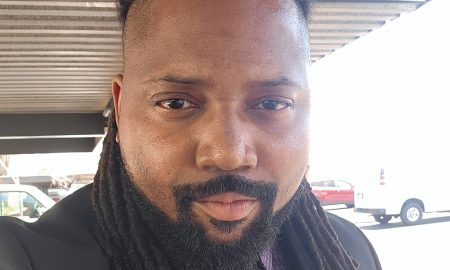
Today we’d like to introduce you to Brian Mecinas.
Brian, please share your story with us. How did you get to where you are today?
I am a first generation Mexican-American and first generation college student. My family comes from what many in the United States would view as next to nothing back in their small, indigenous village of Villa Hidalgo Yalalag in Oaxaca, Mexico, yet they made sure I had everything I needed to succeed.
Unlike many others my age with similar stories, I am privileged enough to have been born in the U.S., meaning I was spared from the worries of citizenship issues that so many young Latinx-Americans are stricken with. My parents worked as hard as they can to remain financially stable and provide for their children and reached their success. It is essential to my own story that I acknowledge the many sacrifices my parents made in order to provide me a life with such privilege. Some families look just like ours, that have worked just as hard, if not harder, that are still held down by the institutionalized systems of oppression and discrimination in the U.S. that hold the efforts of non-immigrants above theirs.
With this privilege and being motivated by the strong work ethic of my grandfather, the first member of our family to come to the U.S. to work, I know I wanted to pursue a career in public service to ensure any human has the same access to opportunity that they deserve.
Has it been a smooth road?
In regards to my work with the Arizona Youth Climate Strike, I would say one of the largest struggles that remain ongoing is trying to ensure that our message is heard by both the people of Arizona and the elected officials that represent us.
So many people are turned off by our work at the first mention of the phrases “climate change” or “climate crisis”, whether it be adults that will flood our messages with responses that these issues don’t exist/are fabricated by one party or just people that believe that we’re doomed regardless of what we do. Then others acknowledge the existence of the climate crisis but firmly believe that my generation now must solve the issue, rather than their generation that left us this mess to be inherited. It is increasingly difficult to make progress toward change and build a movement of concerned Arizonans when there are so many people that refuse to acknowledge the issue itself or refuse to acknowledge the role they must play in fighting for a solution.
On the other hand, when a movement is built and presented to elected officials or even candidates, many fall back into the safety net of political excuses. Whether it be empty claims of “I support this, I just can’t risk…” or “Supporting this would cost me an election in this district”, it is apparent that most elected officials can take the most severe issues facing them and still hold their self-interest at a higher value. Among our state’s disappointing political situation, there are still a handful of good people left, though.
We’d love to hear more about your organization.
Back in early January of this year, I joined a small group of other high school students in forming a small chapter of the national youth-led organization Zero Hour: Zero Hour Phoenix. We were initially just a group of students volunteering at local community cleanups and waste management events hosted by organizations like Keep Phoenix Beautiful.
In February, we heard of an opportunity to join other youth across the United States and in other countries in hosting a Climate Strike. We all became more conscious of the crisis our generation is facing and hosted the Arizona Youth Climate Strike on March 15th outside of the State Capitol building. Moving forward, we became a climate advocacy group and kept the name of the event for our group, becoming the Arizona branch of the national U.S. Youth Climate Strikes.
We’ve hosted further strikes, town halls, meetings with local elected officials, and continue to advocate for comprehensive climate action on behalf of Arizona’s youth. Mostly, our strikes are what we are known for, especially as more attention grows for global youth climate strikes. From a small group of five high school students in Phoenix, we’ve grown to become a state-wide network of middle school, high school, and college students with members in most of Arizona’s major cities/towns (Phoenix, Tucson, Flagstaff, Tempe, Peoria, Mesa, more). As a group, we are most proud of the small victories we’ve been making over the past few months of our operations, especially given that this organization is youth-led, grassroots, and is predominantly composed of people of color. The voices presented are those that will be most affected by the crisis. From having candidates and elected officials swear off money from corporations that pollute our environment (No Fossil Fuel Money Pledge and No Utility Money Pledge) to our strikes leading to the formation of the Sustainability Working Group in our State Legislature, dedicated to enacting environmental policy in the next session.
Let’s touch on your thoughts about our city – what do you like the most and least?
I would say that one of the things I like best about Phoenix is the amount of diversity we have present in our city and the surrounding cities of the valley. During my junior year of high school, I interned for the International Rescue Committee’s office in Phoenix, where I worked in the Housing Department and met the refugees, asylum seekers, and immigrants that have now gathered in vibrant communities in our city. At the same time, many people are unreceptive and discriminate against these new Phoenicians, yet there are just as many allies who step up to help those in need. Our city also has amazing sites like Lookout Mountain Preserve and the Rio Salado Habitat Restoration areas, marking the environment that we must continue fighting to protect and expand.
One of the things I like least about our city is the willful ignorance so many people have about issues affecting fellow Phoenicians, whether it be residents in South Phoenix that disproportionately suffer from asthma exacerbated by decreasing air quality or resistance to rightfully disciplining members our police force, which is one of the deadliest in the nation. Often, it comes down to the issues that predominantly affect people of color being ignored by those who aren’t affected by them.
Contact Info:
- Website: https://sites.google.com/youthclimatestrikeus.org/arizona/home
- Email: bmecinas68@gmail.com or arizona@youthclimatestrikeus.org
- Instagram: instagram.com/climatestrikeaz
- Facebook: facebook.com/climatestrikeaz
- Twitter: twitter.com/climatestrikeaz


Image Credit:
Pri Karlapudi, Zach Denes, Amritha Karthikeyan
Suggest a story: VoyagePhoenix is built on recommendations from the community; it’s how we uncover hidden gems, so if you or someone you know deserves recognition please let us know here.
Popular
-

Phoenix’s Most Inspiring Stories
-

Building Love With Purpose: Darryl & DeLonda Tucker on Faith, Resilience, and Expansion
-

Andrea Savarese Is Redefining Veterinary Care Through Calm, Connection, and Compassion
-
Sun Cities 4 Paws Rescue Is Building a Sustainable, Compassion‑First Future for Feline Welfare