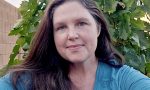
Today we’d like to introduce you to Nura Mowzoon
Hi Nura, can you start by introducing yourself? We’d love to learn more about how you got to where you are today?
My journey into relationship coaching started with my own family. Growing up in a culturally diverse household, I saw how the different upbringings and perspectives of my parents shaped the dynamics of our home. Watching them navigate those differences taught me the importance of compassion, humility and the willingness to have difficult yet meaningful conversations — all of which are essential in building strong relationships.
That foundation led me to earn a Ph.D. in Marriage & Family Therapy, and to dedicate my career to helping others navigate their relationships. My work spans multiple roles: I am currently an instructor at Arizona State University, have a private coaching practice, and am also the co-creator of a platform called “Can We Talk?” where my co-speaker and I travel to different universities around the country talking with students about the power of meaningful conversations during difficult societal times. In all my roles, I strive to bring together research-based strategies and real-world understanding to help individuals and couples. Whether I’m working one-on-one or presenting to a larger audience, my goal is to help people create meaningful, lasting connections that add joy, stability, and purpose to their lives.
Would you say it’s been a smooth road, and if not what are some of the biggest challenges you’ve faced along the way?
The path hasn’t been smooth or overly bumpy—it’s been more like a winding road, full of lessons and the occasional scenic detour. My original plan was to earn my doctorate and start a full-time private practice, but life had other ideas. Writing my dissertation took longer than expected, delaying both my degree and my transition into private practice.
During this time, I made an unexpected decision to change my surroundings completely. I took a job as a tour organizer at the Baha’i House of Worship, the most visited tourist attraction in Illinois. It seemed unrelated to my academic path, but it intuitively felt like the right move. While my classmates were building their therapy hours and writing their dissertations, I was giving tours and squeezing in writing during my off hours.
What initially felt like a detour turned out to be a pivotal moment in my journey. That job helped me discover a love for public speaking, something I might never have realized otherwise. It ultimately inspired me to pursue teaching and public speaking, which led to my role as an instructor at ASU and my “Can We Talk?” platform.
Although my journey took longer than planned and involved a few unexpected turns, I wouldn’t change a thing. Every twist has brought me closer to where I’m meant to be, and as the path continues to unfold, I’m excited to see what lies ahead.
Thanks – so what else should our readers know about your work and what you’re currently focused on?
I specialize in relationship coaching, teaching, and public speaking, with a focus on helping individuals and couples build stronger, more meaningful connections. I love blending research-backed strategies with real-life experience and am particularly passionate about educating people on the science of relationships.
What sets me apart is my dedication to challenging unhealthy beliefs and patterns, and teaching people the science behind strong relationships—especially within the college and young adult population. I’ve found that media heavily influences how they date and the partners they choose, often in ways that don’t align with the science of lasting connections. I’m driven to address these societal influences and equip people with the insights and tools to create and sustain thriving relationships.
I’m also excited about the work I do with my “Can We Talk?” platform, where my co-speaker and I travel the country, engaging students in conversations about the power of meaningful dialogue in polarized, turbulent times. It’s been incredibly rewarding to see the impact of these discussions and how they inspire students to take action in their relationships. We believe that human beings are designed for collaboration, not contention, and that learning to navigate difficult conversations with people we may not understand or agree with is key to unlocking our potential for deeper connection and unity.
How do you think about luck?
I do think luck plays a role in life, but I believe our mindset has a much greater influence on the good and bad things that happen to us. An optimistic, positive mindset tends to attract good things, while a darker, more pessimistic outlook can draw in corresponding energy. From my perspective, this is why some people seem to experience a steady stream of good fortune, while others seem to face consistent challenges.
I also try to approach life with a spiritual perspective, seeing “good luck” as a sign that I’m on the right path and “bad luck” as either a redirection or an opportunity for personal growth—which, in the long run, is a good thing. In my career, I’ve definitely experienced both highs and lows (or doses of good and bad luck), but I’ve come to see the tough moments as serving a greater purpose. They’ve ultimately pushed me closer to what I’m meant to be doing.
Pricing:
- Private practice and speaking fees vary
Contact Info:
- Website: https://www.drnuramowzoon.com
- Instagram: @drnuramowzoon
- Youtube: https://www.youtube.com/@dr.nuramowzoon3568
- Other: https://www.canwetalkseries.com


Image Credits
Jeff Carrion (for the photos where I’m wearing the teal shirt)