


Today we’d like to introduce you to Natalie Nguyen.
Hi Natalie, we appreciate you taking the time to share your story with us today. Where does your story begin?
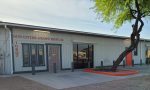
Splinter Collective Art and Community Fund (DBA Splinter Collective) is a vibrant community space housed in a historic Adobe warehouse located in Cukson, or Tucson, AZ, on occupied Tohono O’odham, Yoeme, Pascua Yaqui, and Hohokam lands. Since our inception in the spring of 2021, we have aimed to provide a safe and accessible space for art, performance, organizing, and community-building. Our work is multi-faceted, but we focus primarily on hosting community events, housing advocacy, and mutual aid efforts with our housed and unhoused neighbors. We’re currently working on long-term, accessible solutions to the housing crisis in a hyper-local sense, specifically with the former residents of an encampment near Splinter that was evicted in April. It’s messy and often hard, but it is so vital. Our work with our community has helped us bridge social barriers and strengthen bonds within our community. So how did we get here?
In January 2020, our now ED Natalie Nguyen closed on the historic warehouse that now houses Splinter Collective to utilize the event space for events, parties, workshops, and community space. The world shut abruptly three months later as the COVID-19 pandemic swept the globe. So, those dreams were paused for the first year as we hunkered down and waited. Throughout the pandemic, we started getting to know a few of the unhoused folks living near our warehouse beside a park called Estevan. (living around our neighborhood and nearby Estevan Park.) More and more people needed more housing as the economic strain of the pandemic went largely unaddressed. We noticed a huge gap in basic services previously accessible to unhoused folks. We slowly began what would gradually become a large-scale mutual aid effort with our community.
At first, it was just a charging station where people could sit in the shade, charge their devices, and access water. We didn’t know what we were setting out to do back then, but we saw an unmet need in our community and did what we could to alleviate some of the hardship those folks were experiencing. A few months later, we installed an outdoor shower on the side of our building. The need for hygiene supplies, bathrooms, food, and other essentials grew. Meanwhile, releasing the COVID-19 vaccines allowed us to open our space to events. We started small, with some art events and gatherings in support of our local queer community. We kicked off our monthly poetry and performance series Interrupted by Trains, a broadly accessible event that showcases artists with marginalized identities. We were honored to host many benefits, dance parties, workshops, and teach-ins throughout 2021. By this time, Splinter had grown from a family living in a warehouse to a fledgling non-profit with several employees and a developing board. It felt like we were filling a role that we, and the wider queer community in Tucson, had needed for so long- a truly welcoming space for folks whose identities fell within the intersections of marginalization. We started formulating our mission and our purpose in the community.
Things were starting to get real. It feels like so much has changed for us since then. The city penalized us for the charging station we had set up, so we had to pivot to other methods of community support. We worked with a team of other local organizers and residents of our neighborhood, both housed and unhoused, to demand that the city provide clean and accessible bathrooms to unsheltered people. After months of hard work, they agreed to keep the bathrooms at Estevan Park unlocked and maintained. Then, a few months later, we decided with the City of Tucson that we would take on responsibility for the upkeep of the bathrooms at Estevan Park and some other basic maintenance and distributing essentials to the folks living in the encampment. That lasted a few months until the Tucson Police Department bulldozed the camp and abruptly forced folks to leave. Since then, we’ve attempted to mitigate the harm as much as possible- getting 35 people into hotel rooms and continuing to distribute supplies. We had a very successful fundraising effort to help cover the cost of hotel rooms, and we are now shifting our focus to creative, long-term solutions. Currently, we are putting our efforts into starting a housing program to get a large number of folks off the streets immediately. This work and our robust arts and culture programming have kept us busy throughout the spring. We hope to continue expanding our dynamic approach to addressing the multifaceted needs of our community.
Would you say it’s been a smooth road, and if not, what are some of the biggest challenges you’ve faced along the way?
The road has been anything but smooth, but it has been exciting, invigorating, and hopeful. There are always challenges when trying something different, less hierarchical, and more liberatory. We’ve struggled to match our foundations with our growth and have had to do much growing up this year. I think the biggest thing has been learning from and adopting some helpful structures that more corporate environments employ to fit a collective model.
As you know, we’re big fans of you and your work. For our readers who might not be as familiar, what can you tell them about what you do?
Nat, our Executive Director, is a performance and installation artist, writer, educator, and community activist who manages and curates the space and is the founder of the non-profit wing. They have a long history of community engagement, political organizing, and involvement with the arts world. Nat also co-founded a social justice consulting company called Justice Movement. Justice Movement collaborates with the Tucson Alliance for Housing Justice to teach Allyship courses around housing and ownership. Nat got their start in social justice organizing through involvement with the Unitarian Universalist church as a teenager. Since then, they’ve been involved in social justice organizing, sex worker rights advocacy, performance art, theater, music, and more.
Are there any apps, books, podcasts, blogs, or other resources you think our readers should check?
I love the podcast Maintenance Phase, which deep dives into many pervasive myths about fatness, wellness, and the health industry. It’s an excellent example of how widely held cultural beliefs are often based on dubious or biased claims. They’re also hilarious. One of my favorite books is The Almanac of the Dead by Leslie Marmon Silko. She is a local author, and it highlights Tucson in much of its narrative. It’s a beautiful mystical reality fiction that covers 500 years of human history and imagines a liberated future. Other touchstones are the podcasts “All My Relations” and “Code Switch” and many incredible writers, artists, and thinkers like Sonya Renee Taylor, ALOK, and so many others that I could name if you had all day. I seek out Queer and BIPOC creators and learn so much from my colleagues, collective members, and community. I believe in the inherent knowledge of the community and that we all have something to learn and to teach each other.
Contact Info:
- Website: splintercollective.org
- Instagram: @splintercollective520
- Facebook: Splinter Collective


Image Credits
Rachel Castillo, Isabella Laos, Julius Schlosburg
Popular
-

Phoenix’s Most Inspiring Stories
-

Building Love With Purpose: Darryl & DeLonda Tucker on Faith, Resilience, and Expansion
-

Andrea Savarese Is Redefining Veterinary Care Through Calm, Connection, and Compassion
-
Sun Cities 4 Paws Rescue Is Building a Sustainable, Compassion‑First Future for Feline Welfare
