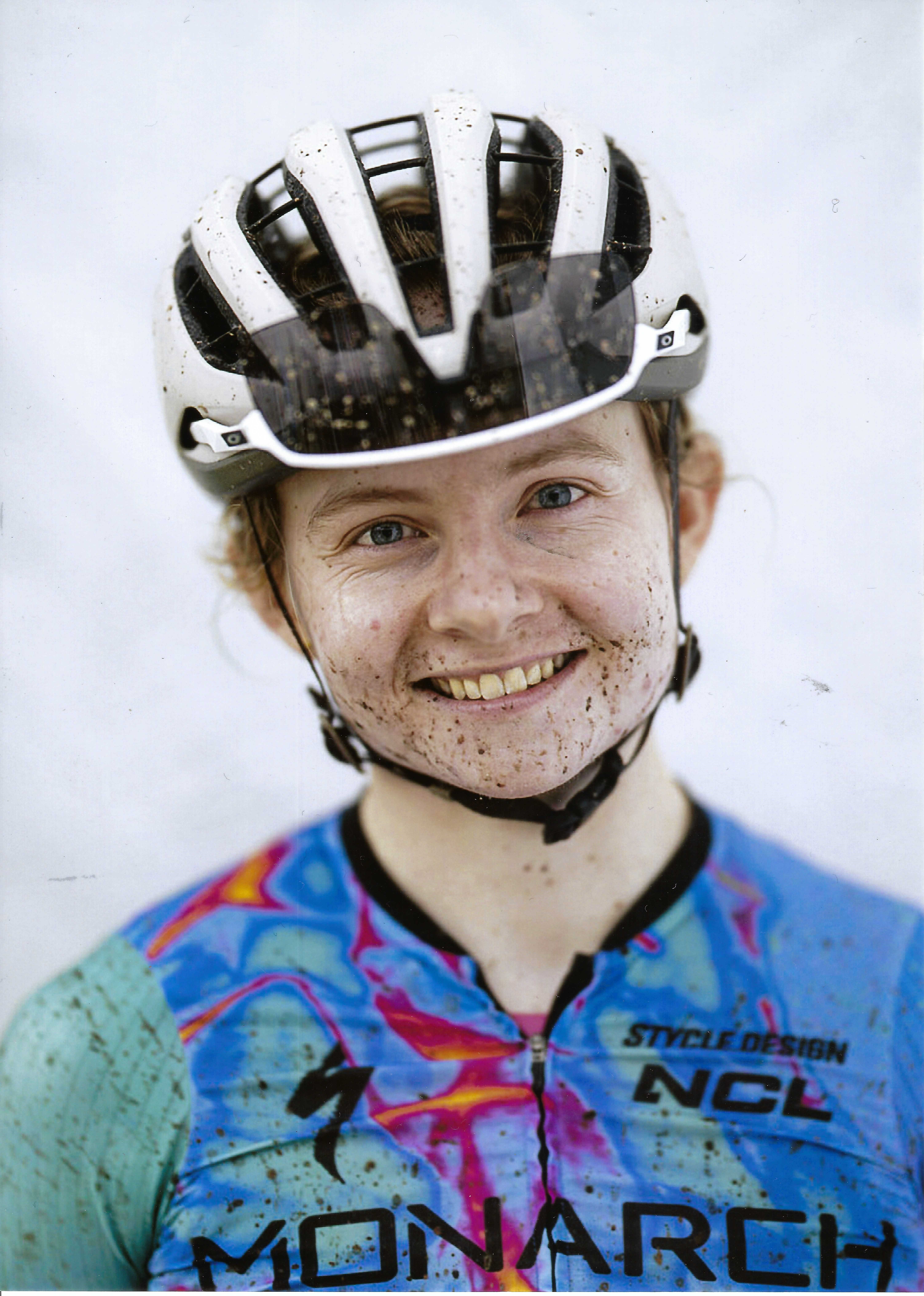
We’re looking forward to introducing you to Helena Gilbert-Snyder. Check out our conversation below.
Hi Helena, thank you so much for taking time out of your busy day to share your story, experiences and insights with our readers. Let’s jump right in with an interesting one: What are you most proud of building — that nobody sees?
I’m proud of building a space where teenage girls are learning how to take up space, be their own advocate and advocate for others, and learn how to navigate conflicts and adverse situations in ways that improve their lives, and the lives of those around them. It’s something that is hard to see or quantify from the outside, and also a change that the girls don’t always recognize in themselves. However, as I watch them start to speak out in public forums, email exchanges, and organize protests or distribute surveys and petitions for missions that they care about, I see them change from shy, tentative individuals who want to change the world around them but aren’t sure how, to the next generation of leaders.
Can you briefly introduce yourself and share what makes you or your brand unique?
My name is Helena Gilbert-Snyder, and I am a retired pro cyclist (at the ripe old age of 26!), and I am deeply involved in youth athlete development, especially junior girls. I founded a women’s cycling team called Monarch Racing — home to a semi-pro women’s team that competes nationally and internationally at the pro level, and a junior development team for girls — and run many of my programs through this team.
I see cycling as a perfect tool to teach lessons that go far beyond the bike, and whether someone is a lifelong cyclist or only partakes for a few years, they can learn skills and lessons that will help them in their future careers, relationships, and life. These young riders learn how to push themselves to their limits physically and mentally, learn to be competitive in a healthy way, gain confidence in making challenging goals, be okay with failure, and learn how to make mistakes and move forward.
Thanks for sharing that. Would love to go back in time and hear about how your past might have impacted who you are today. What part of you has served its purpose and must now be released?
I have always been a competitive person, and that has most obviously presented itself through my athletic career. While I am confident in saying that athletics and competition will always be a part of my life, over the past year or so I have slowly come to accept that my own pro racing is starting to wind down. I’ve raced across the world – three continents, at least 15 U.S. states – met incredible people, and learned a lot about myself. I love racing, but it also is a huge time commitment, and I’m now enjoying riding my bike a little less and having more time to live a balanced life. I’m able to spend more time helping the next generation as they grow up, and make time for friends, sleep in on the weekends, and make fewer unplanned trips to the ER! Letting go of my own professional racing was something I slowly figured out in my own brain, and I am content with the decision and am enjoying taking part in the sport in a slightly different fashion. My racing helped make me who I am today and I will be eternally grateful for the opportunities I’ve had, the lessons I’ve learned, and the places I’ve been lucky enough to visit.
If you could say one kind thing to your younger self, what would it be?
I would say I had a relatively normal childhood, and as a teenager dove deeply into competitive sports (soccer, running, cycling, just to name a few). But I would also go back and tell myself that I would grow up and become the person that I wish I had in my life when I was younger. I had mentors and role models in my life that often took the form as good sports coaches, but I didn’t have a person who was more involved in my life and someone I could be closer to. Now, I am the person I wish I had when I was a teenager, and I hope that the teenagers I work with now take some benefit from my presence in their lives and will grow up and become a similar version for the generations below them.
So a lot of these questions go deep, but if you are open to it, we’ve got a few more questions that we’d love to get your take on. What are the biggest lies your industry tells itself?
The cycling industry (and the outdoor industry as a whole, really) is an odd world. There are some incredible parts of it, and some ugly parts of it. As a whole, cycling is a privileged sport – it’s expensive, it requires access to trails or safe roads to take part, it can be dangerous (and healthcare can be hard to get for many people), and at least in the U.S., it historically has been made up of primarily white men. While the demographics are shifting, and it varies based on where in the country you are, there are a lot of minority groups and underrepresented groups (across gender, race, socioeconomic class, just to name a few big ones) that the industry has been starting to think about and at least mull over the ways to increase the numbers of.
However, the prevailing ideas that you hear and see in trying to increase underrepresented groups, often demands the minority groups to be their own hero in increasing their presence. For example, to increase the numbers of women in the sport, you will often see industry leaders or big names pushing women to lead rides, events, or programs, or make things “Women Only.” However, when any initiatives fail to product large enough results, these groups are then blamed for it.
You can replace “women” with any minority group you want, and the theme stays the same. The unfortunate side-effect of this behavior is that the majority group in cycling remove themselves from taking part in the problem or the solution, and remove all responsibility from it. The majority will tell themselves that they can’t be part of the solution because they “don’t understand” the minority, or “they don’t know how to help,” or “they don’t want to make people uncomfortable.”
This creates a culture where blame is shifted onto the marginalized groups for not being larger than they are, and removes all sense of accountability from majority groups. In the case of gender, I repeatedly push for men to take on leadership roles in growing the sport to women, because it’s not rocket science to be a welcoming, kind, supportive person to those you want to grow the sport to, and if you cannot behave in such a way to not make them feel uncomfortable, you are the problem and you shouldn’t be part of the sport in the first place.
One of the ways to challenge this “lie” about how, and who, should be growing the sport, is to point out situations of the majority group shifting responsibility, and challenge the majority groups to take an active part in the programs or events geared towards growing minority representation.
Thank you so much for all of your openness so far. Maybe we can close with a future oriented question. What do you think people will most misunderstand about your legacy?
While I hope it’s not the case, I think that people may look at what I’ve done (big or small) and think to themselves that those were accomplishments that only I could have done. While I think that everyone has their own unique touch, nothing that I do is so innovative or impossible that it’s unachievable by others – it takes drive, a lot of time and energy, and big picture understanding, but it isn’t rocket science. When I move on from what I’m currently doing, or perhaps move on from this world entirely, I hope that others are inspired to do similar things to what my legacy left behind, or use my legacy to inspire their own iterations.
It’s a lot easier to look at someone’s legacy and say “I could never do that,” than it is to look at someone’s legacy and say “I want to do that.” I want people to take on challenges and take the harder, potentially more rewarding roads in the world, rather than tell themselves that only certain people are capable of creating memorable legacies.
There are always risks that come along with big goals and big dreams. But our lives are so short, and opportunities often so fleeting, that it is a privilege to take those big, scary goals and try to make them a reality. I would encourage everyone who thinks of themselves as not a legacy maker, or not a world changer, to try to change their perspective of themselves. I don’t think I am a special person, and I think I am more similar to everyone else than I am different. We can all create legacies we’re proud of, and affect our community in positive, lasting ways, as long as we don’t take ourselves out of the picture first.
Contact Info:
- Website: https://www.helenagilbertsnyder.com/
- Instagram: hel.racer
- Linkedin: https://www.linkedin.com/in/helena-gilbert-snyder/