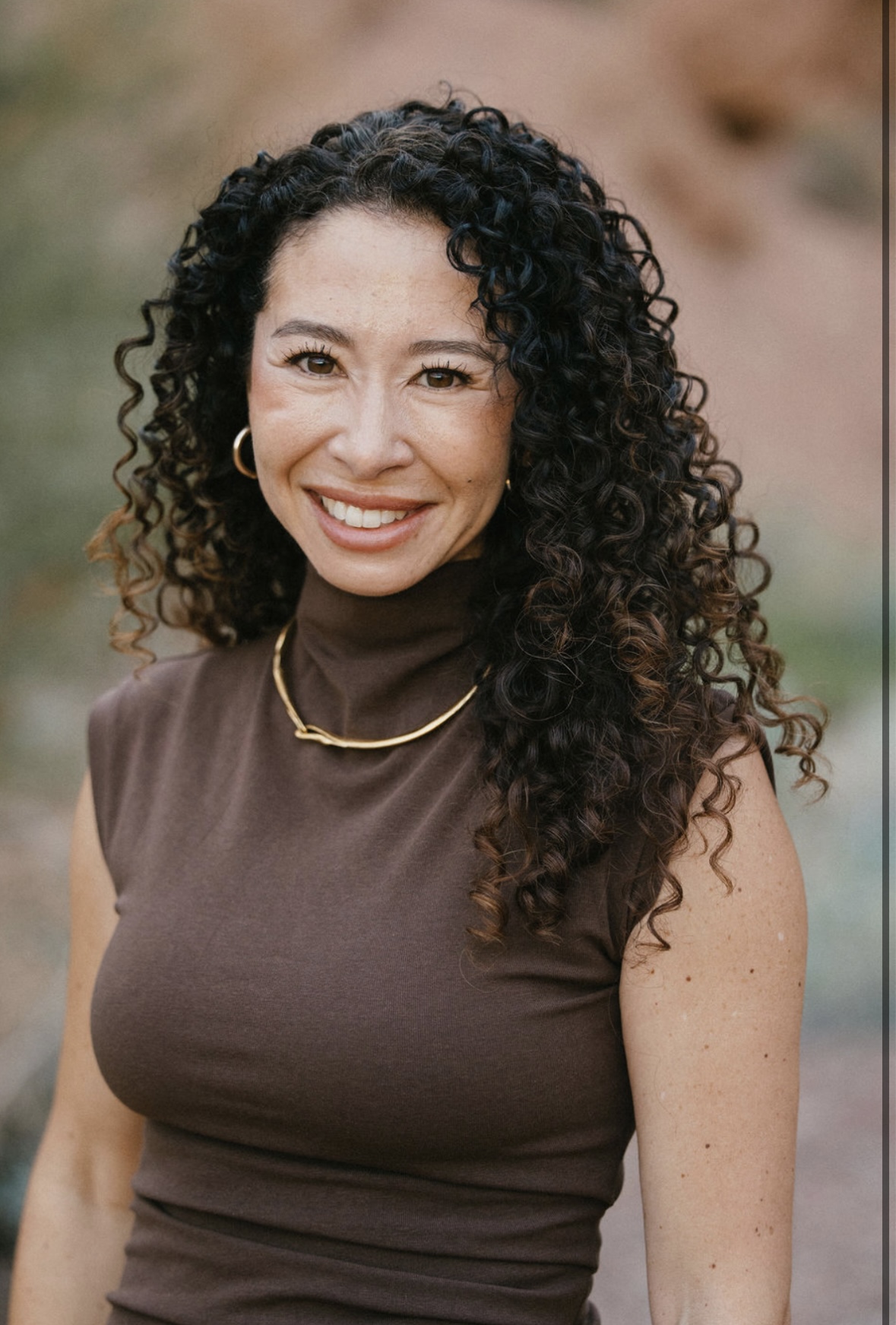
Today we’d like to introduce you to Nicolle Hood.
Hi Nicolle, so excited to have you on the platform. So before we get into questions about your work-life, maybe you can bring our readers up to speed on your story and how you got to where you are today?
Before starting My First Nest Egg, I spent nearly two decades as a business attorney, general counsel, nonprofit board member and adjunct negotiations law professor. I graduated from USC and Notre Dame Law School and spent much of my legal career helping private equity-backed companies grow from startups into regional and national businesses. I loved the strategy and problem-solving involved in building companies, but I never imagined I would eventually build one of my own.
My First Nest Egg began during the pandemic with a very personal problem. My co-founder, Annie Shoen, and I are longtime friends, former attorneys and mothers of seven children between us. While our families were spending so much time at home, we realized our children understood very little about money. They knew they could click a button and something would appear at the door, but they did not really understand the work, patience and choices behind that purchase.
What started as a conversation between two overwhelmed mothers became a much bigger realization: children were growing up in an increasingly digital financial world without age-appropriate opportunities to practice earning, saving, spending and giving. We began researching how money habits form and discovered how early those behaviors take root. And we just decided to build the resource we wished we had for our own families.
Our first product was a chore, allowance and financial education app designed to make healthy money habits fun for young children. We initially offered it directly to parents, but we quickly encountered a problem. The families who needed financial education most were often the least able to pay for it, and we were not very good at turning them away. We began looking for mission-aligned organizations that could sponsor access for entire communities.
Credit unions were the first organizations willing to listen. One local credit union led by Brian Lee, took a chance on us, helped us pilot the model and showed us what was possible when financial institutions used education to build genuine relationships with families. That partnership changed the direction of our company.
As our own children grew, My First Nest Egg grew with them. We expanded beyond the original app to create classroom resources, family engagement campaigns, community experiences and real-world financial education for teenagers. Having children ranging from elementary school through the teen years has given us a front-row seat to how dramatically financial education must change as kids grow. What works for a six-year-old will not work for a sixteen-year-old, so we continue to build resources that meet young people where they are.
Today, My First Nest Egg works with approximately 60 credit unions, banks and financial institutions across the country. Our mission has evolved into a very clear promise: financial education that drives growth. We help children and families grow their financial confidence, while helping financial institutions grow youth accounts, strengthen school and community relationships, engage families and build connections with the next generation.
We have remained bootstrapped throughout this journey with some wonderful friend and family investors who believed in us. Every stage of our growth has come from listening closely, solving real problems and building alongside the families, teachers and financial institutions we serve. I am proud of how far we have come, but what still motivates me is the same belief that started it all: every child deserves the knowledge and confidence to build a financially secure future.
I’m sure it wasn’t obstacle-free, but would you say the journey has been fairly smooth so far?
I call building a business “the journey of 10,000 nos.” It has definitely not been a smooth road, and when I look back, I can hardly believe we are where we are today.
Funding was an early challenge. We were not traditional startup founders. We were older, we were mothers, and we did not come from technology backgrounds. We were two former attorneys with an idea, and we had to learn almost everything along the way. Because we remained bootstrapped, every decision mattered, and every mistake came directly out of our own pockets.
One of the best things we did was become very comfortable asking anyone and everyone for advice. We listened to founders, financial professionals, educators, parents, technologists and people who had built companies before us. Over time, we learned that receiving advice is only half the skill. The other half is synthesizing it, recognizing that not every good suggestion is right for your business, and trusting yourself enough to make the final decision.
The biggest personal obstacle for me was learning how to sell. I had never done it as an attorney, and for years, I hated it. I read more sales books than I can count and tried to turn myself into what I thought a salesperson was supposed to be. Eventually, I realized that selling did not have to feel like convincing someone to buy something. It could simply be connection.
Now, sales is one of my favorite parts of the business. I meet wonderful people, hear their stories and learn about the communities they serve. Sometimes we connect and have exactly what they need. Sometimes we do not, and that is okay. Some of my favorite relationships began with conversations that continued for years before a partnership happened. We have had sales close four years after the first meeting.
One of my favorite things to hear is, “Wow, you guys are still around.” I know it is sometimes said with a little surprise, but I hear it as a tremendous compliment. We kept learning, kept adjusting and kept showing up through thousands of nos. We are still here, and we are building something stronger every year.
As you know, we’re big fans of My First Nest Egg. For our readers who might not be as familiar what can you tell them about the brand?
My First Nest Egg is a financial education company that helps credit unions, community banks and other financial institutions engage children, teens, families and schools. Our promise is simple: financial education that drives growth.
We create modern, age-appropriate financial education resources that are fully branded for each financial institution. Their logo, colors and identity are woven throughout the experience so families see their local credit union or bank as the trusted source of the education. Our partners receive classroom materials, family resources, monthly campaigns, community event kits, youth and teen programs, interactive experiences, digital tools and ready-to-use marketing support.
What sets us apart is that we do not treat financial education as a one-time lesson or a library of generic worksheets. Children’s needs change dramatically as they grow. A six-year-old may be learning the difference between earning and spending, while a sixteen-year-old needs to understand a first paycheck, credit, buying a car or paying for college. Because our own seven children have grown alongside the company, our resources have grown with them. Everything is developed with educators, tested with young people and designed to meet kids at the stage of life they are actually experiencing.
But what we may be known for most is making financial education genuinely fun. We create complete themes and experiences that financial institutions can bring to life in their branches, schools and communities. During one campaign, frontline employees may dress as pirates and welcome children on a treasure-saving adventure. During another, families may explore an undersea world while learning about borrowing, interest and financial decision-making.
There is a completely different energy when an entire frontline team is excited, dressed for the theme and inviting families to participate. Money education stops feeling like a lecture and becomes something children want to experience. That excitement creates conversations with parents, brings families into branches and gives employees an easy, joyful way to connect with the people they serve.
We also understand that financial institutions want their community investment to create measurable results. Our programs are designed to save partners time, deepen relationships with schools and families, increase youth account growth and help institutions become trusted sources of financial education. Partners have reported saving up to 35 hours a month, achieving up to 80% growth in youth accounts and generating four times their annual investment during a single campaign.
Our role is to build and brand the tools. Credit unions and community banks already have the trusted local relationships. We give their teams engaging, polished and ready-to-use resources so they can spend less time creating materials and more time working directly with families, educators and students.
At the end of the day, we make money fun. Financial conversations can carry a great deal of stress, fear and even shame. We want children to encounter money in a completely different way: through stories, games, imagination, humor and real-life practice. Learning should be fun, and learning about money should be no exception.
Today, we work with approximately 60 financial institutions across the country. What began as a tool for our own children has become a way for entire communities to learn together. When financial education starts early, grows with the child and is delivered by trusted local institutions, it can strengthen families and communities for generations.
What sort of changes are you expecting over the next 5-10 years?
I believe financial education will change dramatically over the next five to ten years. The good news is that it is finally being treated as essential. In 2022, only 12 states required personal finance for high-school graduation. Today, that number has grown to 39. That momentum will continue, but simply adding a required high-school course will not be enough.
The biggest shift will be recognizing that financial education needs to begin much earlier and continue as children grow. Money habits, confidence and attitudes start forming long before high school. A teenager may need to understand a first paycheck or car loan, but a young child first needs to practice patience, saving and the difference between needs and wants. The future will be less about delivering one course and more about supporting children through a progression of real financial experiences.
Families will also become a much bigger part of the conversation. Children do not learn about money only at school. They watch how their parents spend, respond to financial stress and make everyday decisions. The most effective programs will give children, parents and caregivers a shared language so that financial education can continue at home.
The subject matter itself will have to evolve quickly. Young people are growing up with digital wallets, instant payments, subscription services, online scams, social-media influencers, cryptocurrency and sports betting in their pockets. Financial education cannot remain a static lesson about balancing a checkbook. It must help young people navigate the financial decisions and risks they are encountering in real time.
Technology and artificial intelligence will make basic financial information easier and less expensive to produce. That means the value will shift away from simply having content. What will matter is whether the information is trusted, age-appropriate, engaging, timely and connected to real life. Human relationships will become even more important. Families need trusted local institutions and people they can turn to when financial information online becomes overwhelming or unreliable.
I also believe the industry will become much more focused on measurable outcomes. It will no longer be enough to say that a lesson was delivered or a school was sponsored. Financial institutions will want to know whether families engaged, whether employees entered classrooms, whether young people opened and actively used accounts, and whether the education led to healthier financial behaviors.
That is why I believe credit unions and community banks have such an important role in the future. They can do more than provide information. They can help young people practice what they are learning, support parents, build lasting school relationships and become trusted financial partners for entire families.
The future of this industry is not simply more financial education. It is financial education that begins earlier, grows with the child, responds to the real world and creates meaningful action. In other words, it is financial education that drives growth for young people, families, financial institutions and the communities they serve.
Contact Info:
- Website: https://myfirstnestegg.com/partners/
- Instagram: @myfirstnestegg
- Facebook: myfirstnestegg
- LinkedIn: https://linkedin.com/in/nicolle-hood-86b9773
- Youtube: https://www.youtube.com/@myfirstnestegg


Image Credits
Image with Annie and all of our kids – Stephanie Slezak Photography
Image of me in bio pic – Melissa Calrson