


Today we’d like to introduce you to Greg Mills.
Hi Greg, it’s an honor to have you on the platform. Thanks for taking the time to share your story with us – to start maybe you can share some of your backstory with our readers?
I grew up fascinated by how things work. From an early age I was drawn to electronics, inventing, tinkering — always curious about building useful, real-world products from ideas in my head. That passion led me to study engineering and eventually begin a career designing and building electronic systems — everything from circuit boards to embedded systems..
Over more than three decades I worked for established companies, gaining experience across a wide variety of products and domains. As I built skill sets in electrical design, mechanical integration, system-level thinking, and manufacturing, I saw over and over how many great ideas never made it to market — not for lack of innovation, but for lack of a one-stop partner who understood both engineering and manufacturing.
That realization sparked my decision to start my own company. In 2007 I founded Southwest Engineering Concepts (SOENCO), with the vision of offering a complete product-development pathway: from rough idea or sketch all the way through prototyping, compliance testing, manufacturing readiness, and production launch. The goal was simple — to give inventors, startups, and established companies the confidence to turn ideas into real, manufacturable products, without being forced to assemble a bunch of different vendors or chase down disparate specialists.
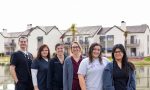
Over the past two decades, SOENCO has grown into a multidisciplinary team of engineers, designers, firmware developers and manufacturing-minded problem-solvers. Today we support clients across consumer, industrial, aerospace, and medical sectors. We’ve helped launch more than 80 successful projects, many of which have resulted in long-term partnerships or repeat collaborations.
What sets us apart is what I like to call our “physics-first, reality-grounded” approach. We don’t just draw pretty CAD renderings — we solve real-world problems using solid engineering principles, practical manufacturability thinking, and clear, down-to-earth communication. We’ve always believed good design must respect the constraints of the real world: materials, costs, regulatory standards, manufacturability, usability, reliability. That mindset has allowed us to shepherd projects from concept through design, prototyping, testing, compliance, and production launch.
Today, based in Chandler, Arizona, we serve customers locally in Phoenix, Mesa, Tempe and across the Southwest — and also nationwide. But we remain committed to that original vision: being a trusted partner who helps innovators, inventors, and companies bring ideas to life.
Alright, so let’s dig a little deeper into the story – has it been an easy path overall and if not, what were the challenges you’ve had to overcome?
No, it definitely hasn’t always been a smooth road — and I don’t think it is for any company that survives long enough to grow.
In the early years, one of the biggest challenges was simply earning trust. As a small engineering firm, you’re asking companies to hand you their ideas, their IP, and in many cases their entire product vision. That takes a lot of confidence on their part. We had to prove, project by project, that we could not only design something that looked good on paper, but also engineer it in a way that could be built, tested, certified, and manufactured reliably.
Another challenge was balancing capacity with opportunity. Engineering projects aren’t always steady or predictable — you might have a lull followed by three major clients needing deliverables at the same time. Figuring out how to grow the team, add capabilities, and scale responsibly took years of refining our processes and learning where to say yes — and where to say no.
Technology itself has been a challenge too. Product development today moves incredibly fast. New chipsets, new software frameworks, new compliance requirements — you’re constantly learning, adapting, and updating workflows. We’ve had to invest heavily in staying ahead of the curve, whether in embedded systems, prototyping methods, or design-for-manufacturing best practices.
And of course, working with early-stage startups comes with its own complexities. Some clients come in with a great idea but no technical background. Others come with a budget that doesn’t always align with their ambitions. Part of our job has been learning how to guide people realistically — to protect them from spending money on the wrong things, or trying to do too much too fast.
But honestly, those challenges are what shaped us. They forced us to build better systems, communicate more clearly, and take a “physics-first, reality-first” approach that’s now the backbone of how we work. Every difficulty ended up sharpening our process and strengthening our team.
Thanks for sharing that. So, maybe next you can tell us a bit more about your business?
At its core, Southwest Engineering Concepts (SOENCO) is a full-service product design and engineering firm. We help clients take an idea — whether it’s a rough sketch, an early prototype, or an existing product that needs improvement — and turn it into something real, manufacturable, and market-ready.
We work across electrical engineering, mechanical design, embedded systems, firmware, software/app development, prototyping, testing, and even support with patents and media. Essentially, if it touches the product development pipeline, we’ve probably done it.
What we’re known for is our “physics-first, reality-first” approach. A lot of firms lean on CAD renderings or aesthetic design first. We do the opposite. We start with the underlying physics, the constraints of manufacturing, the real materials, and the real-world stresses the product will face. That means the concepts we deliver aren’t just pretty — they’re practical, buildable, and engineered to succeed in the field.
We’re also known for being a one-stop shop. Instead of clients juggling 5–6 different vendors for electronics, mechanicals, firmware, testing, and manufacturing support, they can come to us and get everything under one roof. That’s been especially valuable for startups and smaller teams who need an experienced partner to guide the entire process.
What sets us apart is how hands-on and collaborative we are. We don’t just hand over designs — we work side-by-side with clients to solve problems, iterate quickly, and keep the bigger picture in focus. Our team has deep, multidisciplinary experience across consumer, industrial, aerospace, and medical products, and that gives us a very wide toolkit to pull from. Over the last 20 years we’ve helped launch more than 80 successful products, many of which turned into long-term partnerships.
Brand-wise, what we’re most proud of is trust. Most of our work comes from referrals, repeat clients, or companies who have worked with us across multiple generations of a product. That tells us we’re delivering real value, not just one-off engineering services.
For your readers, the biggest thing to know is this: If you have an idea — whether you’re a small startup or a Fortune 500 company — we can help you design it, build it, test it, refine it, and get it ready for production. And we will always ground our recommendations in solid engineering, not trends or guesswork. Our goal is simple: help clients build products that work in the real world, at real scale.
Networking and finding a mentor can have such a positive impact on one’s life and career. Any advice?
For me, mentorship and networking have always come down to one thing: showing genuine curiosity. The best relationships I’ve built in my career — whether mentors, peers, or collaborators, started simply because I asked questions, listened carefully, and tried to learn from people who had strengths I didn’t.
My advice for finding a mentor is to look for someone whose thinking you admire, not just someone with an impressive title. A mentor doesn’t have to be a CEO or an industry celebrity. In fact, some of the most valuable mentors I’ve had were engineers, project managers, or business owners who quietly excelled at the parts of the job most people overlook — communication, decision-making, practical problem-solving, or managing people. Find someone whose judgment you trust, then invest in that relationship. Show up prepared, respect their time, and act on their advice. That’s how mentorship becomes mutual.
When it comes to networking, what’s worked well for me is being helpful first. Instead of going into conversations asking for something, I try to offer something — a perspective, a connection, or even just a thoughtful question. That mindset shifts networking from transactional to relational, and that’s when doors start to open. People remember who helped them, not who handed out the most business cards.
I also encourage people to network outside their immediate niche. Some of my best partnerships came from unexpected places — a manufacturing leader who needed electrical design support, a startup founder looking for prototyping help, or a university researcher trying to commercialize an idea. When you broaden your network, you broaden your opportunities.
And finally, consistency matters. You don’t need to attend every event or conference. You just need to show up regularly in the circles that matter to you — industry meetups, local business groups, engineering communities, or innovation hubs. Over time, familiar faces become trusted relationships.
Contact Info:
- Website: https://soenco.com/
- Instagram: https://www.instagram.com/southwestengineeringconcepts/
- Facebook: https://www.facebook.com/profile.php?id=61557572641681
- LinkedIn: https://www.linkedin.com/in/greg-mills-a4119989/
- Twitter: https://x.com/SOENCO_SEC
- Youtube: https://www.youtube.com/@southwestengineeringconcepts
- Yelp: https://www.yelp.com/biz/southwest-engineering-concepts-chandler-2


Popular
-

Phoenix’s Most Inspiring Stories
-

Building Love With Purpose: Darryl & DeLonda Tucker on Faith, Resilience, and Expansion
-
Andrea Savarese Is Redefining Veterinary Care Through Calm, Connection, and Compassion
-

Sun Cities 4 Paws Rescue Is Building a Sustainable, Compassion‑First Future for Feline Welfare
