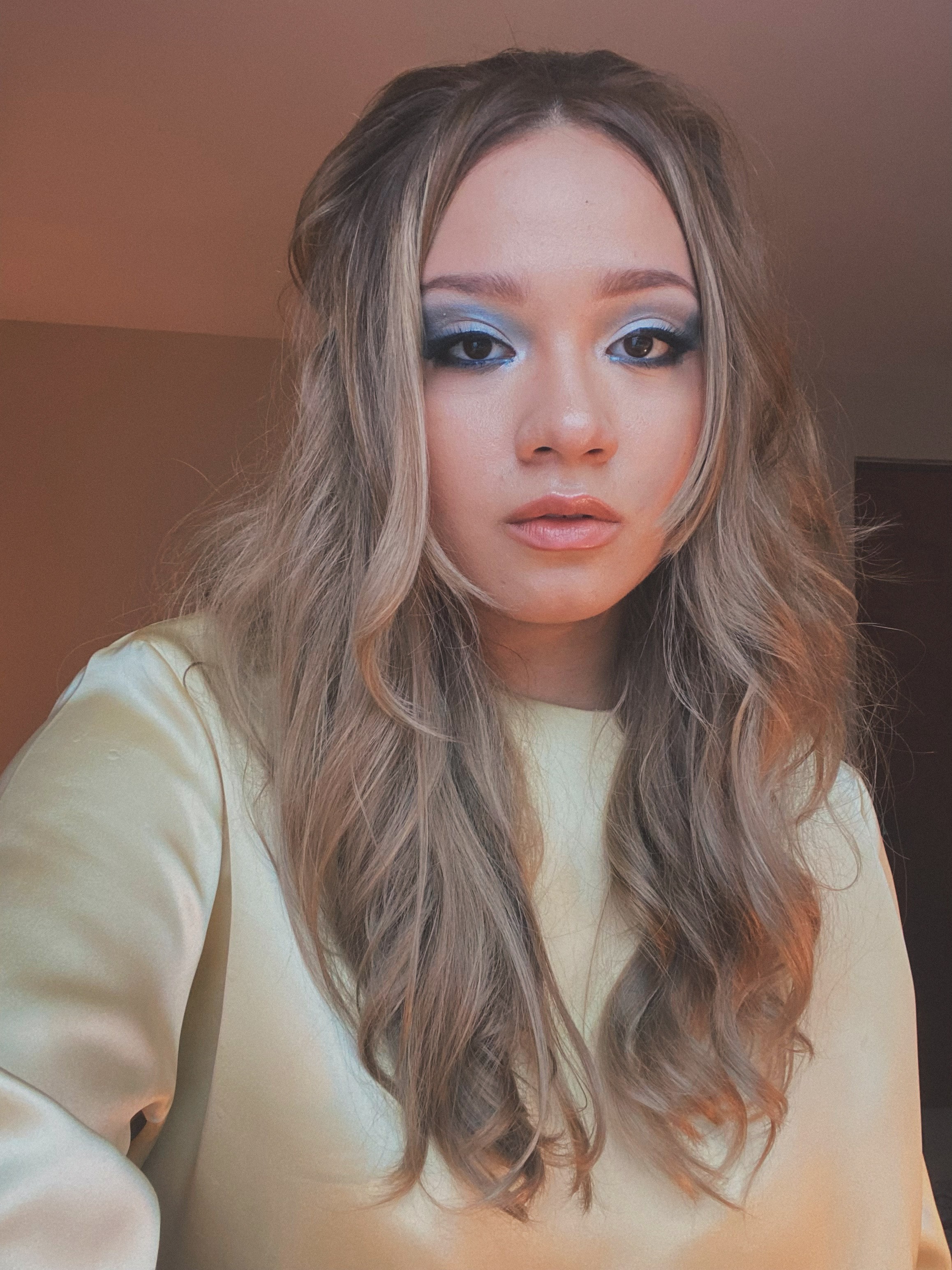
Today we’d like to introduce you to Marie Anne Arreola.
Hi Marie Anne, we’d love for you to start by introducing yourself.
Growing up in northern Mexico, I learned early that identity isn’t something you inherit whole. It’s something you assemble as you move. I started out publishing bilingual work in different journals and magazines across the Americas, but the real shift happened when I stopped thinking about language as something I had to “translate” and started treating it like something I could stretch. Writing poetry in both English and Spanish wasn’t about reach or accessibility in a career sense. I just wanted to be understood without sanding myself down. Growing up in a border state teaches you early that language leaks. Meanings slip. You’re always negotiating tone, context, who you’re speaking to and who you’re allowed to be. Writing bilingually felt like owning that mess instead of apologizing for it.
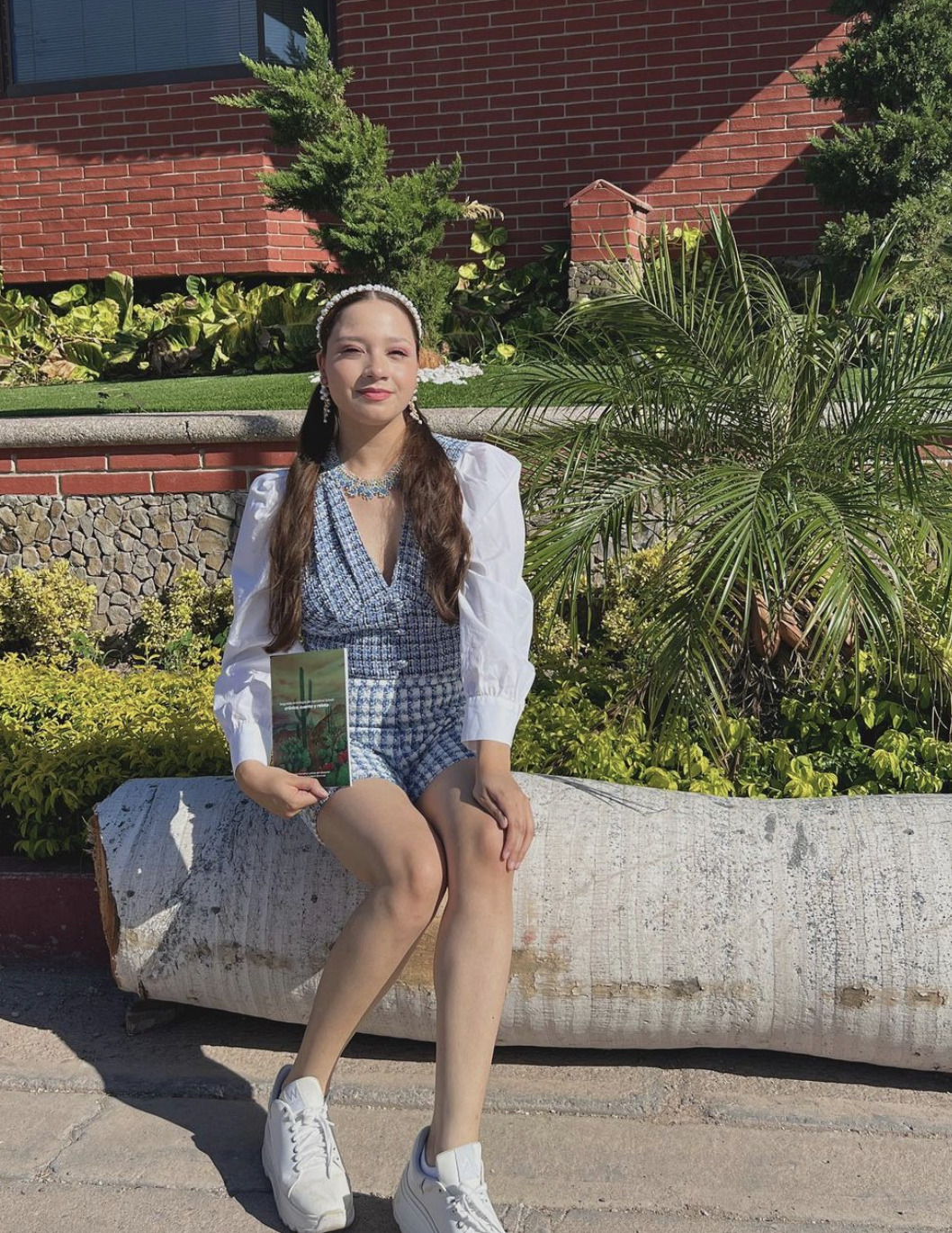
My first poem published in English, Home Arrival, came out with Wingless Dreamer Publisher in 2021. It’s technically about migration, but really it’s about the small, unglamorous parts of crossing: what you pack, what you abandon, what somehow still follows you. That publication didn’t feel like an arrival moment. It felt more like confirmation. Like, okay, this thing I’ve been doing, moving between languages, trusting the in-between, isn’t a compromise. It’s actually the point.
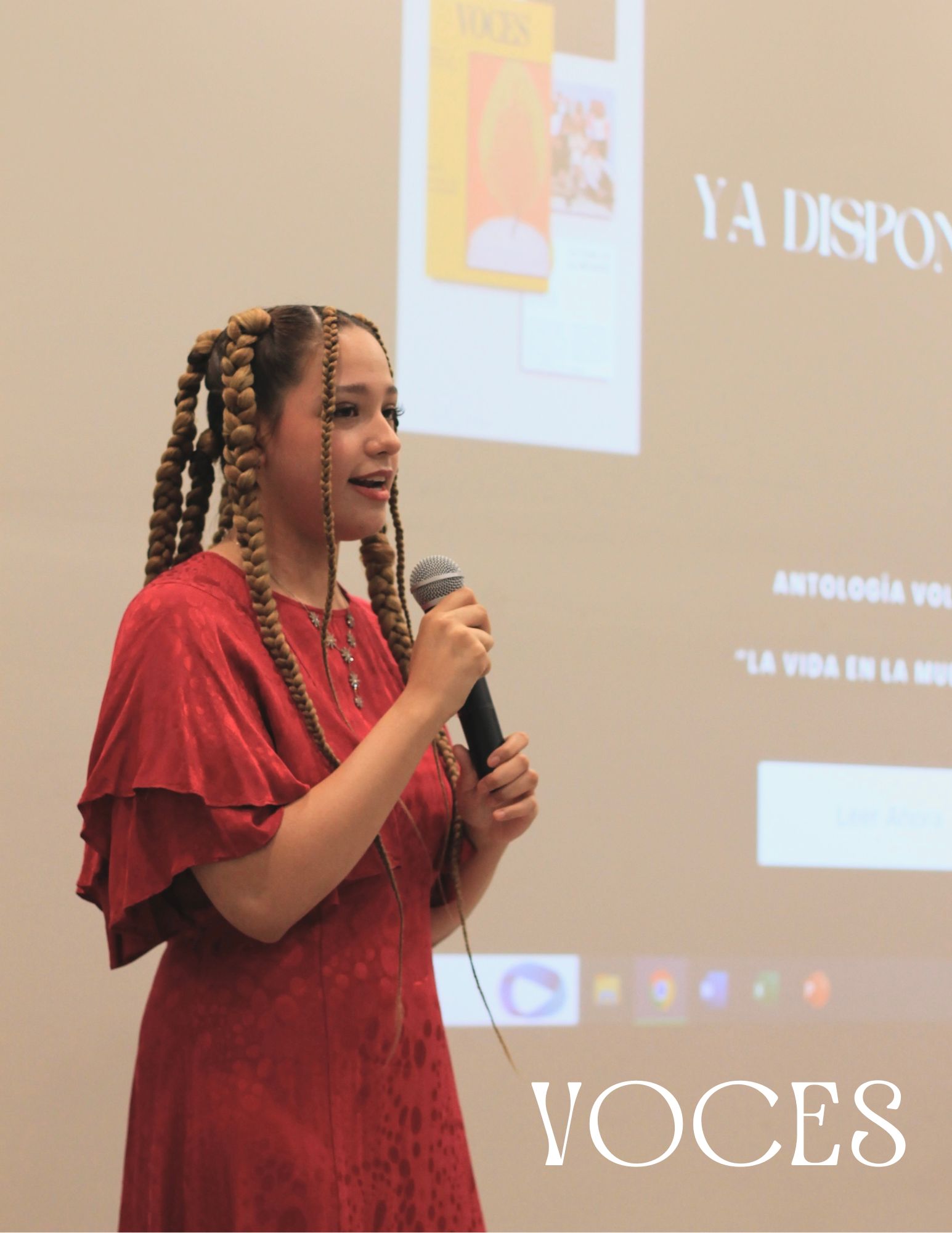
As I kept publishing, I became more aware of how often independent creative projects in the borderlands were doing powerful work without the infrastructure or visibility to sustain it. That’s what led me to build my own digital space. When I created PROYECTO VOCES, I knew translation had to be built into its DNA. English to Spanish, Spanish to English, always moving both ways. Not everything needs to travel globally, but it deserves to be held carefully where it’s made.
Today, I think of my path less as a ladder and more as a series of crossings. Writing taught me how to observe. Editing taught me responsibility. Both continue to teach me how to stay porous without disappearing. I’m still learning how to expand while staying rooted, but that tension, that in-between, is where everything meaningful in my work has always begun.
Alright, so let’s dig a little deeper into the story – has it been an easy path overall and if not, what were the challenges you’ve had to overcome?
No, it hasn’t been smooth, but I don’t think I ever expected it to be. One of the biggest challenges has always been audience. Working bilingually is a gift, but it’s also complicated. Sometimes it feels like you’re speaking to everyone and no one at the same time. It’s hard to define a single “target” audience when your work exists between languages, cultures, and reference points. That tension shows up constantly, especially in publishing, where things are often expected to fit into clean categories.
At the same time, that hybridity has been one of the biggest rewards. Through VOCES, especially in my journalistic work, I’ve seen firsthand how community expands in ways you can’t plan for. The project started from a very specific regional need, but it ended up connecting people across borders, time zones, and creative scenes. Writers, artists, and readers who might never have crossed paths found themselves in conversation through the work. That’s been one of the most grounding parts of the process.
I think a lot of the struggle has been learning to accept that hybrid nature instead of trying to resolve it. Growing up in a border context means you’re always being shaped by more than one culture at once, whether you acknowledge it or not. That influence shows up in the work naturally. The tension has never been about splitting or choosing sides—it’s been about dissecting what the work is doing, how it moves, and who it’s speaking with at any given moment.
If anything, the community VOCES has shown me that this kind of in-between practice doesn’t divide people, it brings them closer. It makes visible the creative ecosystems that already exist, thriving quietly on both sides. It’s hard work, yes, but it’s also proof that there’s real hunger for spaces that don’t ask you to simplify who you are in order to belong.
Thanks for sharing that. So, maybe next you can tell us a bit more about your work?
I owe my life to artists. I say that without exaggeration. They’ve kept me tethered during moments when the future felt really thin. That kind of devotion shapes everything I do, especially how I curate and edit. I’m not interested in turning work into trends or smoothing it out so it travels better online. Most of the time, I’m sitting down with a theme in mind. It usually begins with a feeling I can’t quite place yet. Things like heartbreak, faith, nostalgia, identity, they’re not subjects I rotate through, they’re just part of the atmosphere I’m working inside.
Growing up in a border city shaped how I notice culture. Spanglish slipping in and out of conversations, Catholic references showing up next to street graffiti, migration stories treated as normal, everyday information. That mix wasn’t something I had to intellectualize later on. It was just the environment.
When I was fourteen, I read The Sick Bag Song by Nick Cave and something shifted. It showed me that writing could work like spiritual reportage, less about documenting facts and more about capturing atmospheres, distortions, emotional residue. Around the same time, Patti Smith, Annie Dillard and Ocean Vuong became constant references for me. They taught me that grief and irony can sit in the same sentence without canceling each other out.
That instability—how words slip, glitch, and remake themselves—became especially important in my relationship with English. A lot of my poems start as mistranslations or small mistakes. I don’t rush to fix them. I follow them. For me, creativity lives in that crack: the pause, the echo, the misheard phrase that refuses to land cleanly.
Studying art formally helped me trust those instincts. Mexican art history, border theory, and cultural studies gave language to what I already felt; that writing from the border isn’t just about place, it’s a way of thinking. Gloria Anzaldúa’s idea of nepantla named a state I was already living in: a space where identity stays fluid and contradiction becomes a method, not a flaw.
So my work leans into that instability. I borrow from translation, code-switching, and mirror writing. I write from the position of being both inside and outside of cultures, languages, emotional truths. I’m drawn to people when they’re unguarded, when they don’t know they’re being observed. Maybe that’s why I love mumblecore films, where dialogue stumbles and meaning shows up accidentally. We call watching others “creepy,” but cinema, and writing, honestly, is built on attention. The writer is always watching. The editor, too. My poems live in those soft collisions: sacred and sensual, digital and domestic, heartbreak and healing. I’m not trying to resolve anything. I’m trying to name the ache.
Risk taking is a topic that people have widely differing views on – we’d love to hear your thoughts.
Growing up in Mexico, and especially in a peripheral region in the north, choosing to work in the arts already comes with risk. There isn’t much infrastructure, very few formal initiatives, and almost no clear path that tells you, this is how you make this work. So you’re constantly operating without a safety net.
Starting my own projects was one of the biggest risks, but it was also the only option that made sense. If I hadn’t created my own cultural platform, I don’t think I would’ve developed the confidence or clarity to expand my practice the way I have. Building something from the ground up taught me how to trust my instincts, how to fail quietly, and how to keep going anyway. It opened doors I didn’t even know existed at the time.
That step slowly led to everything else: working as a freelance journalist for Latina Media and other spaces, moving into creative direction, publishing more intentionally, and eventually stepping into roles like editor-in-chief. Now I’m also studying a master’s in communication, media, and culture, where my thesis focuses on the editorial scene along the Mexico–U.S. border. None of that feels linear when I look back. It feels more like an accumulation, each risk stacking on top of the last.
For me, risk hasn’t been about chasing visibility or making a big leap all at once. It’s been about choosing to begin, even when the conditions aren’t ideal. In contexts like mine, not starting can be the biggest risk of all. So those early decisions (launching a page, publishing independently, committing to a practice before it looked sustainable) weren’t optional. They were the first step. And honestly, a very necessary one.
Contact Info:
- Website: https://www.voces.org.mx/in-chief/
- Instagram: https://www.instagram.com/mariana.arreola16/