


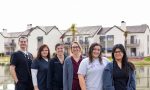
Today we’d like to introduce you to Rinna Harris.
Hi Rinna, we’re thrilled to have a chance to learn your story today. So, before we get into specifics, maybe you can briefly walk us through how you got to where you are today?
I never imagined I’d end up in the field of education. My background was actually in information systems, but motherhood — and my deep belief that mothers are the best teachers of their children — led me here. When my oldest became preschool age, I started a small Montessori school in my home. Over the years, all seven of my children were part of it, along with neighborhood friends. I loved their curiosity, their sense of wonder, and the way each one learned differently. I always said I’d keep doing it as long as my children were in it. I became passionate about understanding how children learn — and I discovered that I loved learning just as much as they did.
Then came 2020. With the COVID pandemic restrictions, my family was home together — and for the first time in a long time, not pulled in a dozen different directions. We did projects and read lots of books, and I remember thinking, I wish I could bottle this up — the joy of learning together. This is what school should feel like. When our local school couldn’t say when in-person learning would resume, I decided to take the leap and do school myself.
I already had a designated classroom space in my home, and my kids agreed to the idea — on one condition: friends had to join them. Around that time, a friend introduced me to Prenda Microschools, a microschool network and service provider that helps everyday people start schools with nothing more than a desire to educate kids. I trained over the summer, and that Fall I opened a K–2 microschool. A few friends opened their own, and together we created a little neighborhood school system that spanned our kids’ grade levels. What was meant to last just one year quickly became something much more.
We loved the freedom, the ability to learn at our own pace (and have no homework!), and to explore our interests fully. I loved the flexibility of designing my own curriculum and creating a student-centered space where kids are encouraged to think deeply, take initiative, and challenge themselves to reach higher. In this kind of environment, children are more fulfilled, happier, and more confident.
Today, my microschool, Harris Academy, serves Grades 4–8. What began as a small home preschool for my own children has grown into a thriving microschool — built on joy, mastery, and the belief that kids learn best when they love what they’re learning.
Alright, so let’s dig a little deeper into the story – has it been an easy path overall and if not, what were the challenges you’ve had to overcome?
It definitely hasn’t always been a smooth road. Starting a microschool during a pandemic meant stepping into many unknowns. There was no playbook for what we were doing! And in those early months, I often found myself learning right alongside the kids — figuring out what systems worked best, managing State requirements, building trust with families, and creating curriculum that felt both rigorous and joyful. There were moments I wondered if I was doing enough or doing it right. Five years later, with so many educational innovations emerging, there is still so much to learn and refine, especially deciding what new ideas are worth weaving into our school day and year.
One of the biggest challenges has been finding balance — balancing the administrative side with the creative side, structure with freedom, and my role as both mom (5 still at home!) and educator. There were times I questioned whether I could keep all the plates spinning, but I always go back to my why: to help kids rediscover a love of learning and to give families an alternative choice in schooling.
Each year, new students join, and with that comes the challenge of getting to know each one — learning what motivates them and how to help them take ownership of their learning. Every child learns differently, so I’m constantly balancing individualized learning plans across many levels, even within the same grades.
I wouldn’t trade the journey for anything. It’s been transformative — not only for the students who have found their confidence and joy again, but also for my own children.
Alright, so let’s switch gears a bit and talk business. What should we know about your work?
At Harris Academy, I get to work closely with my students as their guide or learning coach. It’s very different from traditional school because parents are ultimately in charge of their children’s education, and I exist to support them — to guide, energize, encourage, and help their kids master skills and fill gaps.
Although I use a carefully researched curriculum plan for my microschool, we can adjust a student’s program at any time if something isn’t working — even midyear. That’s one of the benefits of a smaller setting: every child has a truly customized learning plan. Students work at their own pace. We also operate on a shorter school day and week, which surprises families at first. Still, we’re able to accomplish so much more in fewer hours because our environment is flexible, focused, and free from unnecessary transitions or busywork. Our days go fast!
What sets us apart is our approach to learning. We do project-based work, students participate in mini Socratic discussions and meaningful conversations, and they have many opportunities to co-create and take ownership of their learning. I’m there to scaffold their ideas and guide their process. I don’t assign traditional homework — instead, “homework” is created by the child through self-driven exploration or continued work on personal goals.
Beyond moving students along a curriculum plan, one of the most valuable skills I help them learn is how to manage their time, set goals, and think for themselves. It’s not uncommon to see a 4th grader planning the order of their academic work, a 5th grader leading a discussion, or a 6th grader mentoring younger students or running their own project.
What I’m most proud of is the transformation I see in the students. Many come from traditional settings where they felt lost or unseen. It takes time, but within just a few months they begin to light up — rediscovering their voice, their confidence, and their excitement for learning. To me, that’s the greatest success.
How do you define success?
That’s a multi-faceted question. For the kids who come to Harris Academy, success isn’t about grades. It is also evident in their growth in other aspects. It’s when a child who once felt unsure begins to believe in themselves again, when they start to take charge of their learning, or when they light up while explaining something they’ve discovered. It’s different for each child, but those moments remind me that real learning has taken root.
On a personal level, success means doing what you love while staying true to yourself, your purpose, and your beliefs — and balancing that work with family. For me, it’s about keeping family at the center — being available to my own children and husband while building a school that honors all children as individuals, as children of a loving God. If my students (and my own kids) leave knowing who they are and what they’re capable of, and carry with them a love of learning that lasts well beyond my classroom (and home), then I know I’ve done something right.
Contact Info:
- Website: https://harrisacademyaz.com
- Instagram: @harrisacademyaz


Image Credits
Jennette Jenkins
Popular
-

Phoenix’s Most Inspiring Stories
-

Building Love With Purpose: Darryl & DeLonda Tucker on Faith, Resilience, and Expansion
-
Andrea Savarese Is Redefining Veterinary Care Through Calm, Connection, and Compassion
-

Sun Cities 4 Paws Rescue Is Building a Sustainable, Compassion‑First Future for Feline Welfare
