


Today we’d like to introduce you to Doug Maready.
Hi Doug, it’s an honor to have you on the platform. Thanks for taking the time to share your story with us – to start maybe you can share some of your backstory with our readers?
I first discovered my passion for prevention during medical training. I still remember standing in a general surgery clinic caring for a patient with a large abdominal wound that had reopened after surgery. In that moment, it struck me: if we could prevent obesity and diabetes—two conditions that drive so many downstream complications—we could prevent stories like this from happening in the first place.
That realization shaped the direction of my career.
Over time, my focus has become helping people make meaningful, lasting changes in their health by addressing the biological drivers of chronic disease. Sometimes that means medical treatment. Sometimes it means lifestyle change. Most often, it’s a thoughtful combination of both—delivered in a way that is realistic, personalized, and sustainable.
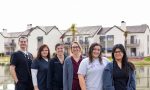
Early in my career, I practiced broadly in internal medicine. Eventually, I opened my own practice in Mesa. That decision was both exciting and eye-opening—especially in understanding the real-world economics and structural barriers within healthcare. Building a practice from the ground up forced me to think not only about clinical excellence, but also about access, systems, and sustainability.
What began as a traditional internal medicine clinic has evolved into a more specialized and comprehensive model of care. Primary care remains the foundation of our practice, with expanded expertise in obesity medicine, lipedema care, and complex metabolic and endocrine conditions such as diabetes and Cushing’s syndrome.
Along the way, we intentionally built lifestyle-based services into the practice—nutrition counseling, habit-change science, physical therapy, and coaching—because improving health rarely comes down to a single prescription or a single appointment. Supporting patients across multiple levels has allowed us to build durable change—not just short-term weight loss, but sustained metabolic improvement.
Beyond the clinic, I lead statewide efforts to train healthcare professionals in evidence-based obesity treatment as President of the Arizona Obesity Organization. I also direct advocacy initiatives aimed at improving public policy so patients can access obesity care when it is medically appropriate.
An extension of that mission has been launching a YouTube channel focused on obesity education—addressing the misinformation online and helping people understand obesity as a chronic disease rather than a personal character flaw. The through-line of my career has been consistent: reduce stigma, replace misinformation with science, and expand access to evidence-based obesity care.
Would you say it’s been a smooth road, and if not what are some of the biggest challenges you’ve faced along the way?
It definitely hasn’t been a smooth road.
Building a practice that operates differently from the traditional model is challenging. You have to constantly balance two competing realities: creating the kind of care your patients truly need while also generating enough revenue to sustain a business. That tension is real, and it never fully disappears.
We’ve had physicians and practitioners come and go over the years. Transitions like that are difficult—not just operationally, but relationally. When you’re building a team-based model of care, continuity matters. Change can be disruptive for both staff and patients.
There have also been costly setbacks in the clinic. When you own the business, every mistake, every infrastructure problem, every miscalculation is yours to absorb. Financially, that has required significant risk. My family and I made the decision early on to live on less income for many years so we could reinvest in the practice and build it the right way. That’s not easy, and it requires long-term conviction.
Beyond the practice itself, building infrastructure—both for the medical clinic and for nonprofit advocacy work—has involved countless hours of work that wasn’t paid. Laying foundations rarely is. There’s a lot of behind-the-scenes effort that people don’t see: policy meetings, curriculum development, organizational leadership, content creation. That work is meaningful, but it requires endurance.
And perhaps one of the most frustrating challenges has been building a practice centered around obesity medicine in a system that often doesn’t cover the treatments patients need. Watching patients qualify medically for therapy but struggle with insurance coverage is difficult. You can have the science, the training, and the infrastructure—but if access isn’t there, it creates real barriers.
None of it has been linear. But every obstacle has reinforced why the work matters. If it were easy, the system would already be functioning better. The challenges have shaped both the resilience of the practice and my commitment to improving access and understanding around obesity care.
As you know, we’re big fans of you and your work. For our readers who might not be as familiar what can you tell them about what you do?
My work centers on comprehensive obesity and metabolic care—both in the clinic and in the public arena. Clinically, I specialize in obesity medicine and complex metabolic conditions, integrating medical therapy with lifestyle science, behavior change, and long-term care strategies. I focus on treating obesity as the chronic disease it is, not as a character flaw or short-term problem.
More recently, I’ve expanded that mission into education and media. I began by sitting down with my own patients and recording podcast conversations about their journeys. Their stories are powerful—full of struggle, resilience, frustration with the healthcare system, and ultimately meaningful progress. Those conversations deepened my connection with them as patients, and they also allowed others to see what real, evidence-based obesity treatment actually looks like over time. Being able to celebrate their successes alongside them has been one of the most rewarding parts of this work.
Beyond patient storytelling, I’ve become increasingly involved in professional education. I’ve had the opportunity to teach physician assistant students locally, which was incredibly fulfilling. I’m now developing more structured opportunities to teach physicians and other clinicians through lectures, webinars, and recorded roundtable discussions. My goal is to raise the standard of obesity care by helping other providers feel confident using evidence-based approaches.
What sets me apart is the intersection of three things: clinical depth, systems-level advocacy, and public communication. I actively treat patients, I work on improving policy and access, and I engage in media to correct misinformation and reduce stigma. That combination allows me to bridge medicine, education, and culture in a way that feels cohesive rather than fragmented.
What I’m most proud of is building something that feels aligned across all levels—the clinic, the classroom, and the public conversation. The mission is consistent: reduce stigma, increase clarity, and expand access to real, science-based obesity care. When patients feel understood, clinicians feel equipped, and the public conversation becomes more accurate—that’s progress worth being proud of.
What are your plans for the future?
My plans for the future are centered on scaling impact—clinically, educationally, and at the policy level.
Clinically, I want to continue refining and developing the obesity care model so that it becomes more accessible, more understandable, and easier for patients to get care. Obesity treatment should not feel confusing or fragmented. My goal is to create a model that other practices can look to as a blueprint—one that integrates medical therapy, lifestyle science, and long-term follow-up in a sustainable way.
Collaboration is also a major focus. I work closely with other physicians and healthcare providers so that I can serve as a trusted referral resource when obesity medicine is needed. Strengthening those referral relationships improves continuity of care and helps normalize obesity treatment as a standard part of medical practice rather than a niche service.
Education will continue to expand. I’m building stronger connections with local medical trainees, developing peer-to-peer educational programs, and participating in media events and roundtable discussions. The goal is to elevate the standard of care by equipping clinicians with practical, evidence-based tools.
Public outreach remains a priority. Through my website, newsletter, and social media platforms, I plan to continue offering a scientifically grounded, trustworthy space where people can learn about obesity treatment without misinformation or stigma. As the online conversation around obesity grows louder, accuracy and clarity matter more than ever.
Public policy is also front of mind. In Arizona, we’ve made meaningful progress, including the formation of an Obesity Treatment Committee in late 2025 with new legislation proposed to create an Obesity Treatment and Prevention Advisory Council within the legislature. That council will help advise on issues such as Medicaid coverage for obesity treatment—an essential step toward equitable access. I’m hopeful that this momentum will continue, including expanded collaboration with the Arizona Department of Health Services to address broader public health strategies.
Looking ahead, I’m focused on integration—aligning clinical care, professional education, public communication, and policy reform so they reinforce one another. If we can improve access, reduce stigma, and make evidence-based care more standard, not exceptional, that will represent meaningful progress.
Contact Info:
- Website: https://dougmareadymd.com/
- Instagram: https://www.instagram.com/doctor.dougmd/
- Facebook: https://www.facebook.com/doug.maready.3
- LinkedIn: https://www.linkedin.com/in/dougmaready/
- Youtube: https://www.youtube.com/@doctor.dougmd
- Other: https://forte-wellbeing.com/


Image Credits
Headshot credit: Zach Maready
Other photo credits: Tyler Maready
Popular
-

Phoenix’s Most Inspiring Stories
-

Building Love With Purpose: Darryl & DeLonda Tucker on Faith, Resilience, and Expansion
-
Andrea Savarese Is Redefining Veterinary Care Through Calm, Connection, and Compassion
-

Sun Cities 4 Paws Rescue Is Building a Sustainable, Compassion‑First Future for Feline Welfare
