


Today we’d like to introduce you to Chad Cluff.
Hi Chad, so excited to have you with us today. What can you tell us about your story?
In 2005 I started working for a real estate investment firm in Gilbert, AZ. I quickly realized that owning my brokerage was the path I wanted to take. The housing market crashed in 2006, and I decided to take a break and finish my undergraduate degree at ASU. In 2009 I started my brokerage firm and bought small houses in downtown Mesa. After a few years of purchasing houses that I would turn into rentals, I sold a few of them and purchased several small 3–16-unit apartment buildings. I teamed up with Daniel Shreeve, and we started a property management company to manage the properties we individually owned and started to manage other investors’ properties. In 2012 I purchased my first commercial property and realized how much less of a headache it was to own commercial properties than residential properties. I started to buy any commercial building that I could. For whatever reason, in 2013, I went to grad school and applied to ASU’s Master of Real Estate Development (MRED) program. Somehow, they accepted me, and I graduated a year later. I wanted corporate real estate experience, so I applied to Black Rock and Suburban Land Reserve. Suburban Land Reserve gave me a 4-month internship, and I fell in love with Salt Lake City, so I bought a house and worked there for two years as an asset manager overseeing an extensive land portfolio. I soon realized that Monopoly is much more fun with your own money than someone else’s, so I resigned and returned to Mesa in 2016. From 2016 to today, I have purchased several dozen properties in Mesa, Phoenix, and Payson, with the majority being in Mesa. Although I enjoy the rental income, I have found that renting to local businesses and maybe not making as much money as possible if I leased to larger businesses can profoundly affect the surrounding area.
We all face challenges, but looking back, would you describe it as a relatively smooth road?
Hell No. In 2005 when I first started buying real estate, I had two partners that were friends from high school, and we each purchased several properties. The market tanked, and our attorney said our best option was to file bankruptcy as the values of the properties we purchased devalued by more than 50%. Our reserve money miraculously disappeared, and said partners gained a drug addiction. So, in 2008 I was 24 and foreclosed 5 properties. Next year I married an amazing woman, and we bought a few properties to scale our real estate holdings.
As you know, we’re big fans of you and your work. For our readers who might need to become more familiar, what can you tell them about what you do?
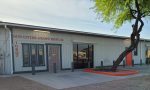
Since 2005 I have been buying/selling/trading real estate, which has been profitable since 2009. I purchase 2-3 value add buildings yearly—the worse the condition, the better. Once I am about to close on a property, I will go and sit in the building for a while and wait for the installation to tell me what it wants to be. All buildings have a vibe; if you listen closely enough, you will know what that building needs to be. I am most proud that despite all the obstacles and red tape created by cities, I did not quit. It is a real rush to drive around a city like Mesa, and at almost every other street, there is a building I own, own, or was involved in. What sets me apart from other real estate investors is that I am local and care about what is happening in my city. In grad school, we always joke that most developers are like pigeons; they fly in from out of town, shit all over, and then leave. Knowing that I will own a property for many years and see the building in passing several times a week makes me very interested in the building’s upkeep and how the end user will impact the surrounding area.
We’d like to hear your thoughts on luck and what role, if any, you feel it’s played for you.
The only thing from undergrad I remember was the professor kept saying that historic properties within 1/4 of rail transit increase substantially within 10 years of the rail completion. Lucky for me, the properties in Mesa that were a 1/4 mile of the light rail were old and ugly, and the days on the market proved nobody wanted them during 2012-2016. I was also blessed to meet some amazing urban planners who taught me about form-based code zoning, and I met Daniel Parolek, who wrote Mesa’s form-based code early on when most city staff had no idea what it was. The local real estate people were clueless that said zoning existed. Almost every property I own is within the particular zoning district, allowing for fantastic development perks.
Contact Info:
- Instagram: @chadcluff

Popular
-

Phoenix’s Most Inspiring Stories
-

Building Love With Purpose: Darryl & DeLonda Tucker on Faith, Resilience, and Expansion
-

Andrea Savarese Is Redefining Veterinary Care Through Calm, Connection, and Compassion
-
Sun Cities 4 Paws Rescue Is Building a Sustainable, Compassion‑First Future for Feline Welfare
