


Today we’d like to introduce you to Beverely Elliott.
Hi Beverely, can you start by introducing yourself? We’d love to learn more about how you got to where you are today.
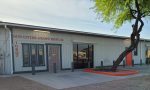
In February 2021, “Jody,” our seven-year-old grandson, was assigned to complete a report during Black History Month on an African-American Hero. He wanted to know where I could go to the museum in Tucson to learn about African American people who lived around here?” I had to tell Jody that there was no Arizona museum registered anywhere like that. Jody wanted me to know that we should open a museum in Tucson, and I agreed! So, I began researching how to open a museum with various mentors, and we took a deep dive on April 15, 2021. We surveyed people we knew and did not know, and the overwhelming response was that it was needed. We approached the University of Arizona via JP Roczniak, the CEO of the UA Foundation, and Dr. Ivy Banks, and they agreed that this was a great idea. We eventually secured a space on campus, worked with UA Facilities Management on the design, began securing and procuring collections, and placed them in storage while getting the word out to the community. So, many African Americans and others in Southern Arizona stepped up to support us. The UA Confluence Center, the Center for Digital Humanities, Cox Communications, TEP, and the Zuckerman Family all stepped up to help us get started. We opened our doors on January 14, 2023, with 5 exhibitions with over 1,700 visitors in 6 months. We have grown from 12 to 23 oral histories, 6 legacy stories, and 8 AZ history stories. We are finding new stories and artifacts every day.
Can you talk to us about the challenges and lessons you’ve learned? Looking back, has it been easy or smooth in retrospect?
It has been a pretty smooth road. We have had a few hiccups. First, being a museum representing the under-represented and marginalized people of color, we have had a few people who feel that this information is a waste of time and nobody cares. This, of course, is the minority, and we push forward. We have had tremendous response and support from our Legacy Founder Investors – TEP, COX, Zuckerman Family – who have held us up and continue to inspire us to grow. Being a minority museum, we see other museums garnering hundreds of thousands, even million-dollar gifts; that is a challenge for us to move forward in that fashion, considering the Tucson population is about 4% African American and many live at or below the poverty level. We also did not know which academic arm the university would support us. After a few disappointments, we are under the management of the U of A’s RII (Research, Innovation, and Impact) Department. We are so grateful to the university for all they have done to help us find our way. I would like to thank the UA Foundation, the Student Union, the Office of The President, Facilities Management, the Intern program, and RII for their encouragement as we move into a new management realm with support.
Thanks for sharing that. So, you could tell us a bit more about your work.
I am a retired educator/ counselor. I am known as a counselor with various local, state, and national awards. I am a lifetime learner and dove into this project, the African American Museum of Southern Arizona; I became the Executive Director after being encouraged by a 7-year-old and then learning how to start a museum. On October 26th, the EEF (Educational Enrichment Foundation) will host their annual fundraiser https://www.eeftucson.org/, and I will accept their “Humanitarian of the Year” award. We have hosted Ruby Bridges in a chat and Stacey Snowden in a Legacy Story Chat about her Father, Coach Fred Snowden.
My husband Bob, who is an entrepreneur, along with support from our founders, put together a wonderful and very well-connected community board and advisory board, and we were on our way to opening a museum. Something I was eager to do and to learn. I am most proud of the Southern Arizona community, which has provided encouragement and assistance by providing oral histories or legacy stories (sharing information about a loved one who has died) or general Arizona history like the Buffalo Soldiers. I am genuinely proud of our interns who have taught me, Emma, Jenny, and Hassan, to name a few. I am proud of the technology we use to capture our society’s young audience. I am also very proud of Jody, who was there when we picked the paint, cut the ribbon for our opening, and prepared “Jody’s bags” – a small bag with candy and a magnet for children who come to the museum.
Let’s talk about our city – what do you love? What do you not love?
I love Tucson and Southern Arizona. We offer so much through our Visit Tucson website. You can learn about the African American Museum of Southern Arizona and all the wonderful places to visit, be it history, like Camp Naco, Bisbee, Nogales, and more. We share our rich culture by recommending authentic foods, dance and how they relate to family and our area. It is so quiet when the snowbirds leave, and the University is closed, so when we are open, there can be some days when we don’t see anyone.
Pricing:
- Free Admission we ask for a donation
Contact Info:
- Website: www.aamsaz.org
- Facebook: https://www.facebook.com/AAMuseumOfSouthernAZ
- Twitter: https://twitter.com/aams_az
 Image Credits
Joe Jackson, Jr. Cox Communications AAMSAZ Domique Ortega
Popular
-

Phoenix’s Most Inspiring Stories
-

Building Love With Purpose: Darryl & DeLonda Tucker on Faith, Resilience, and Expansion
-

Andrea Savarese Is Redefining Veterinary Care Through Calm, Connection, and Compassion
-
Sun Cities 4 Paws Rescue Is Building a Sustainable, Compassion‑First Future for Feline Welfare
