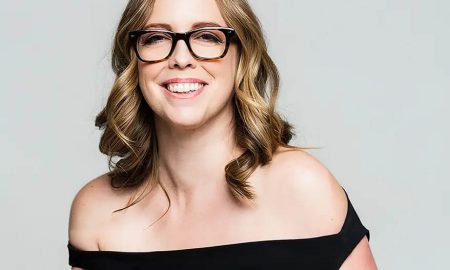
Today we’d like to introduce you to Darcy Falk.
Darcy, we’d love to hear your story and how you got to where you are today both personally and as an artist.
My mother first taught me to use her putty-colored Singer when I was four years old. By the time I was in high school, I was teaching home ec to 5th & 6th graders in summer school, making my own clothes, and had put roughly a hundred thousand miles on my own Pfaff machine.
Fast forward about ten years: I’m living in rural Iowa. At the library, I find a book: Not Just Another Quilt. I take the book home and devour it. I start my first quilt, creating my own design based on a stamped tin ceiling pattern. I make the quilt, (and many mistakes along the way.) I’m hooked!
I didn’t have a lot of money for supplies; I only bought half-yard cuts of fabric, so I’d have more variety to choose from. That critical decision, based on economics, led me to something important: my work never looked traditional (even when I was making traditional pieces). It wasn’t trendy, but it was unmistakably mine. With that variety of fabrics, I was able to establish a rhythm, but not have everything match. I was making quilts that were the opposite of the wallpaper: the repeats were there, but you had to look hard to find them.
I took classes and workshops. I honed my skills. I studied quilts and quilt history, but I also studied art history. I took printmaking, drawing and painting classes at Northern Arizona University. I made friends with artists who were working in other media besides textiles. I taught classes. I learned more techniques. After exhibiting locally for a few years, one of my artworks was accepted into a national exhibit in 1994, and I’ve been showing and selling my work ever since.
Early on, I was told to document my artwork with photos and keep records about where it had been shown, the process of making it, etc. I took that to heart and kept meticulous records on each piece of artwork, every show I had exhibited in, and every article written about me. I had several file boxes of documentation, old slides, exhibit records, etc., all taking up valuable real estates in my studio.
Then, in the summer of 2016, my dad died. I spent weeks going through his papers. Some were important, and some were interesting, but some were neither.
When I got back into my studio, I began going through my own files: all those boxes of articles, and long-since obsolete slides, exhibit entry forms, old postcards, etc. I realized this record of my thirty-plus year career was holding me back, if not physically, then certainly artistically. I had been letting that history define me. My work had stagnated.
I threw almost all of it away and felt an overwhelming sense of relief. It seemed like a new beginning, but one in which all my old skills and tools were still available to me. Since then, my creative energy is freer, less weighty, more easeful. I follow my instincts, pay attention to what feels right, and don’t think too hard. I use my skills to create work that has a vitality and freshness that I’d previously lost touch with.
We’d love to hear more about your art. What do you do you do and why and what do you hope others will take away from your work?
In 2012, in response to disturbing political trends, I wrote an essay for Flagstaff Live about my reproductive history, including my abortion. In the essay, I recalled that in the late 1990s when radicals were bombing women’s health clinics, I purchased two yards of bulletproof Kevlar fabric with the intention of making a metaphorically safe garment as space for a woman to make her own reproductive choices. It took that essay and some encouragement from friends for me to finally get back to that project. The result, completed in 2014, was the Kevlar Kimono, a seven-foot-tall sculptural piece in support of reproductive freedom.
This past summer I made six new pieces for a show in Flagstaff. The exhibit, entitled, Ultraviolet, textile art revealing women’s issues, was mounted at the Church of the Epiphany Flagstaff. Five of the six pieces that were part of the show have a message printed with acrylic paint that only shows up under ultraviolet light. The exhibit included flashlights to view the ultraviolet messages. All the works address so-called “women’s issues”: domestic violence and, sexual harassment, a historical look at women’s suffrage, societal expectations, and the general oppression of women’s voices.
Most of my artworks are stitched textile collages. They have the structure of a quilt, but are more like paintings, and are intended for the wall. I incorporate whatever techniques I need to make these pieces come alive. They might be collaged, then screen printed or embellished or have additional layers attached. The fabrics I use might have been part of a vintage scarf or a piece reclaimed from a garment or an old sheet, or a piece of silk that’s been hand-dyed and photocopied. All the techniques are used not for their own sake, but in service to the concept for the piece.
The stereotype of a starving artist scares away many potentially talented artists from pursuing art – any advice or thoughts about how to deal with the financial concerns an aspiring artist might be concerned about?
Living frugally buys you a lot of freedom to do the work you want to do. If you have to work full time (or more) to support your basic expenses, you probably won’t have a lot of time left over to make art.
Work (part-time, if you can) at a day job, so your artwork doesn’t have to support you, especially when you’re just starting. If your day job is related to art, great. If it’s something completely different, great. Whatever works for you is the right answer.
Consider an entrepreneurial solution: create a commercial line of artwork that won’t take all your time. My company is Tallulah ArtHead, through which I design and sell my line of cork zipper clutches, and oilcloth market bags and zipper pouches; I spend about half my time on this project.
Make time for your non-commercial, experimental work. It will feed all your creative activities, even if it’s not generating income. I spend about half my time working on creative projects in the studio.
Do you have any events or exhibitions coming up? Where would one go to see more of your work? How can people support you and your artwork?
Many artworks can be seen on my website where I also try to let people know about shows of my work. (Prices are listed for all available works.) From November 16 through February 6, my piece, We Learned to Be Fierce, will be on display at Tohono Chul Park’s main gallery as part of Copper State. Visit tohonochulpark.org for details.
I welcome visits to my Flagstaff studio with an appointment, which can be made by contacting me through my website.
If you’d like to be on my email list, please sign up at https://darcyfalk.com/contact/. I send out occasional emails about exhibits, events, including open studios.
My line of oilcloth and cork market bags and zipper pouches is available at https://tallulaharthead.com.
I donate 10% off all proceeds from my retail sales to Planned Parenthood in support of women’s healthcare.
Contact Info:
- Website: https://darcyfalk.com
- Email: artist@darcyfalk.com
- Instagram: @darcyfalk99
- Other: https://tallulaharthead.com


 Image Credit:
Artwork photos by Splendid Graphics, Flagstaff, Arizona
Getting in touch: VoyagePhoenix is built on recommendations from the community; it’s how we uncover hidden gems, so if you know someone who deserves recognition please let us know here.
Popular
-

Phoenix’s Most Inspiring Stories
-

Building Love With Purpose: Darryl & DeLonda Tucker on Faith, Resilience, and Expansion
-
Andrea Savarese Is Redefining Veterinary Care Through Calm, Connection, and Compassion
-
Sun Cities 4 Paws Rescue Is Building a Sustainable, Compassion‑First Future for Feline Welfare