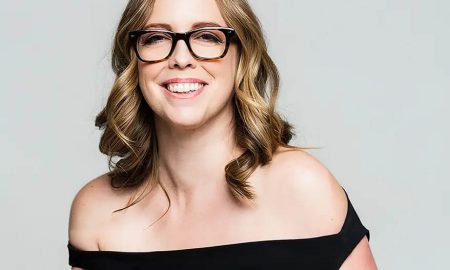
Today we’d like to introduce you to Cherie Buck-Hutchison.
Cherie, please kick things off for us by telling us about yourself and your journey so far.
I have an unusual background. My father’s family helped found a large, mystical-based religious commune commonly called Mary’s City of David (a sect from the House of David) in Benton Harbor, Michigan. My father and one brother left as young men while the rest of the family finished out their lives in the third oldest practicing American Christian community. My parents divorced. My mother raised me in a high-control patriarchal cult in Colorado. So a unique topography of belief systems was a significant part of my life.
My physical landscape vacillated between the alpine terrain area near Telluride, Colorado and the lower elevations very close to the Colorado National Monument area which encompassed cattle ranches and peach orchards. As a young child, I was fascinated with the large clay cakes of earth that would crack into organic, yet gridded shapes after the sun evaporated the snowy ground. I used to dig up that post-winter mud, mix it with water and create little sculptures. Later I explored the untouched desert beauty surrounding a small town when we moved to Arizona. I loved hiking on the hilly abutments next to washes after flash floods had crashed new courses in the sandy landscape.
Our lifestyle consisted of arduous religious practices in many areas. Yet, the connection with the landscape has remained with me. Our summer trips were pilgrimages to religious assemblies in various states and sometimes Canada. We sat listening to sermons from 9am to 9pm every day for eight days, often outside on bleachers. I came to know the American landscape by way of travelling to and from the huge gatherings. We coasted long sections of mountains and hills, struggled up craggy elevations, entered green, vaporous zones and passed through deserts that seemed like another planet. I watched it all through the car’s open windows with whatever local radio music we could tune in wafting through our hair with the wind. It was an immense moving screen. The constant rolling of the tires connected us to highways and the physical earth beneath the asphalt. We packed our best clothes for the trips and sometimes stayed in tiny one-story motels along the way. It was a very American experience yet intersected with a paradoxical liminal space. Beyond the obvious, there exists a mystical quality to the panorama that still engages me on several levels. All of that comes through as a somewhat ethereal aspect in my work that transcends my personal experience. The Great Lakes, mountains laden with quaking aspens and pines, scraggly western juniper trees and magnificent red rock formations eventually found their way into my artwork.
As I grew older, art became more important to me. An education beyond high school was and still is highly discouraged through harsh consequences. The cult did not believe in anything extemporaneous beyond evangelical ministry. Art or other past times were seen as taking away from work. I was adamantly chastised for enrolling in a life drawing class. It was a pivotal moment for me because I chose to be an artist despite vehement disapproval. The very next day I began painting on the largest canvas I could find. I also chose to change my spiritual background, much as my father had years before.
Can you give our readers some background on your art?
I am interested in the metaphoric landscape in tandem with social existence. I layer a range of diaphanous forms, including video, photography, performance, ceramics, and objects. My works seek to explore the unseen, often lurking behind facades. I am engaged with the nuances surrounding authority and how the concealed is materialized through the actual process of overlaying and unveiling. I sometimes create immersive spaces that insist the body enter and move through space during performances between sheer layers. Lately, I have been printing photographs onto silk organza. It allows me to further my exploration of the form.
Informed by my history, I am interested in the relationship between magical thinking, landscape, and marginalization in the contemporary imagination. How do we talk about things that are not being talked about? I think that is why I create idiosyncratic visual art. It is a way to articulate an idea via an immersive methodology. I often reference vintage slides my parents took in the 1950s and 60s. Many people have similar family photos in their parents’ and grandparents’ albums. One of my series involves the miraculous insertion of the female agency into patriarchal positions still maintained in some groups. I often use publicly-owned land as my background images because excluding women happens on a grander scale collectively. My art serves as a stand-in for the broader narrative regarding how we mutually move forward as a nation comprised of fifty percent women. The use of mystical thinking through a feminist lens is very interesting. I am questioning and disrupting the narrative by consecrating the women as equals at every level of a religious organization. My series creates an enchanted Southwest of the future. I layer my imagery as a way to reveal the cloaked fallacies we all walk through. Many of my other works explore the psychological strata surrounding oppression. I reify and revise the veiled behavior shrouded within the intricacies of power.
The use of the imagination is of great value to me. What does change look like for modern day? Is there a better way to move forward? I consider these questions through the lens of a landscape, magical thinking, and the interests of the underserved. I invite a broader dialogue regarding fear and power today.
Any advice for aspiring or new artists?
We are engaging with our collective memory, history and contemporary issues. The concerns the invisibilized face today are indicators of other issues that eventually all society must face. Much of how things are progressing regarding our health, earth and people are alarming. There is a parallel between the treatment of our planet, its inhabitants and their rights. It is important for artists to create space for these conversations. It can be fruitful on a long-term basis because how we think shapes us as a society.
It is easy to become distracted in today’s era of social media and information. I think creating time to make art is vital. Art is the product by which artists engage with society. Without the time commitment to make art, the dialog may be very different from the original desire.
What’s the best way for someone to check out your work and provide support?
Much of my work is on my website: www.cheriebuckhutchison.com. I am represented by Royse Contemporary located at 7077 E. Main St., Scottsdale, AZ, 85251. I also show locally and nationally on a regular basis. Currently, I am in the group exhibition “Interiors” at A. Smith Gallery in Johnson City, Iowa.
My work is also in several InSight books published by Four Chambers Press. The books are part of a community initiative we developed along with Ashley Czajkowski to bring visual artists and writers together for ekphrastic collaboration. I have worked with novelist, Paul Mosier as well as the poet, Dr. Lois Roma-Deeley. Her poem made in response to my work went on to be a finalist in the 45th New Millennium Award. I am also included in Bridges of the Artist’s Mind by Dr. Marianne Roccaforte.
There are many ways to support artists. Of course, purchasing art is always appreciated! I always welcome studio visits with collectors by appointment. Collectors are often visionary individuals with engaging conversations.
Contact Info:
- Website: www.cheriebuckhutchison.com
- Email: cherie.buck.hutchison@gmail.com
- Instagram: cherie.buck.hutchison
- Facebook: Cherie Buck-Hutchison
- Twitter: @monamicherie


 Image Credit:
Bryce Elliot
Marianne Roccaforte-Gardner
Getting in touch: VoyagePhoenix is built on recommendations from the community; it’s how we uncover hidden gems, so if you know someone who deserves recognition please let us know here.
Popular
-

Phoenix’s Most Inspiring Stories
-

Building Love With Purpose: Darryl & DeLonda Tucker on Faith, Resilience, and Expansion
-
Andrea Savarese Is Redefining Veterinary Care Through Calm, Connection, and Compassion
-
Sun Cities 4 Paws Rescue Is Building a Sustainable, Compassion‑First Future for Feline Welfare