Today we’d like to introduce you to Larry Schweikart.
Larry, please share your story with us. How did you get to where you are today?
I am a native Arizonian, born at Higley right across from today’s “Joe’s Farm Grill.” Went to Chandler High (the only high school in Chandler, other than Catholic Seton: maybe had 150 in my graduating class). Attended ASU and received a B/A in Political Science but had bad grades—barely a C.
That is because I was playing drums in rock bands all through high school & college. The weekend after I graduated, I went on the road with the first of many bands playing all over the country. By 1975 I ended up with a group of Southern boys in a band called “Rampage” and we opened for Steppenwolf, the James Gang, Savoy Brown, hung out with the Allman Bros. We played the famous Troubadour Club in LA and the Who’s Pete Townsend sat through our set, then slapped me on the back as we left, saying, “good show, wot!?”
Around 1976 “Rampage” broke up after cutting a single that got rave reviews from “Billboard” and “Cashbox,” but no distribution. I decided to return to Phoenix and find a day job while playing at night. I thought teaching would be easy, and I had a degree. But I was lacking a few Education courses and more important, a history course.
In a single 6-week summer session at ASU, I had a life-changing experience where a very conservative professor named Robert Loewenberg convinced me to become a history professor. But I had bad grades. He vouched for me in the program (straight As), then I won two national student prizes for best article in America written by a student. No one had done that before, or, to my knowledge, since. The chairman of the ASU history department, Thomas Karnes, called me into his office and said, “I have a project that is too boring for me and doesn’t pay enough. Do you want it?” I said “sure. What is it?” He said the Arizona Bankers’ Association wants a little pamphlet written about the history of banking in Arizona. I had already learned “publish or perish,” so I took the ABA’s money, but instead of writing a pamphlet, I wrote just one full chapter, fully researched, of a book I said they should pay me to write. They agreed. It became my first book (still in my Master’s program at ASU), called “A History of Banking in Arizona.” It’s still relevant today.
ASU kicked me out—not due to bad grades, but I had an MA and they honestly said they didn’t have enough national clout to get me a professor job. So I ended up with a full ride at Claremont Graduate School to study with the infamous Harry Jaffa. Something in my spirit said “Meet this guy first.” So I drove to Claremont, had lunch with him and quickly decided he was all about Harry, not a graduate student’s needs. I gave the money back and now needed a Ph.D. program. Lewis Tambs at ASU, who was President Ronald Reagan’s Ambassador to Columbia, got me in with the University of California Santa Barbara, and sure enough, my graduate advisor got me a job in Wisconsin on a single phone call. By then I had co-authored a book called “Trident” about the US Navy’s Trident Submarine Program (long story) with ASU Political Science Professor Doug Dalgleish. So I had two published books by academic presses before I got my PH.D.!
In Wisconsin, teaching at the University of Wisconsin-Richland Center, I finished my doctoral dissertation, “A History of Banking in the American South from the Age of Jackson to Reconstruction.” The school was 200 students. Total! They needed help in their basketball program and I was an assistant basketball coach at an NCAA level school (and couldn’t tell an “x” from an “o.”) With my dissertation done, I got two offers, one from Texas A&M and one from the U of Dayton in Ohio. I was headed for A&M and they were ready to hire me at an “Associate” Level (i.e. one tier above starting level) when Texas oil revenues crashed. They froze all hiring as I was in the Dean’s office! I ended up at the U. of Dayton, a Marianist Catholic school, where I stayed for 31 years teaching business history, economic history, and military history.
After publishing another 5-6 academic books, I got tired of writing stuff nobody read. So around 2000, I published “The Entrepreneurial Adventure”, which was a history of American business. That showed me I could write a “trade” book. By then, Michael Allen of the U. of Washington and I had started work on a history of the United States, published in 2004 as “A Patriot’s History of the United States.” It came out to rave reviews and I was interviewed by Rush Limbaugh in his “Limbaugh Letter,” as well as getting reviewed by the Wall Street Journal. The book did well, but wasn’t a #1 bestseller… yet.
From 2004-2010, I went on to write two other trade books and a few for-hire books. One of them was called “48 Liberal Lies about American History,” which sold over 50,000 copies. The morning show “Fox and Friends” had me on to start a series called “The Trouble With Textbooks” every Wednesday morning. One day I got a call from a guy who said, “This is Harlan Crow of Dallas, Texas.” (Trammell-Crow Holdings). “I want to give a copy of your book to every legislator.” I thought, “wow, 535 copies!” He said, “No, every legislator in America.” I said, “that might be expensive.” He asked, “How much do you think $100,000.00 will get us?” I ended up signing 7,685 copies for Mr. Crow that were sent to every single legislator in America!
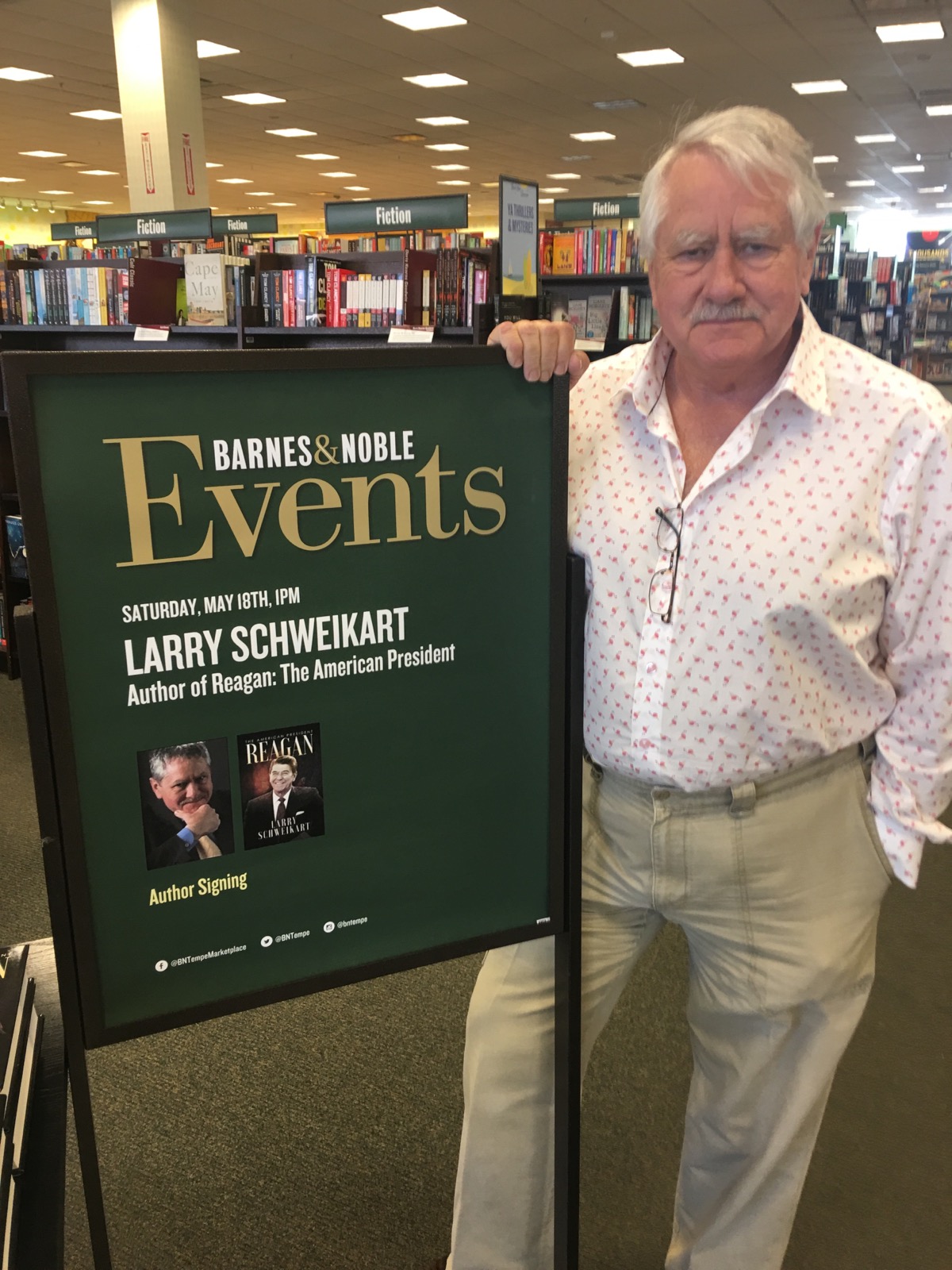
In 2010, a friend, Burton Folsom, Jr. of Hillsdale College, got me an invitation to be on the Glenn Beck Show. At the time, Beck had 3.5 MILLION nightly viewers. For reference, that’s seven times the average CNN show! I gave Beck a copy of “Patriot’s History” and it was clear he did not know the book. A few days later, he called me at home and said he read the 1,000-page book over the weekend and it was the greatest history book ever written! He began holding up the book on his show every night, 4-5 times a night. It instantly went to the top of the NYTimes bestseller list and stayed there for over a month. Today, “Patriot’s History” is in its 30th printing (!) and its fourth edition with over 350,000 sold and a half million copies in print. It’s an interesting comparison: the fabled “People’s History” by Howard Zinn only went through 24 printings and 300,000 copies in its first ten years: “Patriot’s History was at 27 printings and 330,000 over our first decade.
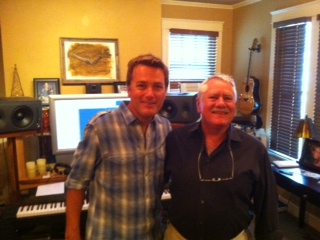
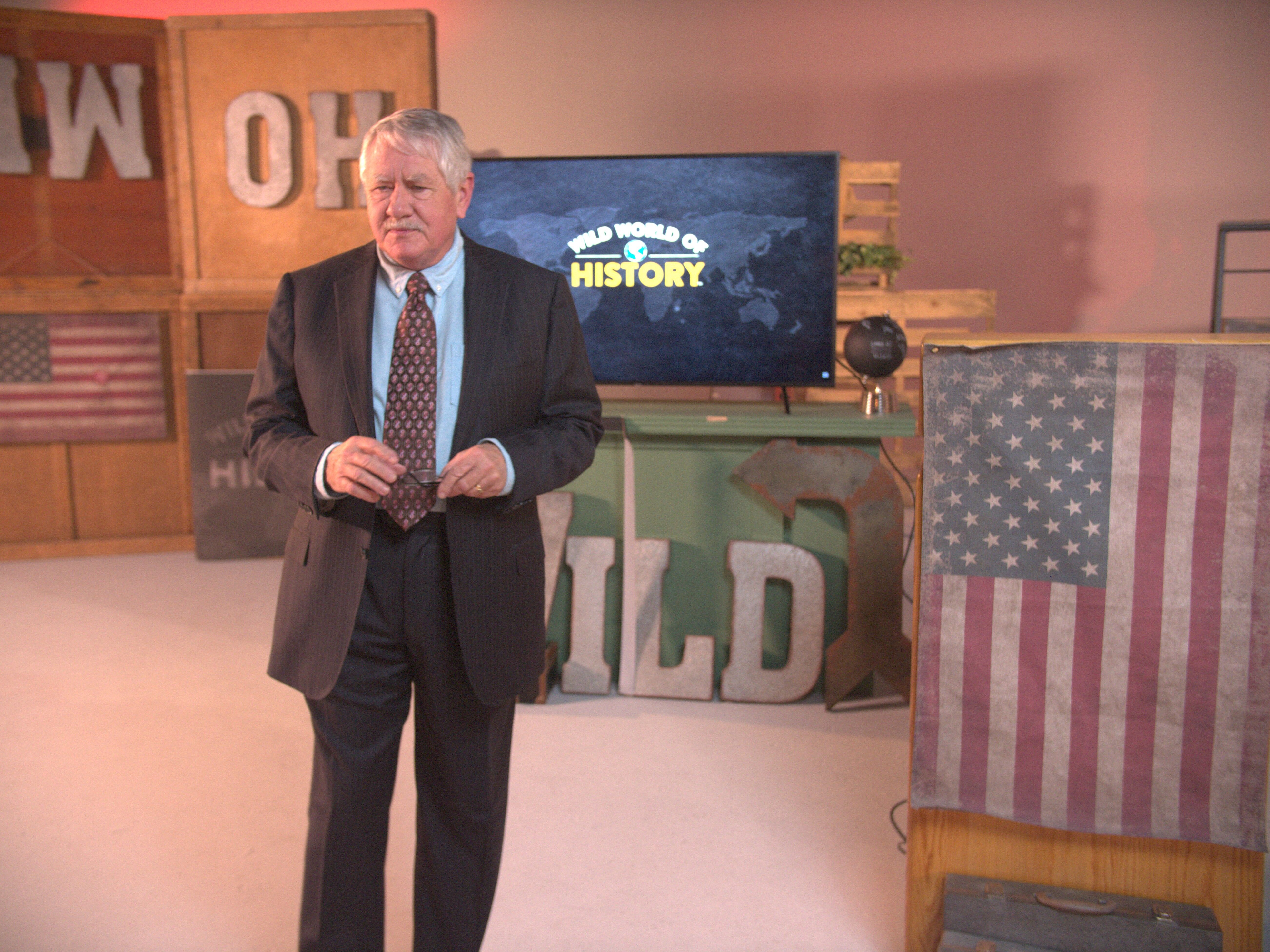
I continued to write other books, including a history of the world since 1900 (“A Patriot’s History of the Modern World,” in 2 volumes). But people kept asking for a curriculum to go with “Patriot’s History of the United States,” which is now the #1 book for homeschoolers in the U.S. (as well as being used in over 30 colleges and universities). In 2016, I retired from UD and moved back to Chandler, where a couple of investors (one of them my high school band bass player who had become extremely successful) put up the money to start “Wild World of History,” which has a full curriculum for high school US History including teacher guide, student workbooks, images/maps/charts, tests, and me teaching all 22 chapters of “Patriot’s History” on video. In our first year, I did eight homeschool conventions and we were slightly profitable.
This year, despite having four conventions cancelled by the “China Virus,” we are ahead of our sales pace for 2019. In addition, we rolled out a “World History Since 1775” high school level course. Finally, somewhere in between, around 2009, I decided to make a documentary film. I had no experience at all either in fundraising or in producing film, but two associates—an OH business associate and an LA director—joined me. I raised $350,000 in eight months and we completed “Rockin’ the Wall,” a movie about how rock music helped bring down communism in Europe, It featured rock and rollers from Toto, Vanilla Fudge, the Doors, Quiet Riot, and Mother’s Finest, as well as interviews with leading music producers like the late Shadow Morton.
In 2010 it was featured on PBS, and in 2014 I held a national film tour of 25 locations, including Notre Dame University, Atlanta, Los Angeles, Westminster College (where Winston Churchill gave his famous “Iron Curtain” speech), North Carolina, Arizona, and Florida. We also raised the money (harder that time) to film a sequel, “Other Walls 2 Fall” In the process of doing those movies, I got to become friends with a number of Hollywood actors and producers. All in all, a wild ride.
Along the way in my history studies I had begun doing political work for the Republican Party of Ohio, mostly free-lance voter registration analysis. I had also become friends with Steve Bannon of Breitbart News. In 2015, I very early concluded Donald J.Trump would win the Republican primary. I concluded this by about July 2015, largely based on intuition. On Aug. 20, 2015, I tweeted that Trump would win the general election over presumed nominee Hillary Clinton with “between 300 and 320 electoral votes” (the final was 306—when even most Republicans thought he would lose). Over the course of 2016, I continued my voter registration work and began a diary/book about Trump’s campaign which I called “How Trump Won.” Again, this was written long before the election. Of course I couldn’t find a publisher. After Trump’s victory, a couple of publishers called and asked if I still had the book. I did, but when they had rejected me, I stopped writing at 150 pages. Regnery Press had a short campaign diary by Breitbart reporter Joel Pollak, and wondered if we could merge the two books. We did, and “How Trump Won” came out early in 2017—but it was written long before Trump actually won!
Great, so let’s dig a little deeper into the story – has it been an easy path overall and if not, what were the challenges you’ve had to overcome?
We never expected “Patriot’s History” to be a best seller. That’s both good and bad. Once the publisher had a bestseller, Sentinel/Penguin expected more. In one case, “Seven Events that Made America,” the book sold really well—but the publisher had printed far too many copies, so despite selling over 55,000 copies, the publisher thought the book was a flop!
When it came to film, the first movie, “Rockin’ the Wall” in retrospect was too easy. I raised all the money in seven months, we finished on time and at only about 1-2% over budget. But then we had difficulty finding a good distributor, even though it appeared on PBS. Meanwhile, fooled by the ease of making “Rockin’ the Wall,” we started a second documentary about music vs. tyranny in other parts of the world, called “Other Walls 2 Fall.” It featured Yanni, Busta Rhymes, Clint Black, and a heavy metal band from inside Tehran that smuggled us footage! We ran out of money at about 80% of the way in, and a one year schedule became seven years! A $450,000 budget—now stretched out through nickel-and-diming—probably ended up closer to $550, 000. We had two different film projects, including a feature film, that supposedly had all the money committed (a total of about $3.2 million) both fall apart in the period of one week.
We had to leave our LA headquarters, a suite in the famous “Crossroads of the World.” Today, the film company is mostly a shell, with any film production I do for Wild World of History being handled by WWoH. It all reminded me of the Hollywood adage: “How do you make a small fortune in movies?” “Start with a large fortune.”
We’d love to hear more about your work.
We do history. The Wild World of History site has a ton of free material (“Wild! Did you know . . . .”) where I write and post interesting and odd historical stories. But the main product is the aforementioned U.S. History Curriculum, with all teacher and student materials, including tests, images, maps, graphs, and me teaching “A Patriot’s History of the United States” in 22 high-production video lessons. We also have a “VIP” side where I do non-curriculum lessons on a variety of topics, including “Enduring Lessons on Life and Citizenship” and “The 1620 Default,” a series arguing that American exceptionalism began at Plymouth, not Jamestown and that the “Four Pillars of American Exceptionalism” had nothing whatsoever to do with slavery. This is a direct, and I think convincing, response to the New York Times’ badly-flawed “1619 Project.”
No other national US history curriculum for high schoolers has either the video component or, for the one competitor that does, nearly the high quality or depth of analysis that WWoH offers. This year we also introduced, with the same teacher guide, student guide, tests, and video lessons, a “World History Since 1775” course. Media people and Hollywood producers have mentioned how impressed they are with our production value—this came from experience gained in making ‘Rockin’ the Wall” and “Other Walls 2 Fall.”
Do you look back particularly fondly on any memories from childhood?
Racing cars on the Indian reservation by Chandler. On Saturday nights, everyone would take their Camaros, Chevelles, Mustangs, Cudas and other cars to an old abandoned airstrip on the Pima Indian Reservation and race until the Tribal police chased us off. However, I would say in second place was the time my band, “Shotgun,” won a “Battle of the Bands” in Mesa to receive a recording session at Phoenix’s only recording studio at the time.
Pricing:
- Our Wild World of History US History 1 & 2 Bundle is $169.00. This is all downloadable. No hard copy to send.
- Our Wild World of History World History Since 1775 bundle is $169.00, all downloadable. No hard copy to send.
Contact Info:
- Website: www.wildworldofhistory.com
- Phone: 937-231-8387
- Email: larry@wildworldofhistory.com

Suggest a story: VoyagePhoenix is built on recommendations from the community; it’s how we uncover hidden gems, so if you or someone you know deserves recognition please let us know here.