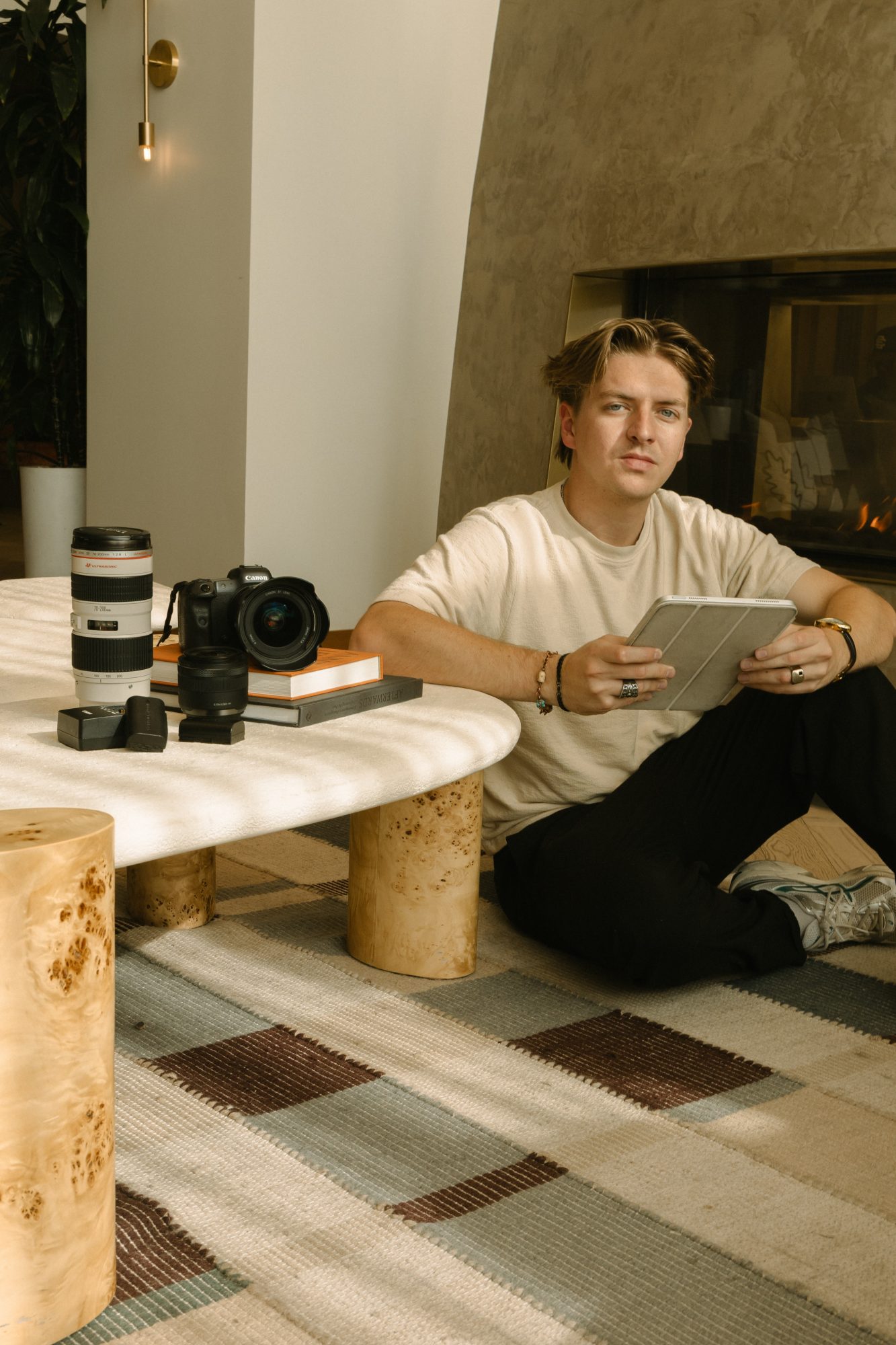
Today we’d like to introduce you to Alexander Peet.
Hi Alexander, we’d love for you to start by introducing yourself.
I was born and raised in Miami, and most of my childhood was in Downtown Miami. Early on I was obsessed with buildings, weather, and media. My dad’s work took us to Chicago for a year when I was a kid, and the skyline left a real impression. Back in Miami, that turned into weather and journalism. I watched The Weather Channel constantly, made mock hurricane forecast videos, and got into documenting whatever was in front of me.
In 2008 I got my first video camera, and from that point I filmed everything. Friends, storms, walks around the city. I didn’t think of it as creative work yet, but it was the first tool that matched how I naturally saw things.
At the University of Arizona I started in journalism, then switched to Information Science with a Photography minor. Around the same time I hosted a student radio show called Peet’s Beats, playing electronic music on Friday afternoons. I was already deep in music, I just hadn’t connected it to the camera yet.
That changed almost by accident. One night junior year I brought my camera to a frat party after doing street portraits earlier that day, and something clicked. I shot every weekend after that, then started photographing DJ friends at campus bars by senior year. One random night ended up changing the direction of my life.
In February 2019, a few months before graduating, I was robbed walking home from a shoot. My gear was taken and I was stabbed twice in the back. I was shooting again within weeks. That experience made it very clear how much this work meant to me.
After graduating I moved to Scottsdale. I got into this because I wanted to tell stories that wouldn’t get forgotten. Phoenix has a creative scene that doesn’t always get documented the way it deserves, and I wanted to help change that.
I spent several years in B2B marketing while building the photography business at night and on weekends. That taught me how to write ads, run campaigns, and understand attention. Shooting nightlife every weekend gave me the reps that built my speed, confidence, and consistency behind the camera.
I shot Decadence, Goldrush, and venues like Sunbar, Maya, and The Hot Chick. Then the scope got bigger. I worked directly with artists like HAYLA, MK, and Disco Lines. I shot SEMICON West, photographed Phoenix Mayor Kate Gallego and ASU President Michael Crow, and worked with brands like Molson Coors at the WM Phoenix Open. Corporate events, conferences, small businesses, people building things across the Valley.
In 2025 I stopped keeping photography, video, and marketing in separate lanes. After a few weeks in Europe, I came back with a clear picture of how I wanted to work. I wanted to combine visual instinct, production experience, and pattern recognition into one offer that helped brands create better work that actually converted. That’s what pulled me into full-time creative strategy.
A few months later, while shooting Goldrush Music Festival, I made a joke image that became a real case study in attention. I used AI to swap a DJ’s face with Barack Obama’s in one of my photos and posted it as a meme. It passed 6 million views across platforms, and I ended up on CNN and Fox 10 Phoenix. What interested me wasn’t the attention itself, but why it spread. Why people stopped. Why they shared it. That same instinct drives the strategy work I do now.
Today I run performance creative strategy for B2C brands across DTC, digital products, and consumer services. The work is UGC-based ad creative: concepts, scripts, casting direction, and campaign architecture built to convert. The production background matters because I can think visually, direct talent, and read what makes content hold attention.
In my first year running performance creative full-time, I worked with brands from early-stage startups to publicly traded companies with over $1B in annual revenue, across DTC, fintech, health tech, and a few verticals legal warns you about.
The Lens of Peet has two sides. The Lab is the strategy arm, focused on performance creative and campaign architecture. The Darkroom is the production arm, photography and video. The idea that’s run through both has always been the same: notice what moves people, then turn that instinct into work that lasts.
I’m 29, based in Scottsdale, building a studio where strategy and production actually reinforce each other.
Alright, so let’s dig a little deeper into the story – has it been an easy path overall and if not, what were the challenges you’ve had to overcome?
Not at all.
The path wasn’t linear, and a lot of it came down to figuring out what environments actually fit how I work. I had to learn early how to adapt, read rooms, and keep going through situations that weren’t a natural fit. That shaped a lot of how I move now, both creatively and professionally.
In 2019, a few months before graduating, I was robbed and stabbed walking home from a shoot. That could have pushed me out of photography entirely, but it did the opposite. I was back shooting within weeks, and it made me more certain this was something worth building.
The years after college were a mix of marketing work, freelance, and trying to find the right lane. Building a business while working full-time taught me a lot about discipline, repetition, and how much output it takes to actually get sharp. Two straight years of shooting nightlife every weekend gave me a level of speed and consistency I still rely on now.
The bigger challenge was learning not to force myself into the wrong setting. Once I found a way to combine strategy, visual instinct, and production into one lane, things started making a lot more sense.
By the second half of 2025, things turned. I landed a creative strategy contract, started producing real results, and built from there. A lot of the uncertainty from earlier years ended up becoming part of the foundation.
Alright, so let’s switch gears a bit and talk business. What should we know?
The Lens of Peet is a creative studio built on two sides that inform each other.
The Lab is the strategy arm. I work as a Performance Creative Strategist for B2C brands across DTC, digital products, and consumer services. The work is UGC-based ad creative: concepts, scripts, casting direction, and campaign architecture built around attention, psychology, and buying behavior. I run strategy across eight active client accounts covering health tech, wellness, and government services. Over my first five months with a major global health tech brand, I helped drive over $140K in tracked ad revenue and cut cost per acquisition by 70 percent. The top-performing ad reached a 2.84x ROAS lifetime on $14,200 in spend and outperformed celebrity-licensed content in the same account by more than 10x. I currently work with brands up to $1.1B in annual revenue.
The Darkroom is the production arm. Photography and video across music, lifestyle, commercial, corporate, events, and studio portraiture.
What separates the studio is the overlap. Most strategists have never touched a camera. Most photographers have never written an ad. I can write a script and already see how it cuts. I can review raw footage and know what’s missing before the data confirms it. That crossover between creative instinct and performance thinking is where most of the value lives.
The site, thelensofpeet.com, leads with strategy. Photography lives on its own subdomain. That’s intentional. The business is a creative strategist who owns a production facility, not a photographer who picked up marketing.
What I’m most proud of is building something where the strategy makes the production sharper and the production makes the strategy more credible. That’s what’s led to founders reaching out directly. It tells me the work is landing the way it should.
Is there any advice you’d like to share with our readers who might just be starting out?
Trust the path that actually fits you, even if it doesn’t look linear while you’re in it.
Most people think progress is supposed to look clean, but usually it only makes sense in hindsight. A lot of the skills that matter most get built on detours, not obvious milestones.
Get your reps in early. Volume builds taste, speed, and confidence. By the time bigger opportunities show up, you want the fundamentals already there.
Document the work as you go. Proof compounds if you track it in real time, but most people try to reconstruct it retroactively and half the detail is already gone. Even a running note with dates, numbers, and decisions is enough. The difference between a case study and a vague reference to “strong results” is usually just whether you wrote it down at the time.
Pay attention to environment. Sometimes the problem isn’t capability, it’s the wrong setting. Once you find the right fit, things move fast.
Pricing:
- Photography: starting at $200/hr (2-hour minimum)
- Videography: starting at $250/hr (2-hour minimum)
- Creative strategy sessions: starting at $300
- Monthly strategy retainers: starting at $1,500/mo
Contact Info:
- Website: https://thelensofpeet.com
- Instagram: https://instagram.com/thelensofpeet
- Facebook: https://facebook.com/thelensofpeet
- LinkedIn: https://linkedin.com/in/alexander-peet
- Twitter: https://x.com/thelensofpeet
- Other: https://photography.thelensofpeet.com
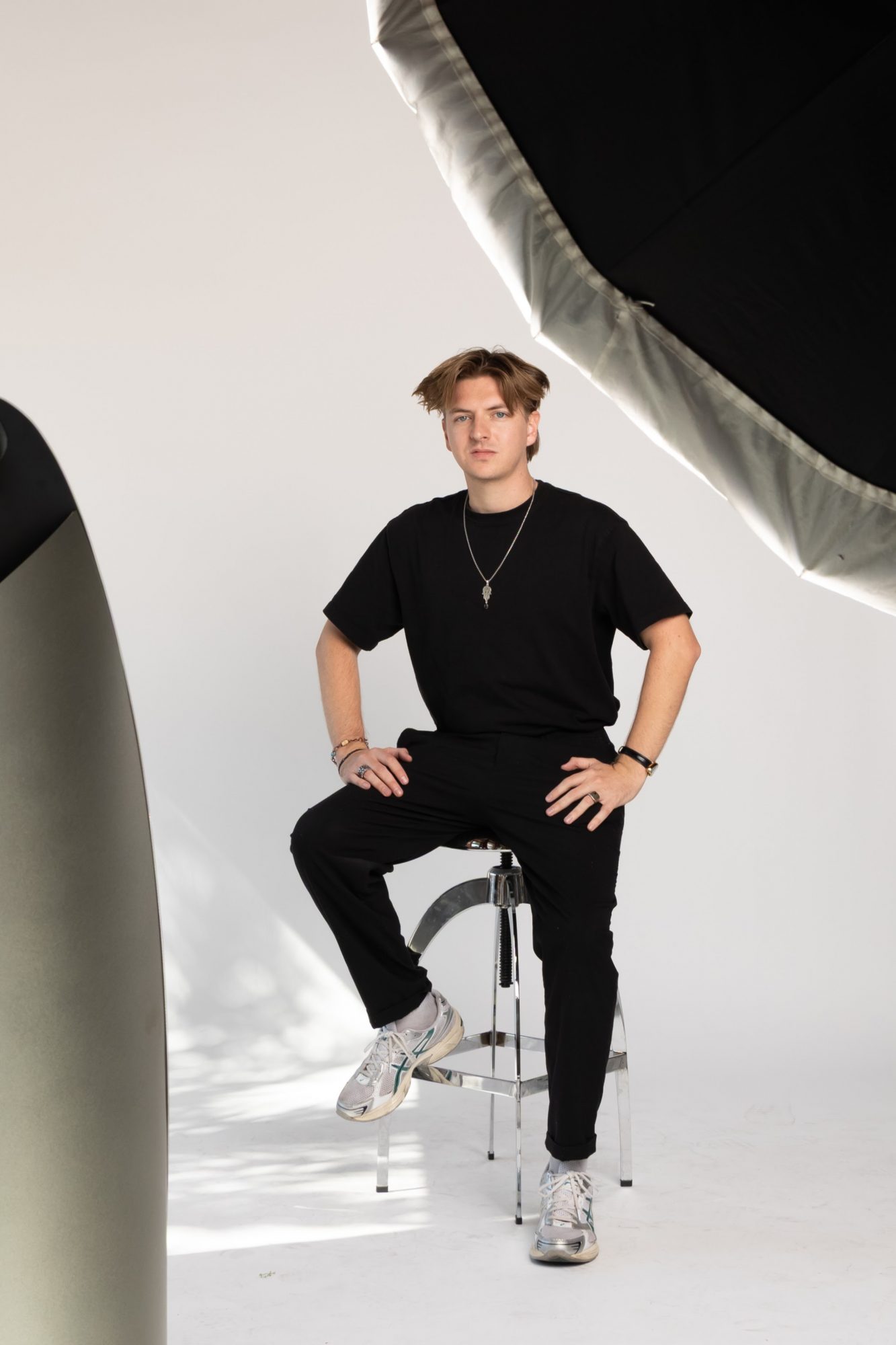
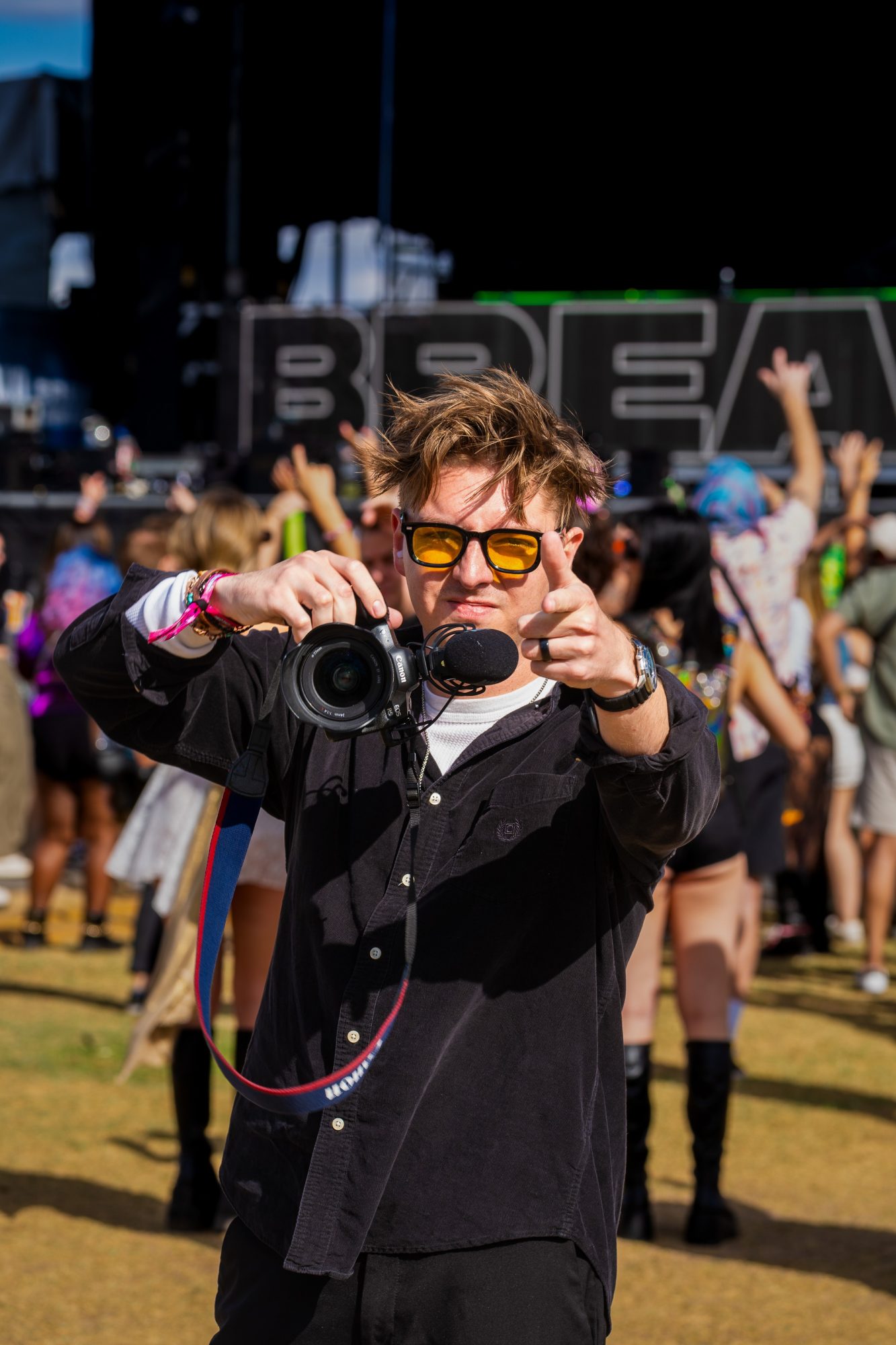
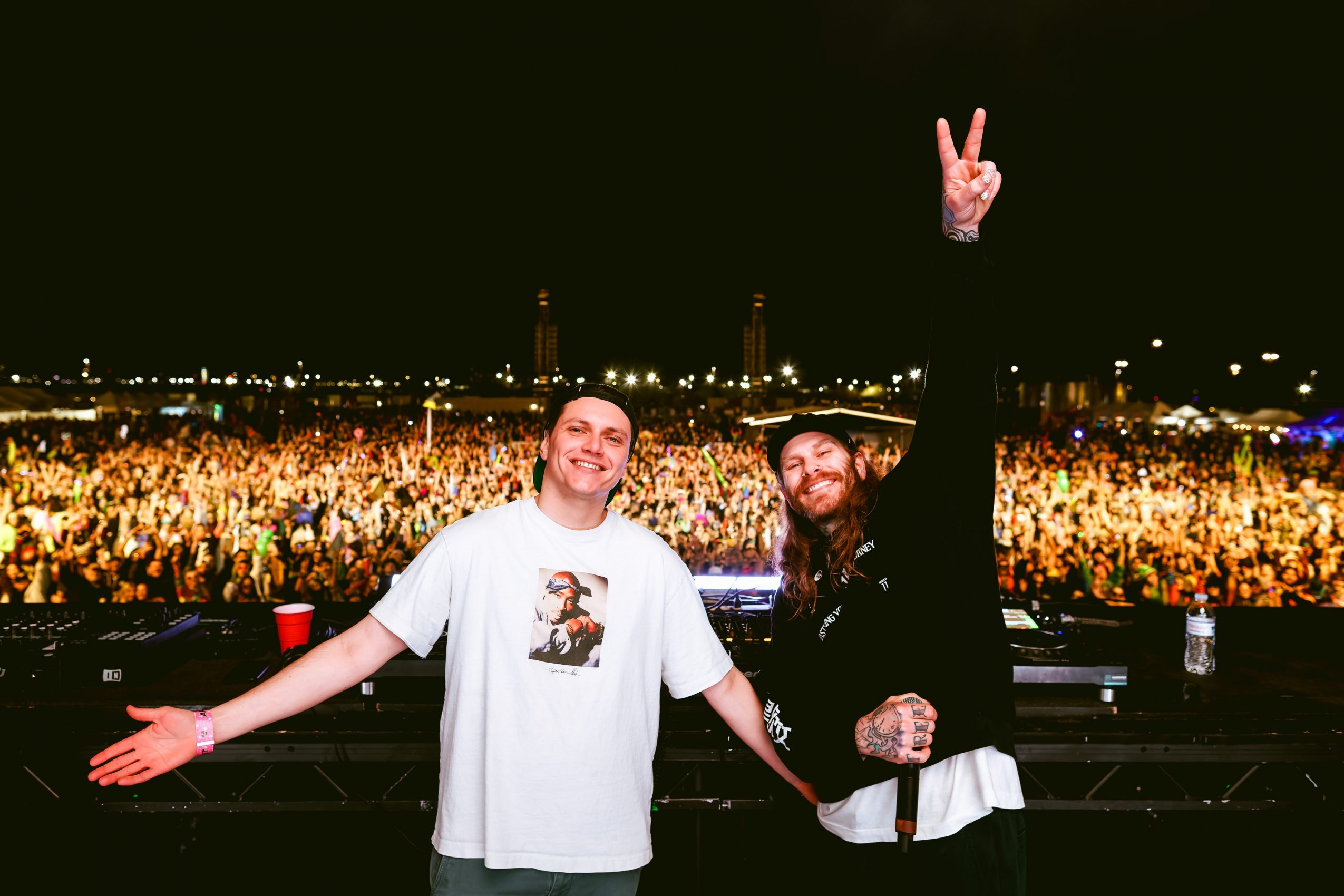
Image Credits
Studio photographer: Karen Castaneda (@karen_cophotography)
Festival portrait: Mitchell Manley (@mindofmeech_)